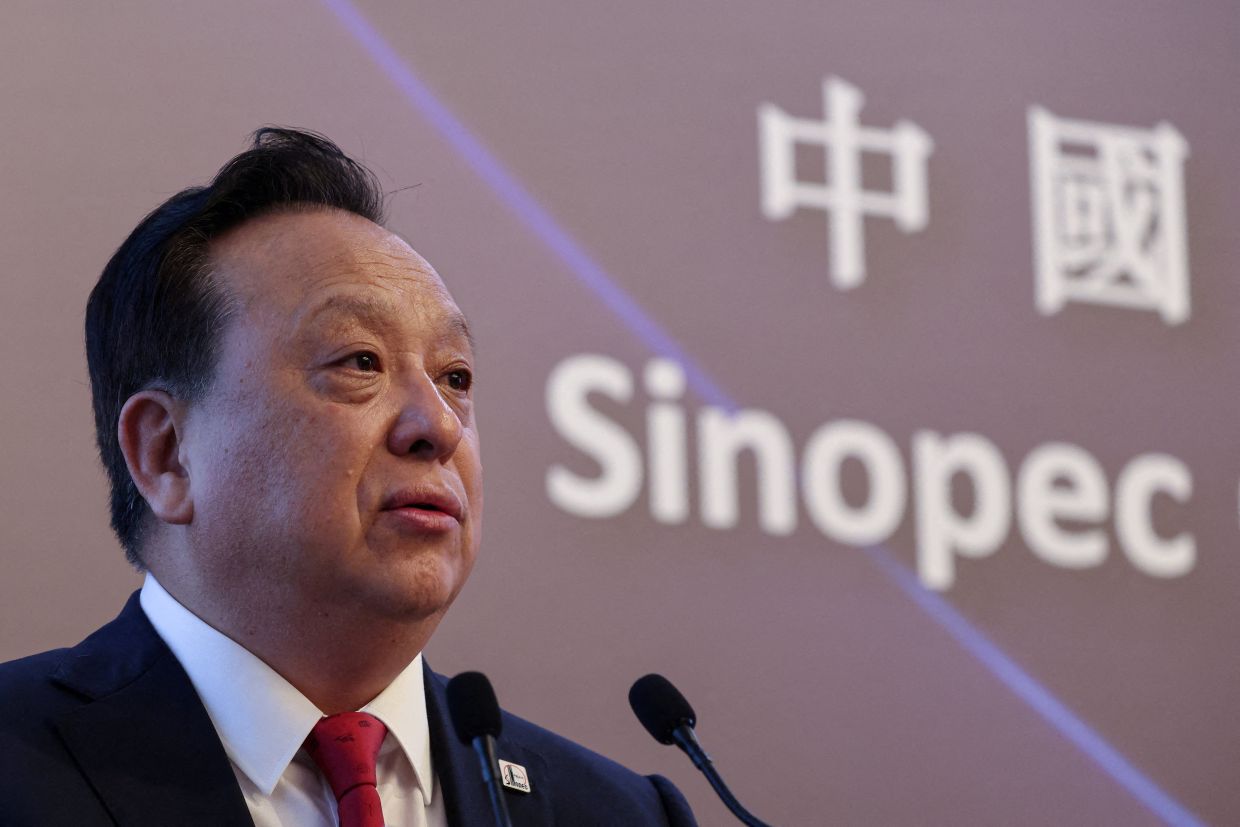
Hou Qijun, who took the helm of Sinopec one year ago, is pursuing an unusually aggressive transformation agenda for a Chinese state-owned enterprise, bucking the typical trajectory where ageing executives coast toward retirement. As chairman of the world's largest oil refiner, Hou confronts a converging crisis: evaporating demand for traditional transport fuels, excess capacity in petrochemical production, and the pressures of operating during what he acknowledges as the most challenging period in the global oil industry. His approach marks a departure from incremental adjustment, instead seeking to fundamentally reshape how the company generates value and competes in a decarbonising world.
Hou's structural overhaul has reorganised Sinopec's sprawling operations into four distinct profit centres, each with enhanced operational autonomy. These divisions span oil, gas and new energy ventures; refining and chemical production; financial services and strategic new business development; and a combined unit handling global trading with Sinopec's extensive downstream marketing networks for fuel, natural gas, and chemicals. By deliberately devolving authority to these units, Hou aims to eliminate layers of bureaucratic friction that have slowed the company's responsiveness to market dynamics. Speaking with unusual candour for a state enterprise leader in a July article for China's State-owned Assets Supervision and Administration Commission magazine, Hou identified the principal obstacles not as technical or resource constraints but rather as organisational rigidity and what he termed "big company syndrome"—the institutional inertia that accumulates as enterprises grow in scale and complexity.
The urgency of Hou's position becomes clearer when examining Sinopec's commercial trajectory. The company's fuel sales have contracted to 2017 levels, and analysts describe the firm's domestic market share position as an "uphill battle." Last year, Sinopec shifted approximately 3.6 million barrels daily of gasoline and diesel to market, predominantly domestically, a volume that increasingly functions as a strategic liability rather than asset. The proliferation of electric vehicles in China, where government policy and consumer preference have combined to accelerate electrification adoption faster than in most markets, has fundamentally altered the economics of refining capacity. Hou articulated this dilemma with striking directness during an earnings briefing in Hong Kong, noting that half of new vehicle sales no longer require conventional fuel, rendering continued investment in incremental gasoline and diesel production economically indefensible.
Hou's response centres on a deliberate pivot toward higher-value-added products and eventually away from hydrocarbons altogether. Despite reporting a 19 per cent increase in net profit for the first half of 2026, the company's financial performance masks underlying structural challenges that higher oil prices temporarily obscured. The chairman has signalled that Sinopec's long-term survival depends on reorienting production toward advanced chemical materials while simultaneously building new energy capabilities—a transition he frames explicitly as a progression from high-carbon to low-carbon to zero-carbon pathways. Over the 2026 to 2030 investment cycle, Sinopec will dedicate approximately 20 per cent of its capital expenditure, exceeding 30 billion yuan (US$4.46 billion) annually, toward new energy and advanced material development.
This reallocation of resources represents a substantial strategic wager. Sinopec has identified more than 30 discrete projects targeted for completion by 2030, including initiatives to build upstream oil and gas reserves, develop shale oil resources, pioneer sustainable aviation fuel production, and achieve significant cost reduction in existing refining operations. The company's pivot toward petrochemicals, however, intersects with an increasingly crowded and competitive landscape. Established rivals including Wanhua Chemical, which benefits from government backing at provincial and local levels, and the privately-managed Satellite Chemical compete fiercely for market position. Simultaneously, the sector faces persistent overcapacity in ethylene production, the fundamental building block for plastics and synthetic fibres, a constraint that limits pricing power and return on incremental investment.
Hou's background as a geologist who spent formative years at China's flagship Daqing oilfield before rising to general manager status at China National Petroleum Corp positions him with distinctive insight into the energy sector's technical complexities. His most recent prior assignment—leading PipeChina from 2019 to 2021, the state-controlled entity that unified pipeline assets from China's three major oil corporations—provided operational experience coordinating complex infrastructure and commercial interests across competing state enterprises. Colleagues describe Hou as a decisive, action-oriented manager who distinguishes himself through willingness to speak extemporaneously and with conviction, rather than adhering to prepared statements typical of many state enterprise executives. At 60 years old, with mandatory retirement at Chinese state firms occurring at 63, Hou operates under an abbreviated timeline that may sharpen rather than diminish his reformist impulses.
The shale oil development initiative, particularly the commercial development of reserves within the Jiyang trough of Sinopec's Shengli oilfield, represents Hou's most ambitious near-term undertaking. Conventional reserves at Shengli, historically one of China's most productive petroleum basins, have depleted substantially, necessitating technological advancement and increased capital intensity to maintain production. Hou has personally positioned himself as the commanding officer overseeing this transition, signalling both personal investment and senior management commitment to what remains commercially uncertain. Success here could provide a template for managing the complex transition from declining conventional reserves toward unconventional sources and eventually alternative energy systems.
Yet formidable obstacles complicate Hou's transformation agenda. Sinopec's exposure to global oil supply disruptions, exemplified by the Iran conflict, constrains operational flexibility. Government price controls that limit how much higher crude costs can be passed to consumers further compress margins and constrain the financial capacity for transformation investments. Competition within new energy spaces increasingly involves non-state actors and private entrepreneurs whose organisational structures may permit faster decision-making cycles than state enterprises. According to energy analysts, Hou possesses genuine advantages through access to government support for commercially marginal investments in hydrogen production and carbon capture—areas where state backing provides essential patient capital. Yet questions persist regarding whether such structural advantages will suffice to establish Sinopec's competitive position in an increasingly crowded renewable and advanced materials landscape.
Hou's appointment and aggressive mandate reflect leadership recognition within Beijing that China's major oil companies cannot maintain viability through incremental adjustment or reliance on crude export revenues. The fiscal and geopolitical pressures constraining oil demand growth across developed economies, combined with China's internal policy emphasis on emissions reduction and electrification, create structural headwinds that no amount of operational efficiency alone can overcome. Hou's elevation and empowerment suggest willingness to embrace more disruptive transformation strategies, accepting near-term profitability pressure to position Sinopec for longer-term competitive relevance. Whether such restructuring will prove sufficient, and whether Sinopec can execute such transformation faster than private competitors and government-backed regional players remains uncertain, but the magnitude of the wager underscores how dramatically China's energy sector landscape is shifting.

