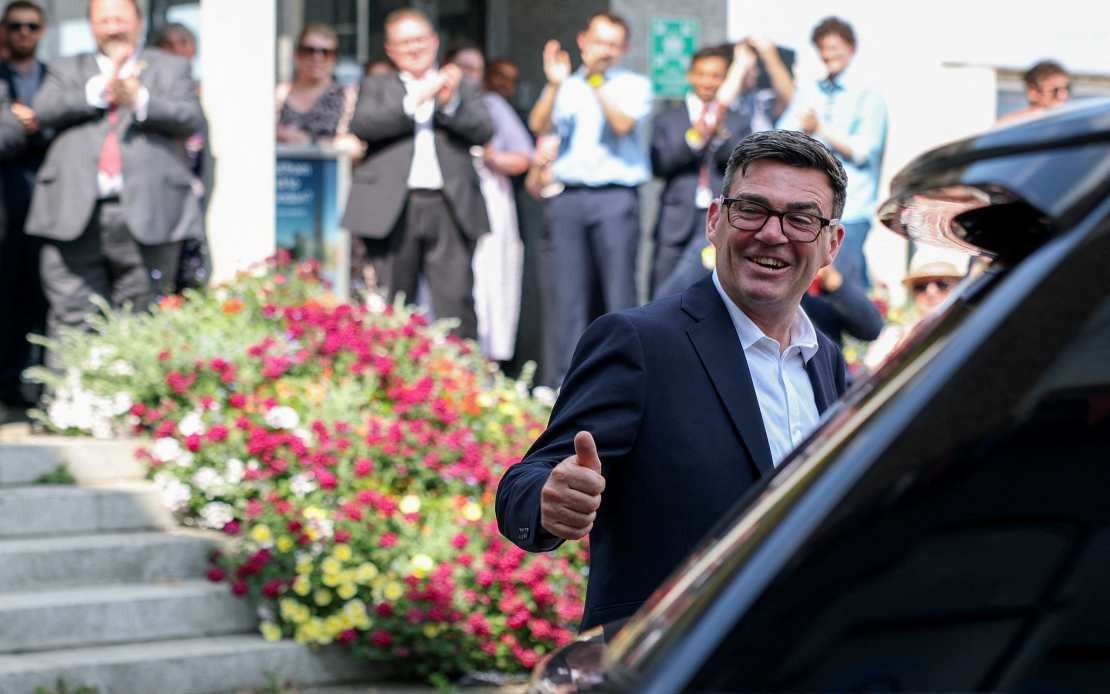
Singapore Prime Minister Lawrence Wong has extended formal congratulations to Andy Burnham following the Labour Party leader's appointment as the United Kingdom's new prime minister on Monday. The gesture, conveyed through an official letter, underscores Singapore's commitment to maintaining and advancing its longstanding partnership with Britain during a period of significant geopolitical realignment and economic uncertainty across the globe.
In his message, Wong expressed confidence that the bilateral relationship between the two nations will flourish under Burnham's leadership. The prime minister specifically highlighted his expectation that cooperation will intensify across multiple strategic sectors, particularly in the domains of innovation, science and technology, and defence capabilities. These sectors have long formed the backbone of Singapore-UK engagement and reflect the practical nature of their partnership beyond traditional diplomatic courtesy.
The Singapore leader emphasised that the foundation for this enhanced cooperation rests on a Strategic Partnership framework that has been carefully constructed over decades. This arrangement transcends routine diplomatic relations, representing instead a comprehensive arrangement that encompasses economic, security, and technological dimensions. Wong's framing suggests that Singapore views the UK not merely as a distant former colonial power but as an active regional stakeholder whose presence carries strategic significance for Southeast Asia.
Burnham's elevation to the prime ministerial post carries particular implications for the Asia-Pacific region. According to official palace announcements, the Labour leader met with King Charles III on Monday and received the invitation to form a government. This transition marks a shift in British leadership that comes at a moment when the UK is reasserting its Indo-Pacific role through various diplomatic and security initiatives, a development that Singapore views with evident satisfaction and pragmatic interest.
Singapore has long valued Britain's sustained commitment to regional engagement through multiple institutional frameworks. Wong specifically referenced the UK's standing as an ASEAN Dialogue Partner, a designation that grants Britain formal consultative status with the Association of Southeast Asian Nations. Beyond this diplomatic arrangement, the prime minister highlighted the Five Power Defence Arrangements, a security framework linking Britain, Singapore, Malaysia, Australia, and New Zealand in coordinated regional security cooperation. These mechanisms demonstrate how the historical British presence in Southeast Asia has evolved into structured partnerships rather than fading into historical irrelevance.
The timing of Wong's message carries particular significance given the convergence of two major governance responsibilities now falling to Singapore and the UK. Singapore is currently assuming the ASEAN Chairmanship, a rotating position that vests the city-state with particular responsibility for coordinating regional affairs and advancing collective Southeast Asian interests. Simultaneously, the UK holds the G20 Presidency in 2027, positioning it as a central player in global economic and political coordination among the world's largest economies.
Wong seized upon this convergence as a distinctive opportunity for bilateral collaboration. The combination of Singapore's regional leadership position and the UK's global economic influence creates what Wong characterised as a unique window for enhanced cooperation. By framing this as a mutual advantage, the Singapore prime minister positioned the bilateral relationship as beneficial not just to both nations but to the broader multilateral system. This approach reflects Singapore's consistent strategy of leveraging its geopolitical position as a bridge between regions and different systems of global governance.
The emphasis on addressing shared global and regional challenges suggests that Wong envisages the relationship extending beyond traditional areas of cooperation into newer domains of mutual concern. Climate change, supply chain resilience, digital governance, and emerging security threats all represent areas where Singapore and the UK have begun exploring common ground. The prime minister's invitation to intensified collaboration during Burnham's tenure signals Singapore's expectation that Britain will maintain its commitment to regional stability and prosperity.
From a Southeast Asian perspective, the formality of Wong's congratulations and the substantive content of his message reflect broader regional interests in sustaining external power engagement. The ASEAN nations have traditionally balanced relationships among multiple great powers, and Singapore's approach to the UK exemplifies this equilibrium strategy. By encouraging continued British engagement in the region while simultaneously emphasising the partnership as mutually beneficial, Wong ensures that Britain views its regional role not as residual imperial nostalgia but as contemporary strategic choice.
The reference to working together amid global uncertainty carries particular weight in the current geopolitical environment. Asia-Pacific stability increasingly depends on the ability of external powers like the UK to maintain rules-based approaches to regional affairs. Burnham's government will face decisions regarding continued naval presence in the region, commitment to international law principles, and support for smaller regional powers' interests. Wong's early engagement signals Singapore's interest in shaping these policy directions through direct diplomatic communication.
Looking forward, the establishment of rapport between Wong and Burnham during this early phase of the prime minister's tenure creates a foundation for sustained high-level engagement. Singapore typically invests considerable diplomatic effort in cultivating relationships with leaders of major powers, particularly those with historical and contemporary interests in regional affairs. The letter represents more than ceremonial courtesy; it functions as both a welcome and a subtle repositioning statement regarding how Singapore expects to engage with Britain's new government.
The broader context includes Britain's evolving strategic posture in Southeast Asia, particularly through initiatives like the AUKUS partnership and renewed naval deployments. Singapore's message to Burnham implicitly acknowledges and welcomes these developments while simultaneously positioning Singapore as an indispensable partner for any external power seeking to understand or influence regional affairs. For Malaysian observers and other regional policymakers, Singapore's approach offers insights into how smaller nations navigate relationships with major powers through selective engagement and strategic partnership frameworks.
As Burnham's government settles into office, Wong's early communication establishes expectations for continued British engagement at political, defence, and economic levels. The prime minister's specific mention of areas for cooperation provides Burnham's administration with a diplomatic roadmap, essentially outlining the pathways through which London can deepen its relevance to Singapore and the broader Southeast Asian region during a period of significant global transformation.

