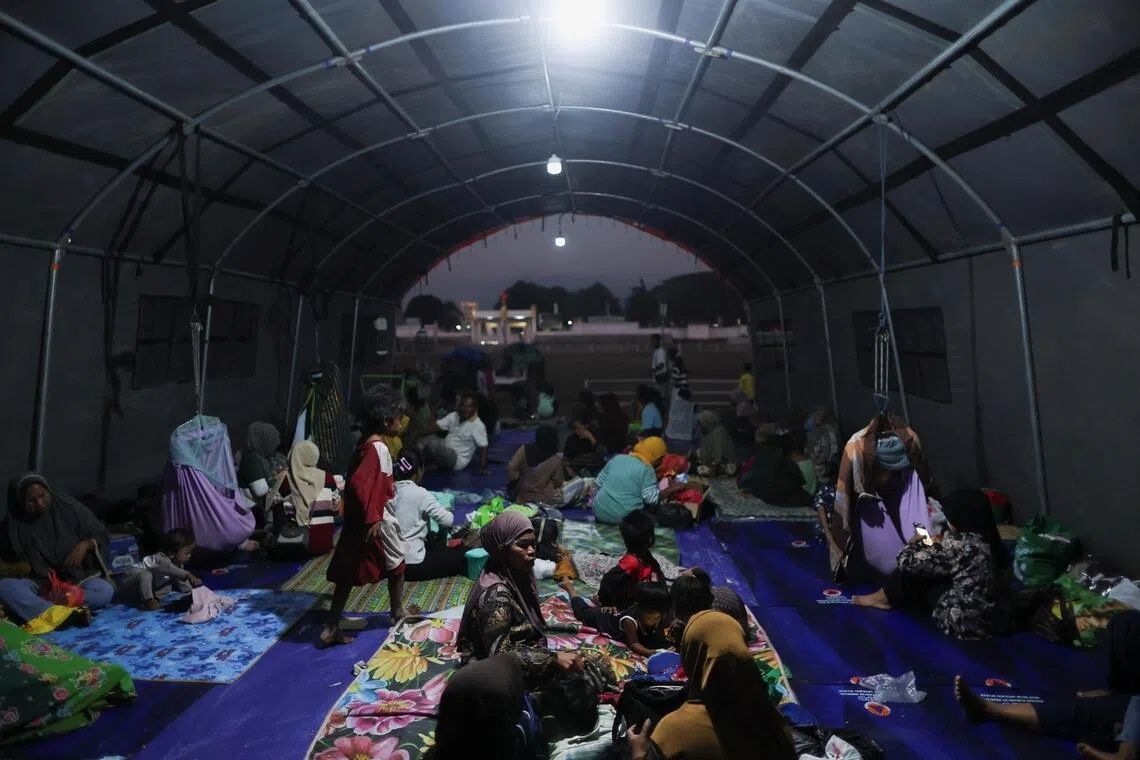
Prime Minister Lawrence Wong has conveyed formal condolences to Indonesia's President Prabowo Subianto following a catastrophic earthquake that devastated communities off the coast of Flores in eastern Indonesia on Saturday, August 15. The tremor claimed the lives of more than 50 people, left at least 135 injured, and caused extensive structural damage to hundreds of residential and commercial properties across the affected region. In a statement posted to Facebook on Sunday, PM Wong acknowledged the scale of human suffering and material loss triggered by the disaster.
The initial 7.7-magnitude earthquake that struck near Flores was followed hours later by a secondary 6.1-magnitude quake centred off the northern Sumatran coast. While the second tremor has not yet resulted in confirmed fatalities, it underscored the heightened seismic volatility affecting Indonesia's tectonically active archipelago. The sequential nature of these major quakes compounded challenges for emergency responders already stretched thin coordinating rescue and relief operations across multiple affected areas simultaneously.
PM Wong's message, delivered on behalf of Singapore's government, conveyed solidarity with the Indonesian people during this period of acute crisis. His statement emphasised Singapore's recognition of the immense suffering experienced by bereaved families and those displaced by the earthquakes. The carefully calibrated diplomatic language reflected the close bilateral ties between the two neighbouring nations and Singapore's established practice of offering formal support during regional disasters.
The scale of displacement was dramatic, with approximately 5,000 residents forced to abandon their homes as the initial quake struck early on August 15. Indonesian disaster management officials reported that nearly 1,000 aftershocks rippled through the region in the hours following the main tremor, creating an atmosphere of fear and uncertainty that prevented many from returning to their properties. This extended seismic activity complicated rescue operations and heightened the psychological trauma experienced by survivors.
Emergency response officials highlighted the urgent humanitarian needs confronting affected communities. Rescue teams and aid coordinators identified critical shortages of emergency tents, food supplies, essential medicines, potable water, and electrical generators as of August 16. The absence of adequate shelter, medical resources, and sanitation infrastructure created immediate risks of disease outbreaks and secondary health crises in the chaotic aftermath of the disaster.
The Flores earthquake occurred along Indonesia's complex network of subduction zones, where the Indo-Australian Plate collides with the Eurasian Plate. This region remains among the world's most seismically active, making powerful tremors a recurring natural hazard for Indonesian communities. The 7.7-magnitude reading placed this event among the more severe earthquakes affecting the archipelago in recent years, capable of generating widespread destruction through ground shaking alone, independent of tsunami risks.
Indonesia's national disaster agency coordinated the initial response, providing real-time damage assessments and casualty figures that informed regional and international relief efforts. The agency's communications regarding aftershock frequencies and structural damage patterns proved essential for international partners like Singapore determining the scale and nature of assistance required. Such coordination mechanisms reflect decades of disaster management cooperation across Southeast Asia.
Singapore's diplomatic response fits within a broader pattern of regional solidarity demonstrated during major humanitarian crises. The city-state's geographic proximity to Indonesia and shared maritime vulnerabilities have fostered established protocols for mutual assistance during earthquakes, floods, and other natural disasters. PM Wong's statement represented the formal activation of these diplomatic channels, signalling Singapore's readiness to provide practical support contingent on Indonesian government requests.
For Malaysia and other Southeast Asian nations, the Flores earthquake served as a sobering reminder of the region's persistent vulnerability to seismic hazards and the cascading humanitarian challenges they generate. The disaster illustrated how rapidly large-scale tremors can overwhelm local emergency response capacities, necessitating coordinated regional assistance. The incident reinforced arguments for enhanced disaster preparedness programmes, improved building codes in seismically active zones, and strengthened mutual aid mechanisms across the Association of Southeast Asian Nations.
The humanitarian dimensions of this disaster extended beyond immediate rescue and relief operations to encompass long-term reconstruction challenges. Historical patterns from previous Indonesian earthquakes suggest that recovery typically requires sustained international engagement spanning months or years, particularly regarding housing reconstruction, livelihood restoration, and psychological support for traumatised populations. Early diplomatic outreach like Singapore's condolences often precedes more substantial forms of technical and financial assistance.
Indonesia's disaster management experiences, accumulated through numerous major earthquakes over recent decades, have generated valuable expertise in rapid response and recovery coordination. However, the sheer frequency and intensity of seismic events continues to strain institutional and financial resources, creating ongoing dependencies on international cooperation. Regional neighbours recognise that stability and prosperity throughout Southeast Asia depend partly on ensuring that major disasters in any country receive adequate coordinated support.

