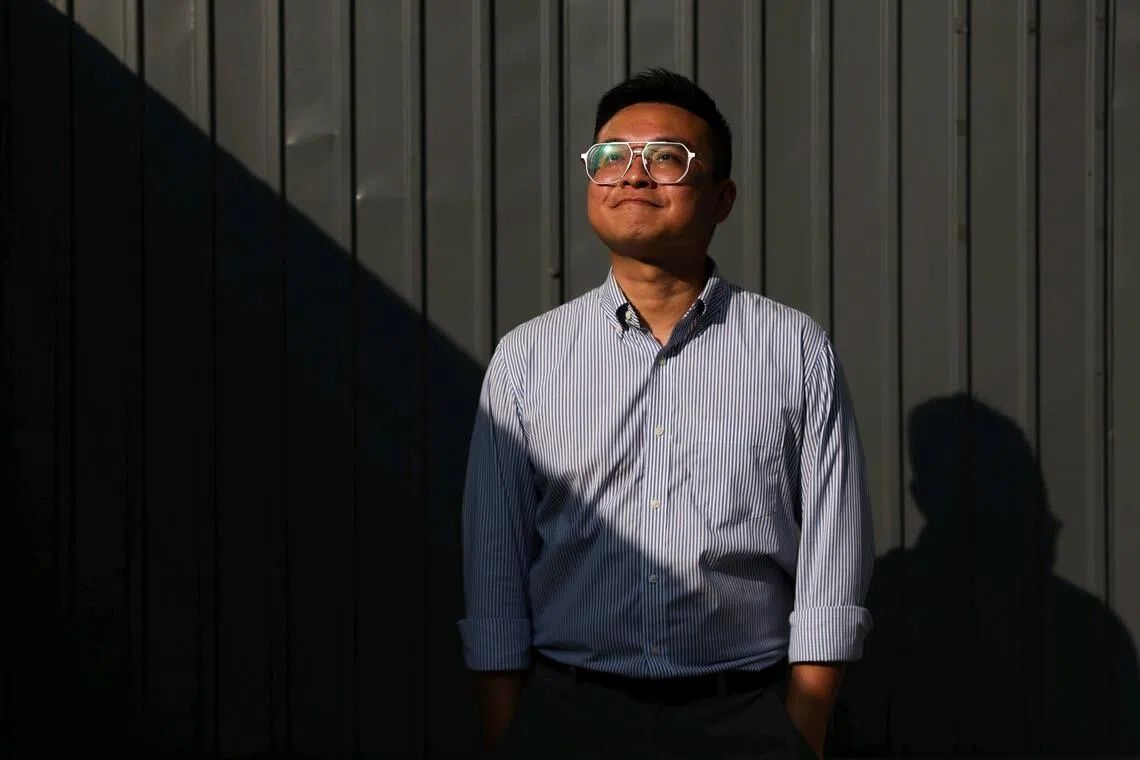
Cornelyus Tan lived two lives in Singapore for nearly a decade. To his employers and colleagues in marketing, he was a successful professional with a promising career trajectory. Behind closed doors, he was battling a methamphetamine addiction that would ultimately dismantle the facade. His arrest in 2022 and six-month detention at Changi Prison's Drug Rehabilitation Centre marked the collapse of a carefully constructed double existence, but it also opened a door into a growing phenomenon that challenges long-held assumptions about who struggles with drug addiction.
Within the walls of Singapore's DRC, Tan discovered he was far from alone. The centre housed teachers, lawyers, bankers and other established professionals—all carrying the same hidden burden. What struck him most was the paradox: on paper, their lives appeared flawless. Credentials were impressive, salaries substantial, social standing secure. Yet underneath ran a common current of emotional and psychological distress that education and income had failed to protect against. "On paper, we look well. We are all very successful. But at the core of it, we had a common problem – the heart," Tan, 37, reflected when publicly sharing his story for the first time.
The numbers paint a concerning picture of escalating substance abuse among Singapore's educated elite. Between 2021 and 2025, the count of DRC inmates holding tertiary education or higher qualifications climbed from 204 to 293—a 43 percent increase in just four years. These individuals now represent approximately one in ten newly admitted inmates annually, up from 8.8 per cent in 2021. Their educational backgrounds span the full spectrum, from polytechnic diplomas through to doctoral degrees. This trend has not escaped the attention of Singapore's authorities, with the Central Narcotics Bureau acknowledging that while the absolute numbers are rising, educated individuals remain proportionally under-represented relative to the general population's educational attainment.
Context is crucial for understanding this apparent paradox. Singapore's population has grown substantially more educated over the past decade, with residents aged 25 and above holding tertiary qualifications rising from 42.9 per cent to 54.5 per cent. When viewed through this lens, the increase in educated drug users might seem merely proportional to broader demographic shifts. However, experts and counsellors working directly with substance abusers argue something more significant is occurring—a breakdown of assumptions that education, stable employment and economic security function as barriers against addiction.
The mechanisms driving this trend extend far beyond individual character or weakness. Global drug markets have expanded dramatically, with synthetic substances like methamphetamine becoming more potent and more widely distributed. Technology has fundamentally altered the distribution landscape. Where drug access once required personal networks—family connections, neighbourhood dealers, or social circles with addiction histories—it now simply requires a smartphone. Telegram channels operate openly, peddling illegal substances to users who need never leave their homes or engage in face-to-face transactions. Social media platforms serve as both marketplace and normalisation tool, with content creators sometimes glamorising drug use or minimising its dangers.
For educated professionals in particular, the appeal often lies in substances' perceived functional benefits rather than escapism. Methamphetamine, the most commonly abused drug among arrested tertiary-educated users alongside cannabis, Ecstasy and heroin, produces what users describe as a "Superman effect"—an intense adrenaline surge that enhances productivity, sharpens creativity and dissolves social anxiety. Tan's introduction to the drug came at a house party in 2014 when he was 25, an arts college student pursuing photography. The drug appeared to unlock creative potential. He found himself thinking more imaginatively, receiving praise for his work, and experiencing a sustained sense of wellbeing that seemed to validate continued use. By 2015, a news outlet profiled him as a promising young photographer, his career apparently thriving despite the hidden dependency.
The cycle that entraps educated users operates differently than stereotypical addiction narratives. Tan managed to abstain for several years after recognising physical deterioration—significant weight loss, excessive perspiration—suggesting he retained agency and rational self-assessment. Yet in 2020, facing intense professional stress as a regional marketing manager in an e-commerce firm, the rationalisation returned: why not use again, when he knew firsthand how effective it could be as a coping mechanism? A junior college teacher, using the pseudonym John, followed a similar trajectory after encountering methamphetamine at a social gathering in 2015. He too managed to maintain professional function for approximately six months, continuing to teach while secretly using, before the toll manifested through missed classes and eventually forced disclosure.
Mental health professionals emphasise that addiction among the educated stems from identical psychological needs as addiction among any demographic: a desire to escape pain, manage stress, forge human connection or soothe underlying emotional distress. What differs is the precise mechanism of denial. Samuel Chua, principal counsellor at the Institute of Mental Health's National Addictions Management Service, notes that educated individuals may find it psychologically more difficult to acknowledge addiction, having built identities around competence and control. We Care Community Services' executive director Tham Yuen Han observes that highly capable professionals often possess unwarranted confidence in their ability to regulate drug use through sheer willpower—a miscalculation that addiction's neurochemical power renders irrelevant.
Peer influence and aspirational lifestyle factors also play significant roles. Exposure to more liberal drug cultures through overseas travel, social circles that normalise substance use among professionals, and entertainment media that either glamorises drug consumption or downplays serious consequences all contribute to lowering psychological barriers. For some, drug use becomes intertwined with professional networking or social belonging within particular industries or social strata.
The recent conviction of a medical doctor for drug use exemplifies how surprising these cases remain to the public, even as their frequency increases. A doctor—arguably society's most educated and trustworthy professional category—battling substance addiction contradicts deeply embedded assumptions about education, expertise and moral character. Yet such cases represent merely the visible tip of what counsellors and rehabilitation specialists recognise as a far more extensive hidden epidemic.
For Southeast Asia more broadly, Singapore's experience offers cautionary evidence that wealth, education and developed infrastructure provide no immunity against the escalating global drug crisis. As synthetic drugs become more potent and digital markets more sophisticated, the assumption that substance abuse correlates with socioeconomic disadvantage becomes increasingly untenable. Malaysia, which shares similar urban characteristics, professional class demographics and technology penetration with Singapore, likely faces comparable vulnerabilities that warrant heightened public health attention and preventive intervention focused beyond traditional risk populations.
Tan's willingness to speak publicly represents a rare moment of transparency in a space typically shrouded by stigma and shame. His message—that addiction transcends educational achievement and professional success, that it is fundamentally a matter of human vulnerability to pain—challenges both policymakers and society to reconceptualise substance abuse prevention and treatment. Rather than assuming education and status naturally confer resilience, comprehensive intervention strategies must target the particular psychological vulnerabilities and access mechanisms that affect educated populations specifically.

