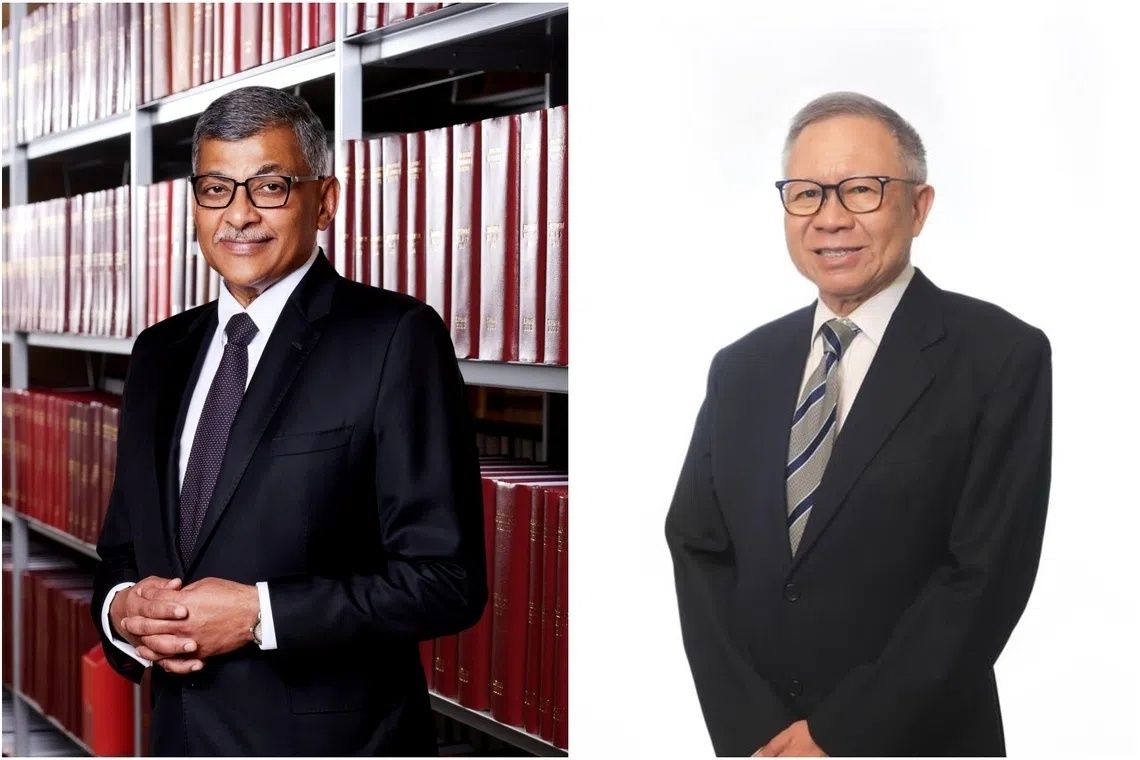
Chief Justice Sundaresh Menon and Eddie Teo, former chairman of the Council of Presidential Advisers, are among 7,491 individuals receiving 2026 National Day honours from Singapore. The two prominent figures will be conferred the Order of Temasek (With Distinction), the republic's most prestigious civilian award, recognising their substantial contributions across the judiciary and public administration respectively.
Menon, aged 62, will step down from his position as head of the judiciary on February 26, 2027, concluding a 14-year tenure that began in November 2012. His leadership has fundamentally reshaped Singapore's legal landscape through sweeping modernisation and institutional strengthening. The Chief Justice oversaw the transformation of the judiciary's operational infrastructure, championing digitalisation initiatives that have enhanced accessibility and efficiency across the court system. His vision extended beyond procedural improvements to establishing new institutional frameworks designed to meet contemporary legal challenges and support Singapore's position as a regional legal hub.
Under Menon's stewardship, the judiciary has witnessed landmark developments that have repositioned Singapore's justice system on the global stage. The establishment of the Appellate Division of the High Court provided enhanced appellate capacity, whilst the creation of the Singapore International Commercial Court positioned the nation to handle complex cross-border commercial disputes. These institutional innovations reflect a strategic approach to judicial governance that balances domestic needs with international competitiveness. Beyond structural changes, Menon championed the Singapore Judicial College, an educational institution dedicated to continuous professional development of judges and enhancement of judicial expertise across all court levels.
Menon's tenure has also witnessed a significant philosophical shift in how certain courts approach their social function. The Family Justice Courts and Youth Courts have embraced therapeutic justice methodologies, reflecting an understanding that traditional adversarial processes do not always serve the best interests of vulnerable populations such as children and families in crisis. This approach recognises that resolution and healing can coexist with legal accountability. Menon's willingness to pioneer these evolving justice paradigms demonstrates thoughtful stewardship of the rule of law as a living, adaptive framework rather than a static set of procedures.
In his response to the honour, Menon emphasised the collective nature of judicial achievement, noting that Singapore's commitment to the rule of law represents the accumulated work of judges, court staff, legal professionals and Government. He positioned his tenure within Singapore's historical trajectory as an independent nation, underscoring how robust legal institutions have been foundational to the nation's economic and social development. The recognition comes at a symbolically significant moment, coinciding with the bicentennial of Singapore's legal and judicial system, suggesting a historical continuity and evolution of legal governance spanning two centuries.
Teo's recognition reflects a remarkable 56-year career in public service spanning some of Singapore's most consequential periods of development and crisis management. The 79-year-old began his career in 1970 at the Ministry of Defence's Security and Intelligence Division, rising to lead that agency at just 31 years old—a position he held from 1979 to 1994. His trajectory through Singapore's bureaucratic hierarchy reflects both his individual capability and the Government's commitment to developing leadership talent from within its institutions. Later service as permanent secretary for defence and subsequently in the Prime Minister's Office positioned him at the nexus of national security and strategic policy-making during decades of geopolitical significance for Southeast Asia.
Teo's tenure as Public Service Commission chairman from 2008 to 2018 marked a deliberate expansion of recruitment and governance philosophy within Singapore's civil service elite. He worked to broaden the commission's composition, drawing members from academia, law and social work, signalling an intention to infuse Government leadership recruitment with diverse professional perspectives. This institutional change reflected evolving thinking about how merit and excellence should be conceived and identified in public administration. Following his PSC retirement in 2018, Teo assumed the chairmanship of the Council of Presidential Advisers, a role he maintained until June 2026, positioning him as a key advisor during periods of significant economic and health challenges.
Teo's recollections of his early career highlight a dimension of Singapore's historical experience often overshadowed by contemporary developments. He described his first two decades in service as the substantive highlight of his professional life, during which he worked closely with Singapore's founding generation leaders including Lee Kuan Yew and Goh Keng Swee, as well as former President S. R. Nathan. This direct mentorship from nation-builders who shaped Singapore's post-colonial trajectory provided Teo with formative experiences and institutional understanding that informed his subsequent leadership across multiple Government portfolios. His gratitude toward these pioneers underscores how Singapore's institutional knowledge has been transmitted across generations through direct mentorship relationships within the civil service.
Teo particularly emphasised his experience during the Covid-19 pandemic as chairman of the Council of Presidential Advisers, when Singapore accessed approximately S$40 billion from national reserves—the largest such drawdown in the nation's history. This unprecedented fiscal mobilisation required navigating both constitutional frameworks and economic philosophy. Then-President Halimah Yacob and the Council conducted extensive deliberations before approving the extraordinary reserve withdrawal. Teo credited this decisive intervention with enabling Singapore to stabilise its economy, preserve business viability and protect employment whilst avoiding the accumulation of substantial public debt. The decision exemplified how Singapore's institutional arrangements permitted rapid, substantial responses to existential crises without compromising long-term fiscal prudence.
In reflecting on his six-decade public service career, Teo offered an implicit commentary on the sustainability and attractiveness of Government employment in Singapore's competitive economy. He acknowledged that public sector compensation cannot match private sector rewards for successful entrepreneurs and senior business executives, yet he argued that Government service offers intellectual engagement, contribution to nation-building and the satisfaction of serving broader societal interests. His observation addresses a perennial challenge for civil services globally—attracting and retaining talented personnel when private sector alternatives offer superior material rewards. Teo's own sustained commitment across five decades suggests that institutional purpose and developmental opportunity can counterbalance purely financial incentives.
Beyond Menon and Teo, the 2026 National Day Awards recognised five additional individuals with the Distinguished Service Order, Singapore's next-highest civilian honour. Alan Chan, 73, chairman of the Land Transport Authority since 2016, was recognised for advancing Singapore's land transport infrastructure and operational reliability. Under his leadership, the mean kilometres between rail failures improved dramatically from 393,000 kilometres in 2017 to two million kilometres by 2026—a sevenfold improvement that reflects both technological advancement and operational excellence. Chan's tenure has overseen completion of major projects including the Thomson-East Coast Line and the Singapore Rail Test Centre, alongside acceleration of electric vehicle adoption across the transport network. Edmund Cheng, 73, former chairman of the Civil Aviation Authority of Singapore, was similarly honoured for contributions spanning aviation sector development, rehabilitation programmes for formerly incarcerated individuals, and support for the arts—illustrating how Singapore's honours system recognises multifaceted contributions across public and civic domains.

