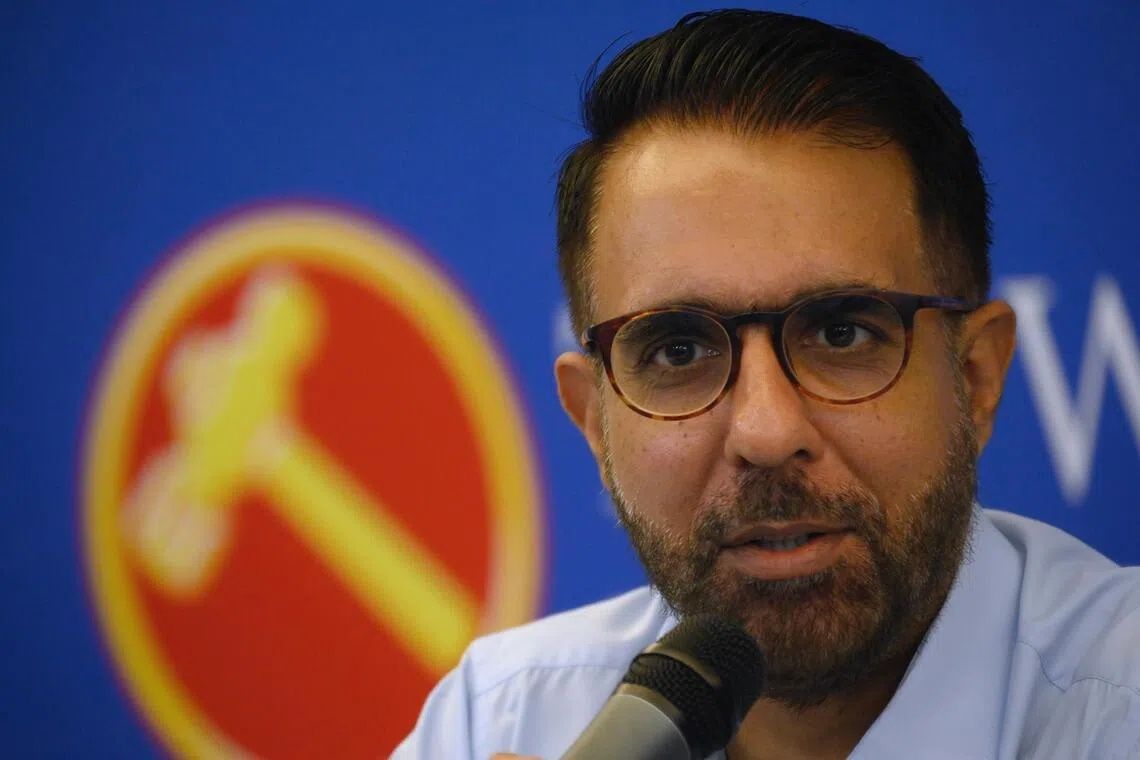
The Singapore Workers' Party stands at a crossroads following a surge in internal dissatisfaction with secretary-general Pritam Singh, with party cadres planning to mount an unprecedented challenge to his leadership at elections scheduled for June 28. The contest reflects deep fractures within Singapore's main opposition movement, triggered by Singh's December 2025 court conviction for misleading a parliamentary committee and exacerbated by what critics view as his mishandling of former Sengkang GRC MP Raeesah Khan's fabricated parliamentary statement from 2021.
The push for change gained momentum after roughly 25 party cadres—a significant bloc within the party's slightly more than 100-strong inner circle—formally requested a special conference to account for Singh's actions. This development marks the first serious challenge to Singh's authority since he assumed the secretary-general role eight years ago, signalling the depth of discontent simmering beneath what had appeared to be a unified opposition front. The dissidents, comprising former central executive committee members and election candidates, view Singh's conviction as fundamentally damaging to the Workers' Party's carefully cultivated brand as Singapore's integrity-focused alternative to the ruling People's Action Party.
The mechanism for June 28's showdown involves two sequential meetings. The special conference will provide Singh an opportunity to respond to critics and either resign voluntarily or face a secret ballot on his continued leadership. Should Singh survive this first hurdle, a separate biennial ordinary cadres' conference will follow to formally elect the party's leadership positions, including secretary-general. This structure creates a complex political dynamic where Singh could theoretically be deposed at the first meeting, then re-enter as a candidate at the second—a scenario that cadre sources suggest remains fluid and could shift based on outcomes of the first vote.
While no challenger has formally declared candidacy, party insiders indicate that several senior MPs have been approached. Names circulating within party circles include Gerald Giam from Aljunied GRC, Dennis Tan representing Hougang, and Sengkang GRC MPs He Ting Ru and Jamus Lim. The latter pair hold particular significance as members of the three-person disciplinary panel that found Singh had violated party constitution provisions related to his conviction. This overlay of committee involvement with potential challenger candidacy underscores the institutional complexity of the party's internal crisis. To date, however, none have publicly committed to running, with party insiders attributing this caution to fear of disciplinary action against members critical of leadership.
The conviction itself centres on Singh's alleged guidance of Khan in maintaining a false narrative about an encounter she fabricated during an August 2021 parliamentary speech. Khan did not admit to the fabrication until November that year, and subsequent investigations by Parliament's committee of privileges determined that Singh had encouraged her deception. Courts subsequently upheld this finding, creating a profound legitimacy challenge for a party whose primary selling point to voters has been principled governance and moral superiority over the ruling establishment. Cadres opposed to Singh argue that his continued tenure undermines the Workers' Party's capacity to claim the ethical high ground in parliamentary discourse and public opinion.
Former party chief Low Thia Khiang, who steered the party from 2001 to 2018 and orchestrated its historic 2011 GRC victory, looms large over the unfolding contest despite holding no formal leadership position. Rumours suggest Low voted against Singh during central executive committee discussions on the disciplinary panel's findings—a potential signal of withdrawn support that could prove decisive. Low retains substantial influence among party cadres, many of them veterans of earlier factional contests. Should Low extend backing to another candidate, party calculations suggest combined support from approximately 30 discontented cadres plus Low's sympathizers could potentially comprise a majority sufficient to unseat Singh. This scenario carries particular resonance given that Low himself weathered a 2016 leadership challenge from former Aljunied GRC MP Chen Show Mao, an unsuccessful bid that drew upon many of the same cadre networks now mobilizing against Singh.
The broader context of Singh's difficulties extends beyond the conviction itself. The Workers' Party's performance in the 2025 general election disappointed cadres who had anticipated gains from what they regarded as a formidable candidate slate. Singh's decision to withdraw from Marine Parade-Braddell Heights GRC on Nomination Day further generated questions about strategic judgment. Most significantly, Prime Minister Lawrence Wong removed Singh as Leader of the Opposition in January 2026 and invited the party to nominate a replacement MP for the role. The Workers' Party declined, closing ranks behind Singh instead—a decision that some cadres privately view as self-sabotaging, ceding parliamentary prominence and potentially harming the broader opposition cause.
The mechanics of the challenge require only a simple majority to succeed, and any cadre in good standing can nominate or run as a candidate. Singh faces no formal restrictions preventing his re-election regardless of the formal reprimand letter he received earlier for constitutional violations. This technical openness masks deeper questions about whether a challenger will materialize at all. Party insiders suggest the dynamic may evolve between the special conference and the ordinary cadres' conference, with the result of the first vote influencing whether candidates emerge for the second. A narrow victory for Singh, or his departure through resignation or defeat, could each trigger different cascading effects.
The Workers' Party's current predicament reflects the hazards opposition parties face when leadership integrity becomes entangled with partisan loyalty and institutional survival. For Malaysian and broader Southeast Asian observers, the contest illustrates how legal setbacks and governance questions can destabilize opposition movements dependent on principled differentiation from ruling parties. The Workers' Party has positioned itself for over a decade as Singapore's conscience in Parliament—a role that Singh's conviction fundamentally compromises. Whether party cadres ultimately decide that Singh can rehabilitate this damaged brand or whether they seek new leadership will carry implications well beyond Singapore's political sphere, signalling to regional opposition movements how institutional responses to integrity crises shape long-term political viability.

