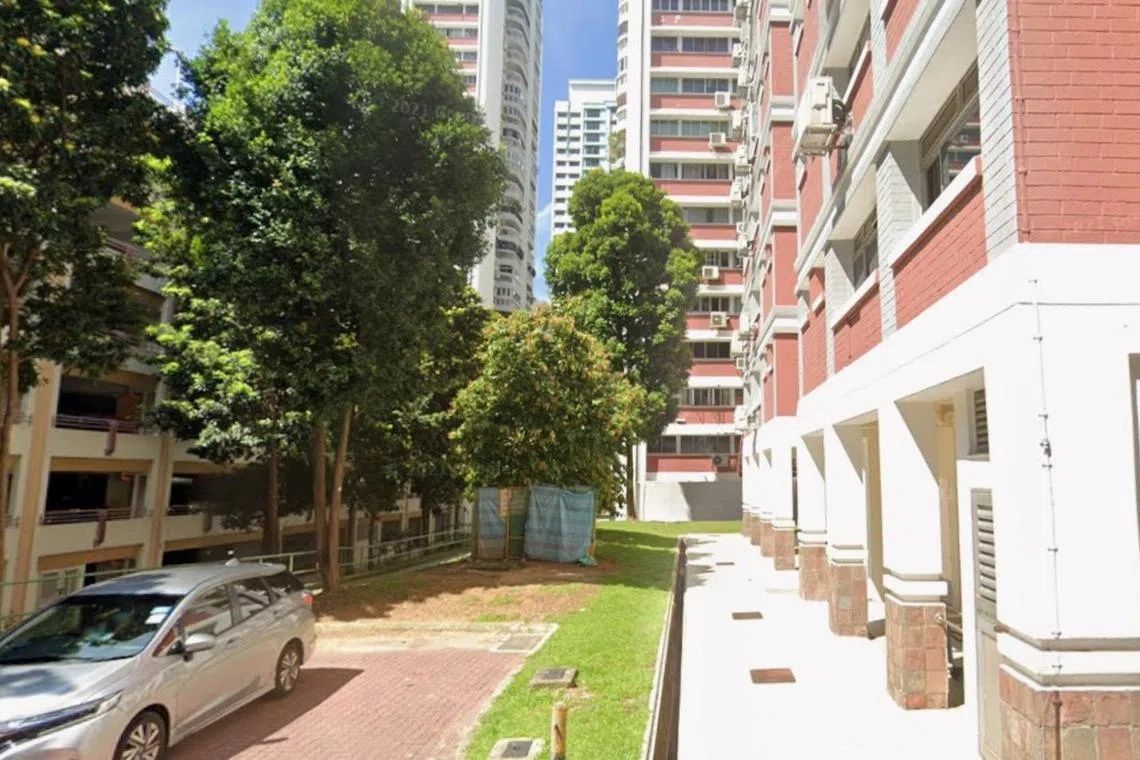
Singapore's police force responded to an emergency call at a Housing Board residential block in the Bukit Merah area on Saturday evening, leading to the arrest of a 46-year-old woman suspected of committing a knife attack against a 43-year-old acquaintance. The incident unfolded at 7 Kim Tian Place at approximately 7.40 pm, with authorities arriving to find the aftermath of what appears to have been a violent confrontation between two individuals known to each other.
The suspect, whose identity has not been disclosed, was taken into police custody on suspicion of causing grievous hurt using a weapon. Investigators recovered a knife at the scene as a key piece of evidence in the case. The 43-year-old victim, who sustained injuries from the blade, was transported to Singapore General Hospital while conscious and able to communicate with emergency responders. Her current condition has not been publicly detailed, but the fact that she remained conscious suggests the injuries, while serious enough to warrant hospital treatment, were not immediately life-threatening.
Chinese-language media outlets covering the incident reported visible evidence of the violence at the void deck area of the housing block, where bloodstains were observed by residents and first responders. The void deck location suggests the attack may have taken place in a semi-public area of the residential complex, potentially witnessed by other inhabitants of the block. This detail carries significance for the investigation, as eyewitness accounts could prove crucial in establishing the precise sequence of events and any potential provocation or motive behind the assault.
The incident reflects broader public safety concerns that occasionally surface in Singapore's HDB estates, which house the majority of the city-state's population. While violent crime remains relatively uncommon compared to international standards, knife-related assaults at residential blocks generate particular public concern given their occurrence in spaces meant for community living and child safety. The Bukit Merah area, a densely populated residential neighbourhood south of the central business district, is home to thousands of families residing in high-density public housing.
At the time of reporting, police investigations remained ongoing, with detectives likely conducting interviews with the victim, the suspect, and any witnesses present at the scene. The nature of the relationship between the two women and the circumstances that precipitated the violence remained unclear. Understanding whether the attack was spontaneous or the result of accumulated tensions between the acquaintances will be central to the investigation's direction and any subsequent charges filed against the suspect.
The recovery of the knife weapon at the scene strengthens the prosecution's case regarding the charge of causing grievous hurt with an implement. In Singapore's legal framework, such charges carry significant penalties, with potential imprisonment and caning depending on the severity of injuries inflicted and the circumstances of the offense. The fact that the victim was transported to Singapore General Hospital rather than treated at the scene suggests the injuries were substantial enough to require specialist medical assessment and ongoing care.
For Malaysian readers, this incident underscores how even highly developed and generally safe city-states experience occasional violent crimes within their public housing estates. Singapore's HDB system, while efficient and well-maintained, houses over 80 percent of the population, making it statistically inevitable that crimes will occasionally occur within these residential complexes. The incident also illustrates the rapid emergency response capabilities of Singapore's law enforcement and healthcare systems, with the victim receiving hospital treatment within minutes of the emergency call being received.
The case represents a reminder that domestic and interpersonal violence can manifest in sudden, unexpected ways even in residential communities widely regarded as secure. The arrest of the suspect within hours of the incident demonstrates the effectiveness of Singapore's police force in responding to violent crimes and apprehending perpetrators. The emphasis on weapon recovery and the characterisation of the charge underscore the serious nature with which authorities approach assaults involving implements that could cause significant bodily harm.
As investigations continue into the motivations and circumstances surrounding the Bukit Merah incident, the case will likely be monitored by residents of the affected HDB block and broader public safety advocates in Singapore. The outcome of the investigation and any subsequent legal proceedings will contribute to the evolving understanding of interpersonal violence patterns within residential communities in the developed city-state.

