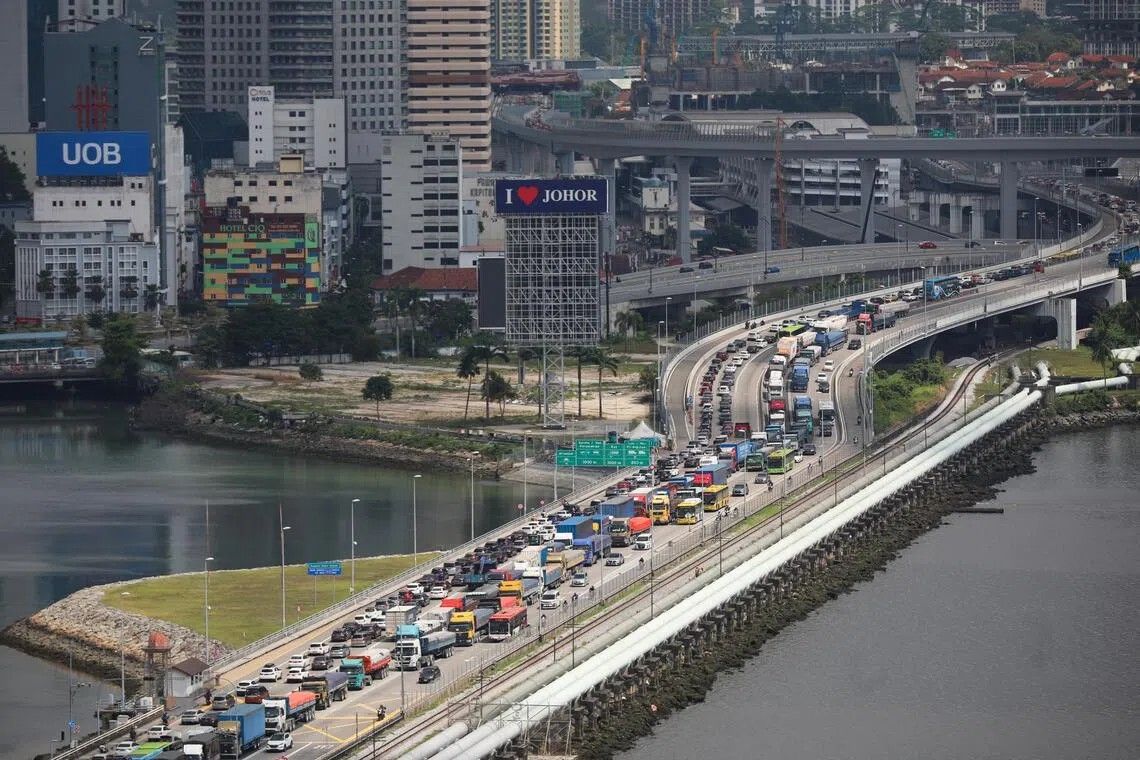
Singapore's immigration authorities are bracing for unprecedented congestion at the country's two main land checkpoints during the National Day long weekend from August 7 to 10, with officials cautioning travellers to expect "very heavy traffic" conditions. The Immigration and Checkpoints Authority issued its advisory on August 3, signalling that the extended holiday period will likely draw massive numbers of cross-border commuters and leisure travellers between Singapore and Malaysia.
The scale of movement during such peak periods has become increasingly dramatic in recent years. Between May 26 and June 28 alone—spanning the Hari Raya Haji break, Vesak Day weekend, and June school holidays—more than 18 million travellers transited through Woodlands and Tuas. Most striking was June 19, when over 598,000 people cleared immigration through both checkpoints in a single day, surpassing the previous record of 589,000 set in December 2025. These figures underscore the critical role these crossings play in regional mobility, particularly for Malaysian citizens working or studying in Singapore and Singaporeans visiting Johor.
Waiting times during peak hours have become a genuine concern for commuters. During the heaviest periods, motorists have faced queues stretching to three hours just for immigration clearance, with backlogs originating from the Malaysian side compounding delays on the Singapore approach. Such extended wait times create frustration and gridlock that can extend well beyond checkpoint facilities, affecting traffic flow on major arterial roads connecting to the crossings. For daily commuters and weekend travellers alike, these conditions transform what should be routine border transits into time-consuming ordeals that can consume entire hours.
To mitigate congestion and improve processing efficiency, the authority has recommended several strategies for travellers. Planning journeys well in advance and consciously avoiding peak hours—particularly early morning and late evening slots—remain the most effective approaches for reducing wait times. Travellers are also advised to monitor real-time traffic conditions before departing, enabling them to make informed decisions about timing and potentially choose alternative routes if available. The ICA has emphasised that proactive planning is far more effective than simply attempting to navigate gridlock once it develops.
Digital solutions have emerged as important tools for accelerating clearance processes. The MyICA mobile application generates QR codes that enable faster immigration processing, reducing the need for manual document verification and speeding transactions. For motorcyclists and pillion passengers specifically, facial recognition technology under the New Clearance Concept has yielded remarkable improvements in throughput. This system has increased departure clearance rates by more than 35 per cent—equivalent to an additional 7,600 travellers per hour—compared with pre-pandemic levels in 2019. Such technological enhancements represent meaningful progress in managing high-volume periods, though they require traveller awareness and adoption to deliver maximum benefit.
Security considerations have added another layer to checkpoint operations since February 28, when ICA intensified security screening across all facilities in response to a heightened global security environment, particularly following developments in the Middle East. These enhanced measures, while necessary for public safety, inevitably contribute to processing times and must be balanced against efficiency. The combination of increased security scrutiny and record traveller volumes means that checkpoints are now operating under significantly greater strain than in pre-pandemic years.
Behaviour at border facilities substantially impacts overall flow efficiency. The authority has repeatedly highlighted the disruptive effect of queue-jumping and lane discipline violations. When motorists cut queues or ignore lane assignments, they create cascading delays that affect dozens or hundreds of subsequent travellers. During the recent Hari Raya Haji, Vesak Day, and June school holidays period, fifty-two motorists were identified committing traffic-related offences and dangerous road behaviour. Enforcement responses have included referrals to Traffic Police for investigation and prosecution, mandatory re-queuing from the back of lines, and banning from Singapore entry. These measures serve both as deterrents and as essential traffic management tools.
For Malaysian and regional readers, these congestion warnings carry direct implications for cross-border planning. Many Malaysian professionals commute to Singapore regularly, while business travellers frequently transit between the two countries. Students, healthcare visitors, and leisure travellers similarly depend on these corridors. The August 7-10 period will likely see intensified demand, suggesting that anyone with flexible schedules should strongly consider alternative dates. Those with fixed commitments should adjust expectations regarding travel time and depart significantly earlier than historical norms.
The broader context reflects the region's integration and the volume of daily interdependencies between Singapore and Malaysia. These two checkpoints are critical arteries for the region's economy, with hundreds of thousands of workers, students, and business people depending on reliable cross-border access. As populations continue growing and travel volumes increase, the balance between security, efficiency, and capacity will remain a central challenge for regional authorities. For travellers heading into the National Day weekend, the core message is straightforward: prepare thoroughly, leave early, and cooperate fully with authorities to minimise collective delays.

