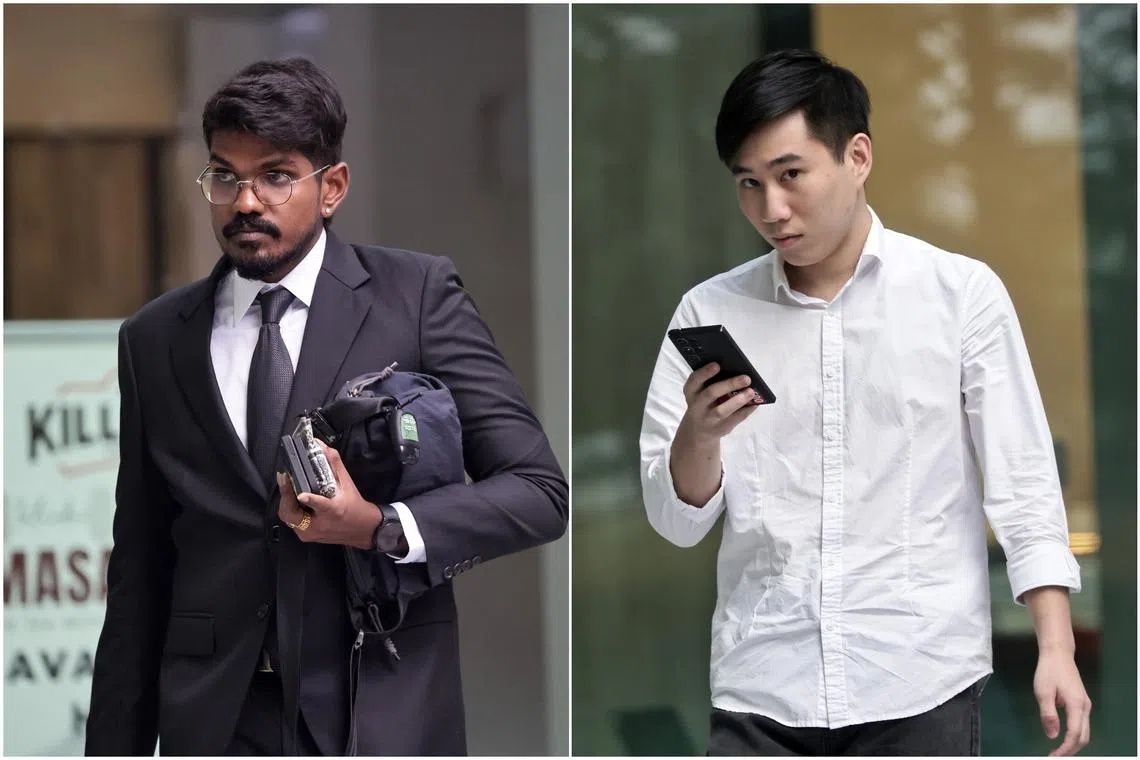
A Singapore Traffic Police officer has been handed a year and four months' jail term after being found guilty of unlawfully accessing government computer systems and sharing sensitive information with a friend who later made death threats against a woman, illustrating a serious breach of public trust and data protection within law enforcement ranks. Shivasuria Maniam Kesaval, 29, exploited his position as a TP investigation officer to obtain and transmit confidential details to his associate, Brayden Ong Ying Shan, 25, fundamentally undermining police accountability and the safety of citizens willing to report crimes.
The case emerged from a relatively routine traffic violation that spiraled into a serious criminal matter involving abuse of official power and intimidation. The woman in question had entered into a relationship with Ong and subsequently discovered that he was operating a vehicle without a valid driving licence. Concerned about public safety and legal compliance, she made a formal police report in July 2022. Two Traffic Police officers responded to her information and apprehended Ong, impounding his vehicle as part of standard enforcement procedures. This seemingly straightforward law enforcement action became the catalyst for a disturbing chain of events that revealed systemic vulnerabilities within police data access protocols.
When Ong learned of the traffic stop, he immediately contacted Shivasuria to report what had transpired. Rather than maintaining professional boundaries and refusing to assist, Shivasuria began accessing the Ministry of Home Affairs' computer systems across a two-week period from mid-July to late July 2022, conducting unauthorized searches that were entirely unrelated to his official duties. Through these illicit database queries, he obtained the woman's personal identification details and crucially, identified the original police report that had triggered the enforcement action against Ong.
During the trial, prosecutors revealed that Shivasuria had deliberately shared the timing and nature of the initial report with his friend, providing Ong with sufficient information to deduce the woman's identity as the person who had reported him. The officer met repeatedly with Ong during this period, further cementing what amounted to an active conspiracy to help his friend evade accountability and to intimidate a witness. This pattern of conduct demonstrates not merely a lapse in judgment but calculated assistance in threatening a complainant.
Ong subsequently escalated matters significantly by making explicit death threats directly to the woman. On July 15, 2022, he told her he would "murder" whoever had reported him to police, while simultaneously sending her a photograph of Shivasuria and boasting about having "a TP friend that is high ranking." The threat was not merely violent rhetoric—it constituted a direct invocation of his corrupt police connection as a tool of intimidation. Ong further demanded that she provide the names of family members, insinuating that Shivasuria would perform unauthorized background checks on them as part of an attempt to identify other potential witnesses or whistleblowers.
The woman, recognizing the severity of these threats and the apparent collusion between Ong and a police officer, filed a second police report in late July 2022. This action triggered a broader investigation that ultimately exposed the systematic misuse of police databases and the security lapses that had permitted such unauthorized access in the first place. Her courage in reporting the intimidation proved critical to holding both men accountable, though not before she endured considerable fear and harassment.
At trial, Shivasuria was convicted on four counts of misusing computer systems and one count of violating the Official Secrets Act, while Ong faced separate convictions for criminal intimidation and an additional OSA offense. District Judge Lim Tse Haw found the evidence compelling on both matters. The prosecution had argued for a sentence of one year and seven months, emphasizing that Shivasuria demonstrated no genuine remorse for his actions. Shivasuria, who appeared in court without legal representation, submitted only a written mitigation statement that was not read aloud and offered no substantive explanation or apology.
The case has taken a troubling turn following the sentencing announcement on July 2. Brayden Ong, rather than accepting the court's judgment, fled Singapore by boat on June 2, prior to his formal sentencing, attempting to evade the consequences of his criminal conduct. Authorities have since issued a warrant of arrest for Ong, and he remains at large—a development that underscores the seriousness with which law enforcement now views his crimes. A review hearing was scheduled for July 14 to address Ong's absence and continued evasion.
For Malaysia and other Southeast Asian nations, this case carries significant implications regarding police integrity, data protection, and the vulnerability of citizens who come forward with complaints. It demonstrates how personal relationships and institutional access can conspire to undermine the rule of law and put complainants at risk. The ease with which Shivasuria accessed sensitive government databases—and the apparent lack of adequate oversight or audit trails—raises broader questions about cybersecurity protocols within regional law enforcement agencies. Malaysia's own police force and other institutions handling sensitive citizen data should view this as a cautionary precedent warranting urgent review of access controls and monitoring systems.
The Singapore Police Force had suspended Shivasuria in August 2022, approximately one month after the unauthorized database accesses occurred, indicating some degree of internal investigation and corrective action. However, the delay in suspension and the fact that such serious breaches were possible in the first place suggest systemic weaknesses in real-time monitoring and access verification. For citizens across Southeast Asia, the case underscores the importance of robust whistleblower protections and the need for institutional mechanisms that shield complainants from retaliation by officials or their associates.
This sentencing represents a critical moment for regional law enforcement agencies to reassess how they protect both the integrity of their systems and the safety of the public they serve. The sentence of 14 months jail, while substantial, may be viewed by some as insufficient given the cascading harm caused—a woman endangered, police databases compromised, and public trust further eroded. Nevertheless, the conviction and imprisonment of a serving officer for such offenses sends an important signal that abuse of police access carries serious criminal consequences, a message that authorities across Malaysia and the region would be wise to reinforce through their own institutional practices and legal frameworks.

