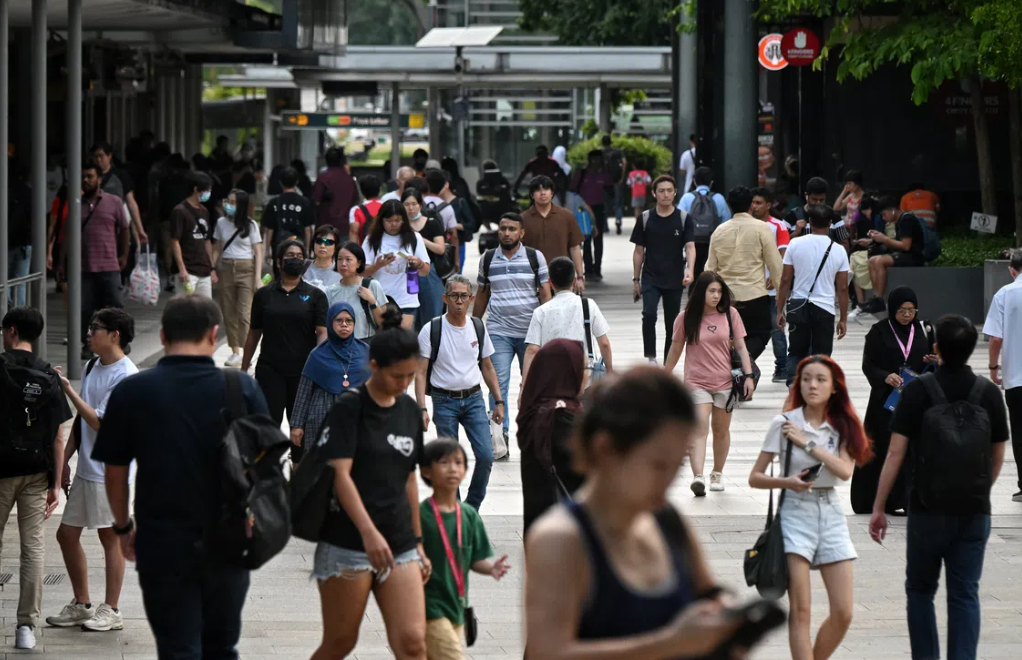
Singapore's Ministry of Finance announced Thursday that over 2.4 million eligible citizens will receive direct cash assistance ranging from S$400 to S$600 beginning September 9, as the government intensifies efforts to cushion households against persistent inflationary pressures. The initiative represents a significant fiscal commitment to help lower and middle-income earners manage elevated expenses across essential categories including utilities, transport, and food.
The Cost-of-Living Special Payment scheme was initially flagged during parliamentary proceedings in April and now forms part of a broader S$1 billion relief allocation designed to target vulnerable populations most severely impacted by price escalation. This announcement underscores Singapore's strategic pivot towards targeted welfare spending, contrasting with its historically more limited social safety net approach. The government's expanded intervention reflects growing recognition that wage growth and traditional economic mechanisms alone have proven insufficient to offset cost pressures affecting household purchasing power.
To qualify for the payment, applicants must be Singapore citizens residing in the country, have attained at least 21 years of age by 2026, and satisfy two critical economic thresholds. Firstly, their assessable income for the year of assessment 2025 cannot exceed S$100,000, effectively limiting benefits to those in lower-to-middle income brackets. Secondly, recipients must not own multiple properties, a criterion designed to exclude wealthier individuals likely holding investment real estate. The property ownership restriction particularly impacts Singapore's significant investor class while protecting the scheme's targeting integrity.
The payment structure incorporates a tiered mechanism calibrated to property valuations as recorded on national identity cards as of December 31, 2025. This approach acknowledges that residential property values serve as reasonable proxies for overall household wealth and economic standing in Singapore's property-centric society. Residents with homes valued above S$31,000 annually receive S$400, while those with properties valued at S$15,000 or below and assessable income not exceeding S$22,000 qualify for the maximum S$600 payment. This differentiation ensures greater support flows to those with fewer financial resources, addressing wealth inequality through progressive benefit design.
The government has implemented multiple payment channels to maximize accessibility and reduce administrative friction. Citizens can verify eligibility through the govbenefits portal using Singpass credentials, providing immediate transparency about entitlement status. Those linking their identity cards to PayNow by August 30 will receive funds earliest, while others can expect deposits via GIRO by September 17 or through GovCash by September 24. This staggered rollout reflects lessons learned from previous large-scale disbursement programs and aims to prevent system congestion while ensuring orderly fund distribution across the population.
Communication safeguards have been explicitly prioritized given Singapore's experience with increasingly sophisticated phishing and social engineering attacks targeting government-related communications. The Ministry has emphasized that authentic notifications will originate from "gov.sg" and will never request recipients to respond, click embedded links, or disclose sensitive information. Government representatives similarly will not solicit money transfers or banking credentials through unsolicited phone contact. These repeated public reminders reflect the authorities' commitment to protecting citizens from fraud while managing expectations about legitimate government channels during large payment operations.
The S$1 billion package sits atop Singapore's record S$155 billion Budget 2026, demonstrating the government's substantial fiscal commitment to supporting economic resilience during a period of global uncertainty. This layered approach, combining baseline budgetary measures with targeted cost-of-living relief, signals recognition that conventional monetary and fiscal tools require supplementation through direct cash assistance to maintain social stability. The unprecedented budget scale reflects pressures from Middle Eastern geopolitical tensions affecting energy prices, global supply chain disruptions, and structural cost increases across multiple sectors.
Prior relief measures announced in April included S$200 cash payments to platform workers, private-hire drivers, and taxi operators, recognizing that gig economy participants face disproportionate vulnerability to fuel price fluctuations and income volatility. These workers, lacking traditional employment protections and benefits, experienced direct earnings erosion following escalated tensions between the United States and Israel affecting crude oil prices and refining margins. Subsequent interventions in June brought forward Community Development Council voucher distributions by six months, providing S$500 in spending credits to approximately 1.38 million households for immediate consumption support.
Government support expanded further on July 29 when Second Minister for Finance Jeffrey Siow announced an additional S$900 million package addressing sustained energy price pressures. This supplementary allocation includes S$300 in additional CDC vouchers per household alongside utility bill rebates scheduled for October 2026 and January 2027, directly offsetting higher electricity and gas costs. The sequential announcement pattern demonstrates adaptive policymaking, with government calibrating intervention scale based on evolving economic conditions and energy price trajectories throughout 2026.
For Malaysian observers, Singapore's approach offers instructive contrasts with regional welfare frameworks. While Malaysia has implemented targeted assistance programs including fuel subsidies and cash transfers to lower-income households, Singapore's means-testing methodology and asset-based eligibility criteria reflect its distinct demographic composition and tax base structure. Singapore's capacity to rapidly deploy large sums across multiple simultaneous schemes reflects both strong fiscal surpluses and a well-developed digital infrastructure enabling swift verification and payment processing. The cost-of-living relief strategy also illustrates how city-states with limited natural resources increasingly emphasize direct household support as compensation for exposure to global price volatility.
The initiative's broader significance extends beyond immediate fiscal transfers to signal government acknowledgment that Singapore's population faces genuine economic strain despite the city-state's persistent portrayal as exceptionally prosperous. Rising property valuations, education costs, healthcare expenses, and utility bills have compressed real purchasing power for many Singaporeans, particularly younger workers and those outside high-skill sectors. By acknowledging cost-of-living pressures through substantial direct payments, the government validates widespread concerns about affordability while positioning itself as responsive to household financial stress. This messaging dimension proves as important as the transfers themselves in maintaining social confidence during economically turbulent periods.

