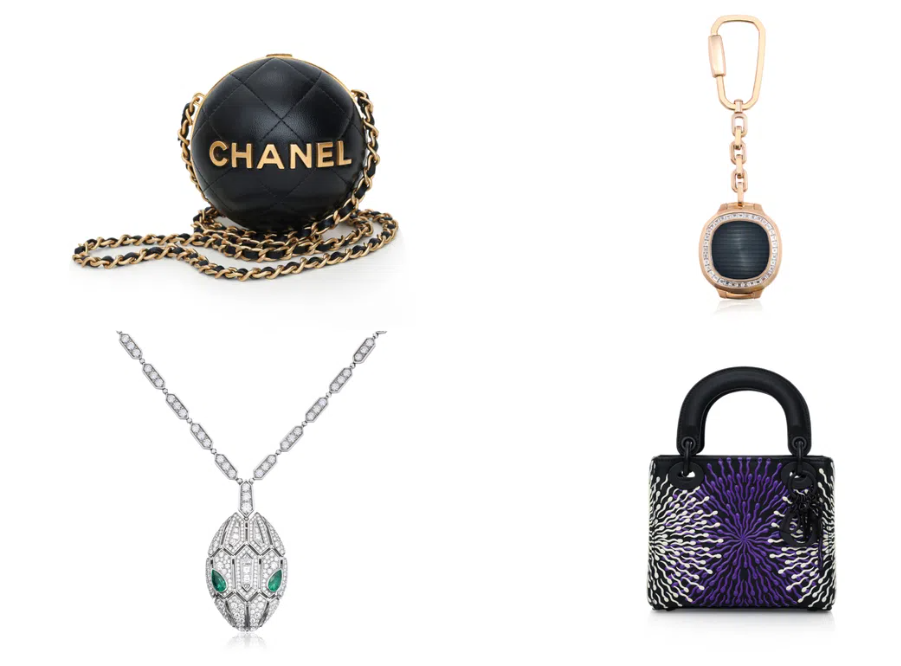
Singapore's authorities are preparing to sell off more than S$1.25 billion in seized luxury assets stemming from the country's largest money laundering investigation, with a series of online auctions beginning next month. The assets confiscated during the landmark probe—which led to the conviction and deportation of ten foreign nationals—include high-end handbags, fine jewellery, timepieces, real estate and other valuables accumulated through illicit financial networks. Professional services firm Deloitte announced on August 29 that the liquidation process would commence through a combination of auction and alternative sales channels, representing one of the most significant asset recovery operations in Singapore's recent history.
The first phase of auctions will launch on September 7, with two simultaneous sales targeting jewellery and designer handbags. These initial offerings will run as timed, online-only events through auction house Hotlotz, accepting bids from global participants until 4 pm on September 20. The digital catalogues will become available at 10 am on September 7, allowing international buyers to review items without geographic constraints. This approach reflects Singapore's strategy to maximise transparency and achieve fair market value through open competitive bidding rather than private or restricted sales processes.
The opening tranches will showcase the extraordinary breadth and opulence of the seized collection. More than 300 designer handbags and accessories bearing labels such as Chanel, Louis Vuitton and Christian Dior will be offered alongside over 250 pieces of fine jewellery from prestigious brands including Graff, Bulgari and Van Cleef & Arpels. Subsequent auctions, planned for November 2026 and continuing through May 2027, will feature an additional 15 distinct sales events encompassing more than 1,000 items in total. These later tranches will include Hermès handbags and luxury timepieces from elite watchmakers such as Patek Philippe, Richard Mille and Rolex—brands synonymous with extreme wealth and status.
Physical viewing of items will be facilitated through Le Freeport, Singapore's ultra-secure private vault facility located in Changi. Prospective bidders must register online and book appointment slots through Hotlotz's digital platform to inspect merchandise in person, a requirement that underscores both the security protocols surrounding the collection and the professional nature of the sale process. This arrangement ensures that only serious, verified buyers gain access to the items while maintaining strict control over the high-value inventory. Matthew Elton, chief executive of Hotlotz, emphasised the commitment to integrity and transparent pricing, stating that professional cataloguing and extensive promotion would ensure fair valuations.
The real estate component of the seizure represents an even more substantial challenge and opportunity for the authorities. More than 80 properties tied to the money laundering network will be progressively auctioned through three appointed real estate agencies: SRI, Edmund Tie & Company (SEA) and Knight Frank. Deloitte indicated that certain selected properties would also be marketed through an expression of interest mechanism managed by List International Realty, providing flexibility in the sales approach depending on individual asset characteristics and market conditions. The public has been cautioned to participate only through officially sanctioned channels to avoid fraudulent schemes capitalising on the high-profile case.
The scale of the original seizure underscores the sophistication of the money laundering operation uncovered in August 2023. During that initial islandwide raid, authorities arrested ten foreign nationals whose subsequent prosecution and conviction led to deportations from Singapore. The investigation ultimately resulted in the confiscation of 207 properties, 77 vehicles, more than S$1.45 billion in bank deposits, and more than S$76 million in cash spanning multiple currencies. Beyond these headline figures, investigators recovered thousands of bottles of premium liquor and wine, cryptocurrency valued at over S$38 million, 68 gold bars, 483 designer handbags, 169 branded watches and 580 pieces of jewellery—a collection reflecting the lavish lifestyle funded by criminal proceeds.
The liquidation process has already achieved substantial progress. As of the close of the 2025 financial year, Singapore police had transferred approximately S$1.4 billion to the Consolidated Fund, comprising cash from seized bank accounts and proceeds from earlier asset sales. This figure demonstrates that the authorities have moved swiftly to convert liquid assets into government revenue while simultaneously preserving options for maximising returns on high-value tangible goods through properly conducted auctions. The strategy balances the urgent need to recover public funds with the patience required to achieve optimal pricing for specialised luxury items whose values may fluctuate based on market demand and collector interest.
For regional readers, this case holds particular significance as a cautionary tale about financial crime infiltration in Asia's financial centres. The investigation revealed vulnerabilities in Singapore's regulatory systems that sophisticated criminals sought to exploit, while simultaneously demonstrating the effectiveness of coordinated law enforcement responses. The eventual recovery and public auction of seized assets sends a powerful deterrent message that illicit wealth cannot be permanently concealed, even when invested in ostensibly legitimate luxury goods and real estate. For Malaysia and other Southeast Asian nations, the Singapore investigation provides instructive lessons about cross-border money laundering networks and the institutional capacity required to disrupt and prosecute such schemes effectively.
The auction methodology adopted by Singapore authorities reflects evolving best practices in asset recovery, particularly the emphasis on digital transparency and global market access. By utilising online platforms and international marketing, Singapore ensures that seized assets achieve prices closer to genuine market value than closed or restricted sales might yield. This approach also minimises corruption risks associated with private transactions and generates confidence among buyers regarding the legitimacy of the sales process. The decision to employ professional auctioneers and real estate agencies rather than direct government liquidation demonstrates confidence in market mechanisms and established commercial practices.
The timeline for completing all property and asset sales extends through May 2027, reflecting the complexity of managing such a large and diverse portfolio. Deloitte's flexibility in employing multiple sale methods—auctions, limited tenders, expressions of interest and direct sales—suggests that individual assets will be matched to the most appropriate disposal mechanism based on characteristics, market conditions and potential buyer interest. Some properties may be better suited to negotiated sales with institutional or commercial investors, while others might attract residential buyers through conventional auction processes. This differentiated approach maximises the likelihood of completing sales within reasonable timeframes while optimising proceeds.
Beyond the immediate financial recovery, the Singapore case illustrates broader challenges facing Southeast Asian financial systems as criminal networks become increasingly sophisticated in integrating illicit proceeds into legitimate economies. The ease with which money launderers accumulated property and luxury goods in Singapore—despite eventual detection—highlights the need for enhanced due diligence in high-value transactions. Malaysian authorities and financial institutions monitoring significant cross-border flows can extract valuable insights from Singapore's investigation regarding red flags, documentation patterns and behavioural indicators that warrant closer regulatory scrutiny. The case underscores that no single jurisdiction, however well-regulated, can entirely prevent determined criminals from exploiting gaps in systems or vulnerabilities introduced through transnational financial flows.

