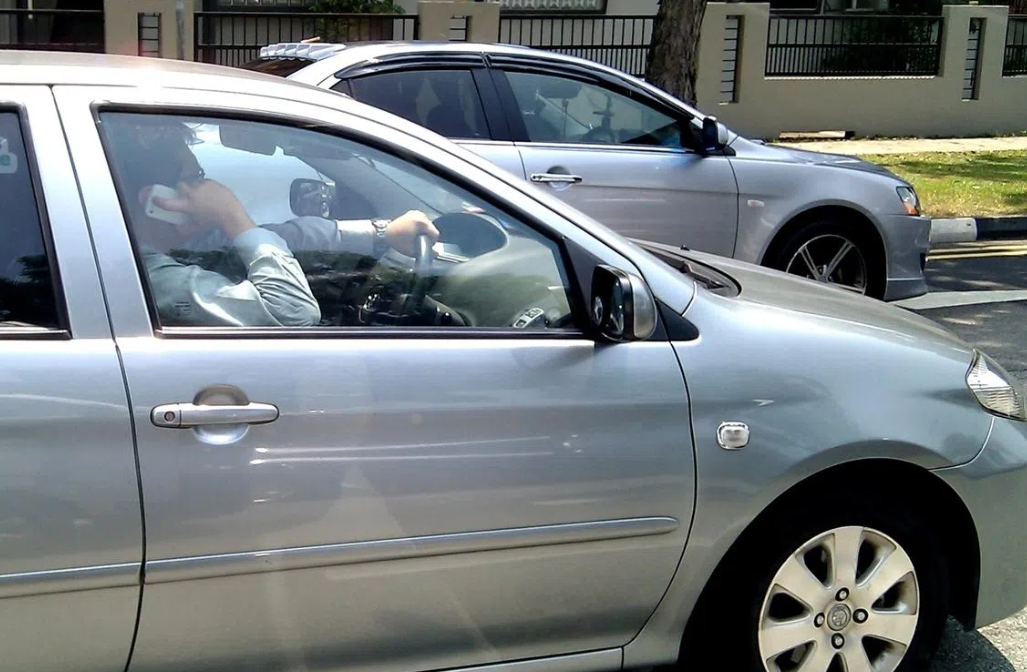
Singapore is preparing to fundamentally reshape its approach to road safety by making it an offence to simply hold a mobile phone while driving, regardless of whether the device is being actively used. The Ministry of Home Affairs tabled the Road Traffic (Miscellaneous Amendments) Bill on Tuesday, July 7, introducing a raft of stricter penalties and new categories of traffic offences designed to combat what officials describe as an alarming deterioration in road conditions and driver behaviour across the island state.
The legislative overhaul comes against a backdrop of troubling statistics that underscore the urgency of the intervention. Between 2021 and 2025, traffic fatality rates climbed by approximately 24 per cent, while traffic violations surged by roughly 38 per cent. Most starkly, the number of people killed on Singapore's roads hit a decade-high of 149 in 2025, a significant jump from 141 deaths recorded in 2016 and 142 in 2024. The injury toll has similarly worsened, with 9,955 people hurt in traffic incidents during 2025 compared to 9,342 the previous year. These figures have prompted MHA to declare that enforcement mechanisms and penalties must be substantially strengthened.
Under existing legislation, using a phone while driving—whether for calls or text messages—already constitutes an offence, typically resulting in 12 demerit points and a fine ranging from $400 to $500. More serious prosecutions can lead to imprisonment of up to six months and fines of $1,000 for first-time offenders, with repeat offenders facing up to a year's jail and $2,000 in fines. However, the critical weakness in the current framework lies in the burden of proof: authorities must demonstrate that the device was actually being used, requiring Traffic Police to directly observe the behaviour and manually verify it at the scene. This evidentiary requirement has significantly hampered enforcement efforts.
The new legislation removes this enforcement bottleneck by criminalising the act of holding a phone itself while a vehicle is in motion, irrespective of whether the device is being operated. The rationale is straightforward: authorities argue that merely possessing a phone in hand while driving creates an inherent distraction and reduces driver focus on the road. This shift will empower Traffic Police to utilise technological solutions such as cameras to identify offenders, and also enable the public to submit photographic and video evidence of violations. The approach mirrors enforcement strategies adopted in other jurisdictions seeking to combat distracted driving. Importantly, the provision does not restrict use of properly mounted devices, and drivers remain free to hold phones when their vehicles are stationary.
Beyond the phone-holding offence, the Bill introduces a new category termed "purposeful endangerment using a vehicle," addressing a gap in existing law that has troubled the judiciary. Under current provisions, drivers who deliberately endanger others cannot be charged with murder or culpable homicide unless intent to kill or knowledge that death would likely result can be proven beyond reasonable doubt. Instead, they are typically prosecuted for dangerous driving causing death, which carries a maximum penalty of eight years' imprisonment. The case of Jarrett Tee Lee Kiat, who displayed no remorse after killing an 18-year-old during an expressway racing incident, exemplified this limitation; he received five years and eight months despite the gravity of his conduct.
The new purposeful endangerment offence is intended to bridge this gap by providing enhanced sentencing for deliberate acts of vehicular endangerment. Those convicted of purposeful endangerment causing death or grievous hurt face up to 15 years' imprisonment, substantial fines, caning, and permanent disqualification from driving or disqualification for a minimum of 10 years if circumstances warrant such leniency. The reforms were motivated in part by judicial observations that existing maximum sentences may prove inadequate for the most egregious incidents, as noted by a High Court judge in the case of Yoong Kok Kai, whose jail term was increased from three and a half years to five years after he caused an accident while drunk driving that left an auxiliary police officer in a vegetative state.
The Bill also substantially elevates penalties for dangerous and careless driving that results in grievous bodily harm. For dangerous driving causing grievous hurt, maximum jail sentences will increase from five years to seven years for first-time offenders, and from 10 years to 13 years for repeat offenders. No changes are proposed to maximum sentences for careless driving causing grievous hurt, though additional penalties triggered by aggravating factors—such as drink driving—will be raised. Specifically, serious offenders committing the offence while intoxicated will face up to 18 months of additional imprisonment, an increase from the current one-year enhancement.
These reforms carry implications extending beyond Singapore's borders, particularly for Malaysian readers and regional observers. As Southeast Asia's most densely developed city-state with exceptionally high traffic density, Singapore often serves as a testing ground for transport and safety innovations subsequently adopted across the region. Malaysia's own road safety challenges—evidenced by persistent traffic fatalities despite periodic enforcement campaigns—suggest that policymakers in Kuala Lumpur and state capitals may scrutinise Singapore's legislative approach. The move to penalise phone possession rather than usage alone represents a philosophical shift toward stricter liability standards that could influence future amendments to Malaysia's Road Transport Act and related legislation.
Furthermore, the introduction of purposeful endangerment as a distinct offence addresses a universal challenge in road safety regulation. Malaysian courts have similarly grappled with prosecuting deliberate acts of vehicular violence under existing frameworks designed primarily for negligence-based offences. The Singapore model may provide a template for legislative reform across the region, though cultural, legal system, and enforcement capacity differences would necessitate local adaptation. The emphasis on technological enforcement—using cameras and public submissions—also reflects broader trends in smart city governance that several Malaysian cities, particularly Kuala Lumpur and Penang, are exploring.
From a practical enforcement perspective, the phone-holding provision faces implementation challenges that Malaysian authorities would need to consider if adopting similar measures. Distinguishing between momentary contact and prohibited holding, and managing the evidentiary threshold for camera-based enforcement, will require clear guidelines and consistent application to avoid accusations of arbitrary policing. Public education campaigns will be essential, as drivers accustomed to viewing phone use as the actual violation may resist the expanded scope of the offence. The caning provision for purposeful endangerment also reflects Singapore's distinctive sentencing regime, which differs from Malaysia's approach and would require adaptation in any regional harmonisation of road safety laws.
The legislative package ultimately reflects a recalibration of how Singapore's authorities view road safety: no longer primarily a matter of individual negligence requiring remediation through demerit points and fines, but increasingly a public safety crisis demanding proportionate criminal sanctions comparable to those applied in other serious harm contexts. The statistics driving this shift—24 per cent increases in fatality rates over a five-year span—represent a failure of existing deterrence mechanisms. By tightening the definition of prohibited conduct, increasing sentence ranges, and enabling technological enforcement, MHA is banking on a combination of enhanced perceived certainty and severity of punishment to reverse behavioural trends. Whether these measures prove effective will provide important data for neighbouring jurisdictions, including Malaysia, as they confront their own persistent road safety challenges.

