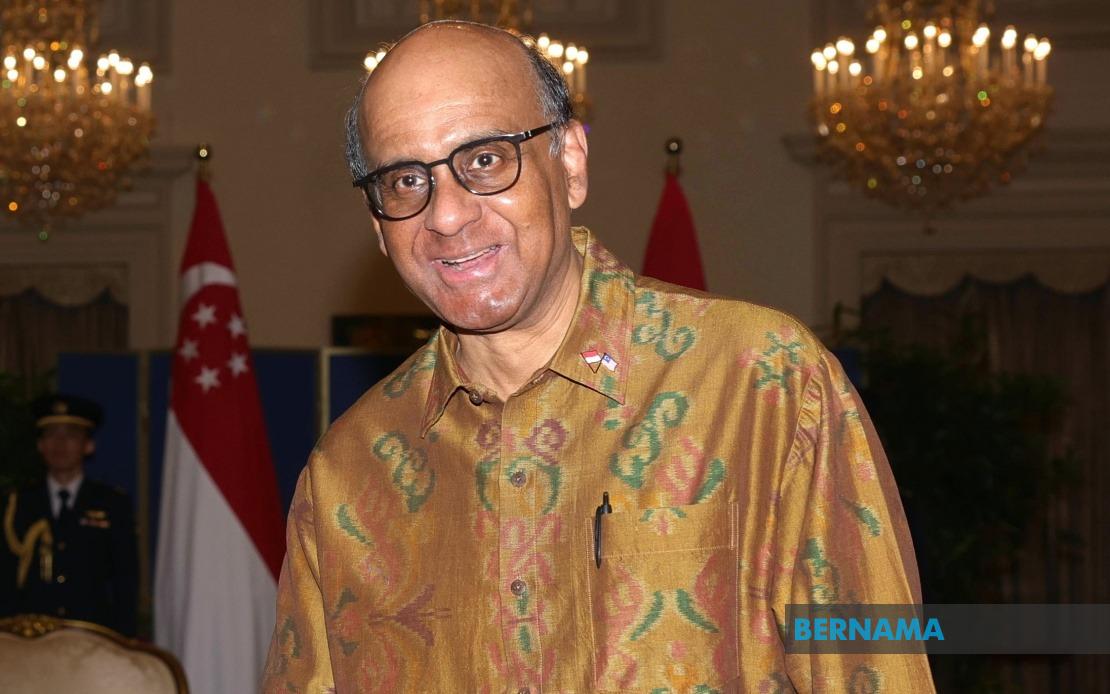
Singapore President Tharman Shanmugaratnam is set to undertake a three-day state visit to Malaysia beginning July 13, reinforcing the two nations' deepening bilateral relationship at the highest diplomatic level. The visit, which extends through July 15 and occurs at the personal invitation of His Majesty Sultan Ibrahim, King of Malaysia, represents a significant milestone in Tharman's presidency and underscores the enduring commitment both countries maintain toward strengthening regional ties.
This forthcoming engagement serves as a reciprocal gesture following His Majesty's own state visit to Singapore in May 2024, demonstrating the ceremonial rhythm of high-level diplomacy between the two neighbouring nations. The reciprocal nature of such visits signals continuity in Malaysia-Singapore relations and reinforces the principle of mutual respect that has underpinned their engagement. For Tharman, who assumed the presidency on September 14, 2023, this represents his inaugural state visit to Malaysia in his official capacity, marking an important milestone in his presidency as he consolidates Singapore's diplomatic relationships across the region.
According to the Malaysian Foreign Ministry, the high-level visit carries profound significance beyond ceremonial protocols, deliberately articulating commitment to what both governments characterise as strong and enduring partnership. The ministry's statement emphasises that deepening cooperation across key sectors of mutual interest forms the backbone of this relationship. This framing reflects how contemporary diplomacy functions at the bilateral level—moving beyond symbolic gestures to tangible collaboration in economic, security, and developmental frameworks that directly benefit both populations.
The presidential delegation will include Tharman's spouse, Jane Ittogi Shanmugaratnam, alongside several Singapore ministers and senior officials, a composition that signals the visit's comprehensive nature. The inclusion of multiple governmental representatives typically allows for parallel discussions across various ministerial portfolios, enabling productive engagement on diverse policy matters simultaneously. This structural approach to state visits facilitates more substantive dialogue than ceremonial occasions alone would permit.
During his stay in Malaysia, Tharman will participate in a formal State Welcoming Ceremony and subsequent audience with His Majesty at Istana Negara, the constitutional seat of Malaysia's monarchy. The visit's programme also includes a State Banquet, one of the traditional hallmarks of official state visits. Additionally, Prime Minister Datuk Seri Anwar Ibrahim has scheduled a courtesy call with the Singapore President, providing an opportunity for Malaysia's chief executive to engage directly with his counterpart on matters of bilateral and regional importance.
The economic dimension underlying this diplomatic engagement cannot be overstated. Singapore holds the position of Malaysia's second-largest trading partner globally and represents Malaysia's most significant trade partner among the ten ASEAN member states. This commercial prominence reflects decades of integration between the two economies, built upon geographic proximity, complementary economic structures, and substantial investment flows in both directions. The bilateral trading relationship extends across multiple sectors, from manufacturing and petroleum to services and telecommunications, creating deep interdependencies that make economic cooperation central to both nations' prosperity.
Bilateral commerce between Malaysia and Singapore reached RM402.35 billion, equivalent to approximately US$93.97 billion, during 2025—a figure that increased 1.5 per cent compared with the preceding year. While this growth rate appears modest, it reflects the mature nature of the bilateral relationship and the already substantial scale of existing trade. The trajectory becomes more striking when examining the most recent data: from January through May 2026, bilateral trade expanded by 14.5 per cent year-on-year, reaching RM189.90 billion (US$47.87 billion) versus RM165.93 billion (US$37.65 billion) during the corresponding 2025 period. This accelerating growth trajectory suggests strengthening commercial momentum, potentially reflecting expansion in high-value sectors and increased cross-border investment activities.
For Malaysian readers, this state visit carries practical implications across multiple dimensions. Enhanced high-level engagement typically facilitates smoother resolution of cross-border issues, from customs procedures affecting the millions who cross the Johor Bahru causeway annually to regulatory harmonisation in shared sectors. The presence of multiple ministers and officials creates platforms for addressing operational challenges in bilateral commerce, infrastructure development, and people-to-people exchange.
The timing of this visit also reflects broader Southeast Asian dynamics. As ASEAN navigates increasingly complex regional geopolitics—spanning great power competition between the United States and China, evolving maritime security challenges, and economic restructuring driven by technology and climate imperatives—Malaysia and Singapore's robust bilateral relationship serves as a stabilising anchor. Their cooperation at the bilateral level contributes to ASEAN cohesion and provides models for effective regional partnership.
For Singapore, strengthening relations with Malaysia assumes particular strategic importance given shared maritime boundaries, overlapping defence concerns, and Malaysia's role as ASEAN's largest economy by nominal GDP. For Malaysia, Singapore's financial sophistication, technological prowess, and global network provide valuable partnership opportunities that extend Malaysia's regional influence and integration into international systems. This mutuality of interest explains why both nations invest heavily in maintaining and elevating their relationship despite occasional bilateral tensions that emerge periodically.
The state visit framework—with its formal protocols, high-level participation, and structured engagement—demonstrates how established diplomatic partnerships between neighbouring nations remain valuable even in an increasingly digitalised world. Physical presence, personal relationships, and ceremonial reaffirmation of commitment continue to anchor bilateral relations in ways that virtual communication and remote diplomacy cannot fully replicate. As Malaysia and Singapore continue navigating an era of rapid technological change, economic disruption, and shifting regional power dynamics, their commitment to maintaining strong diplomatic ties through such high-level visits provides essential continuity and stability.

