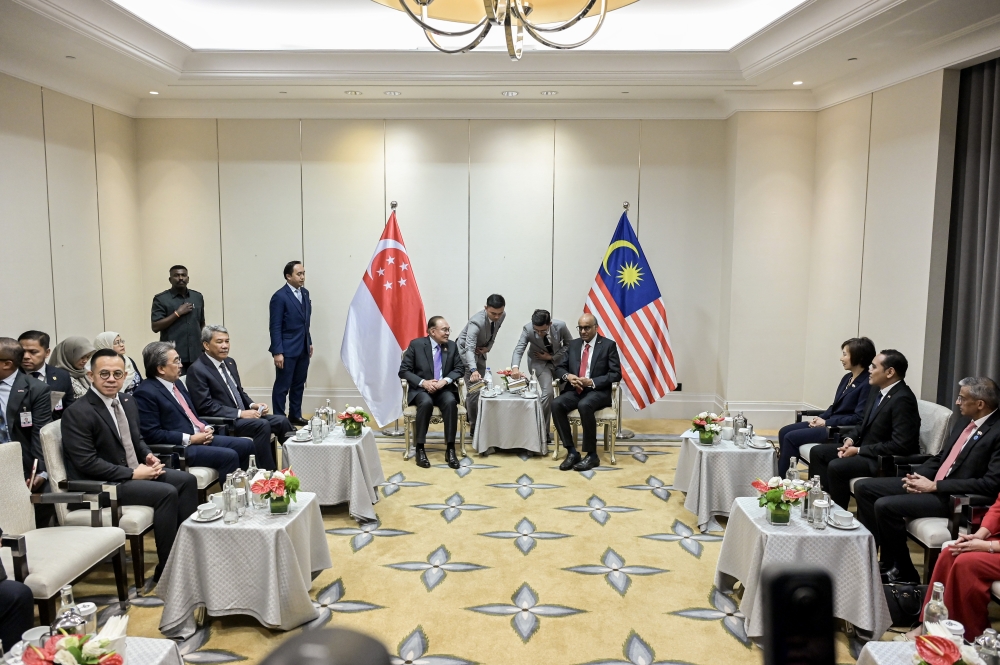
Singapore President Halimah Yacob and Malaysian Prime Minister Datuk Seri Anwar Ibrahim engaged in substantive discussions during a 40-minute meeting in Kuala Lumpur on Monday, marking a significant moment in the two nations' ongoing diplomatic engagement. The courtesy call between the two leaders took place against the backdrop of Halimah's official state visit to Malaysia, underscoring the importance both governments place on their bilateral relationship and regional cooperation efforts.
The meeting between Anwar and Halimah centred on deepening Malaysia-Singapore ties across multiple sectors and exploring avenues for enhanced collaboration on issues of mutual concern. Both leaders sought to reaffirm the solid foundation built over decades of partnership, whilst identifying contemporary challenges that require coordinated responses. The discussions reflected a pragmatic approach to regional diplomacy, with emphasis on practical cooperation rather than symbolic gestures alone.
A significant portion of the talks focused on economic and trade matters, reflecting the commercial interdependence between Malaysia and Singapore. The two nations share extensive business linkages, with Singapore being a major investor in Malaysia and serving as a key trading partner. Both leaders recognised the importance of facilitating cross-border investment and ensuring smooth commercial operations in the post-pandemic era, where supply chain resilience has become increasingly critical for the region's economic stability.
Defence and security cooperation featured prominently in the bilateral discussions, an area where Malaysia and Singapore have traditionally maintained robust engagement. The leaders explored mechanisms for enhanced intelligence-sharing, maritime security coordination, and counter-terrorism efforts. Such collaboration is essential given the two countries' shared maritime borders and the evolving security landscape in the Strait of Malacca, one of the world's most strategically significant waterways through which a substantial portion of global trade passes.
The state visit itself carries symbolic weight in Malaysia-Singapore relations. Presidential and prime ministerial visits represent high-level commitment to bilateral ties and provide platforms for substantive policy discussions beyond routine diplomatic channels. Halimah's presence in Kuala Lumpur signals Singapore's investment in maintaining strong relations with its largest neighbour, whilst Anwar's engagement demonstrates Malaysia's openness to deepening regional partnerships under his administration.
Regional stability and the broader geopolitical context of Southeast Asia formed another component of their discussions. Both leaders operate within a region experiencing significant strategic transitions, with great power competition becoming more pronounced and traditional regional arrangements facing new pressures. Malaysia and Singapore, despite occasional tensions over bilateral issues, generally share interests in maintaining ASEAN centrality, upholding international law, and ensuring stability in critical waterways and economic zones.
The meeting also provided an opportunity to address specific bilateral issues that periodically test the relationship between the two neighbouring nations. Malaysia and Singapore have historically grappled with disputes over maritime boundaries, water agreements, and immigration matters. While such issues remained challenging, the framework of the bilateral discussion allowed both leaders to acknowledge these sensitivities whilst emphasising the broader strategic imperative of cooperation.
Anwar's administration has signalled a priority on strengthening regional ties whilst pursuing ambitious domestic reforms. The engagement with Halimah reflects this broader strategic orientation, positioning Malaysia as a constructive regional partner committed to multilateral cooperation. For Singapore, maintaining a productive relationship with Malaysia remains fundamental to its economic prosperity and security, given its geographic position and economic interdependencies with the wider region.
The timing of the state visit carries additional significance given broader regional developments. Southeast Asia continues to navigate complex dynamics involving traditional allies and emerging powers, requiring careful diplomatic balancing from all parties. Both Malaysia and Singapore, as ASEAN members, have stakes in ensuring the bloc's cohesion and effectiveness in addressing transnational challenges ranging from pandemic preparedness to climate change and maritime security.
Both leaders' commitment to furthering Malaysia-Singapore cooperation extends to cultural and people-to-people exchanges, recognition that sustainable bilateral relationships rest on mutual understanding beyond governmental channels. Educational partnerships, tourism promotion, and cultural initiatives help build the soft power foundations that complement formal diplomatic and economic cooperation.
The 40-minute meeting, whilst brief by some standards, packed substantive business into its timeframe, reflecting the practised nature of Malaysia-Singapore high-level diplomacy and the established channels through which both governments communicate on critical issues. Such focused engagement demonstrates that productive bilateral relations need not always require extended formal ceremonies, though Halimah's state visit certainly afforded the necessary ceremonial elements befitting a presidential visit.

