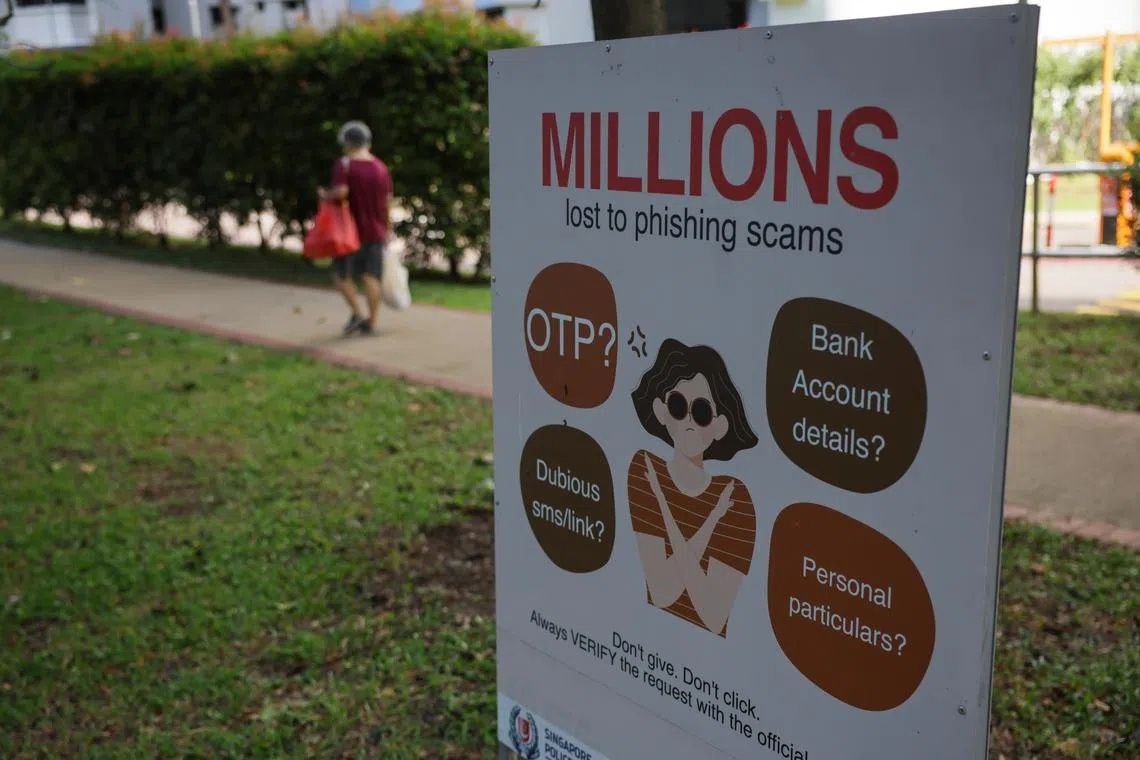
Singapore's police force has launched a significant enforcement operation against organized scam networks, with 230 individuals now under investigation for their suspected involvement in fraud schemes that have cost victims approximately S$9 million. The operation, conducted between June 18 and July 1, represents a coordinated effort by the Commercial Affairs Department and seven police land divisions to dismantle scam operations operating across the island state.
The investigation has cast a wide net across age groups and demographics, capturing suspects ranging from just 16 years old to 77, comprising 159 men and 71 women. The breadth of the operation underscores how scam networks have successfully recruited participants across generational lines, exploiting both young people and older adults for their involvement in fraudulent activities. The inclusion of a teenager among the suspects highlights growing concerns about youth participation in organized cybercrime, a trend that has become increasingly common across Southeast Asia.
The 230 suspects are believed to have orchestrated or facilitated more than 713 distinct scam incidents, demonstrating the scale of fraudulent activity within these networks. The scams encompass a diverse range of deceptive schemes designed to target vulnerable segments of the population. E-commerce scams, where fraudsters pose as legitimate online retailers, represent one major category, while friend impersonation scams exploit personal relationships by impersonating known contacts to request money. Job scams have similarly proliferated, capitalizing on employment seekers' aspirations by offering fake positions that extract application fees or personal information.
Government official impersonation scams represent a particularly insidious variant, where perpetrators falsely claim authority from government agencies to create artificial urgency and compel victims to transfer funds. Investment scams promise unrealistic returns to lure victims into handing over savings, while rental scams involve fraudsters listing properties they do not own or control. This portfolio of scam types demonstrates sophisticated understanding of social engineering tactics and victim psychology. The diversity of schemes suggests organized networks with specialized roles and considerable operational coordination.
Investigators have classified the 230 suspects into two primary categories based on their alleged roles within the criminal ecosystem. Those suspected of direct involvement in perpetrating scams face the most severe potential consequences. Additionally, approximately 71 individuals are suspected of functioning as money mules—facilitating the movement of illicit funds through bank accounts and digital payment systems. Money mules serve a critical function in scam operations by laundering proceeds and converting stolen money into forms that are difficult to trace, effectively enabling the entire criminal enterprise.
The legal framework governing these offences carries substantial penalties designed to deter participation. Individuals convicted of cheating face imprisonment for up to a decade along with financial penalties. Those found guilty of money laundering confront jail terms reaching 10 years combined with fines up to $500,000. The provision of unlicensed payment services, which money mules frequently facilitate, carries maximum penalties of three years imprisonment and fines reaching $125,000. These graduated sentencing structures attempt to reflect the relative culpability of different participants within scam networks.
Singapore's justice system additionally mandates corporal punishment for scam-related offences. Convicted scammers and syndicate members face mandatory caning sentences ranging from six to 24 strokes, a punishment mechanism that distinguishes Singapore's approach from many Western jurisdictions. Money mules convicted of facilitating scams through SIM card provision, Singpass credential transfers, or account manipulation face lesser but still significant caning penalties of up to 12 strokes. These supplementary punishments reflect official determination to impose additional consequences beyond imprisonment and fines.
Beyond immediate criminal sanctions, authorities have begun implementing preventive financial measures targeting money mule networks. Individuals convicted of mule-related offences face potential restrictions on banking services and mobile line subscriptions, effectively reducing their capacity to participate in future criminal activity. These administrative restrictions represent an innovative complement to traditional sentencing, acknowledging that preventing access to essential financial infrastructure can disrupt scam operations more effectively than incarceration alone.
The broader context for this operation emerges from Singapore's annual scam statistics released in February 2026, which reveal a cautiously encouraging trend in fraud reduction. The number of reported scam cases declined significantly from over 50,000 incidents in 2024 to 37,308 cases in 2025, representing a substantial decrease in fraudulent activity. Total monetary losses to victims similarly contracted from $1.1 billion in 2024 to $913.1 million in 2025. While these figures demonstrate progress, they underscore that scamming remains a persistent problem affecting hundreds of thousands of people and extracting enormous sums annually.
E-commerce scams emerged as the predominant scam category in 2025, with 6,703 cases reported resulting in $16.7 million in losses. This concentration reflects how growth in online shopping and digital transactions has created unprecedented opportunities for fraud. Scammers have adapted their targeting strategies to exploit the proliferation of e-commerce platforms where anonymous transactions and limited buyer protections facilitate deception. The sustained prevalence of e-commerce fraud despite enforcement efforts indicates that criminal networks continuously evolve their methodologies to circumvent detection.
Singapore's anti-scam infrastructure includes several public-facing resources designed to educate citizens and provide reporting mechanisms. The government operates a dedicated ScamShield helpline accessible through the number 1799 and maintains an informational website at www.scamshield.gov.sg offering fraud prevention guidance. Citizens with information regarding scam activities can contact the police hotline at 1800-255-0000 or submit reports through www.police.gov.sg/i-witness, with authorities guaranteeing confidentiality for informants. These reporting mechanisms acknowledge that community engagement and intelligence-gathering represent essential components of effective anti-scam enforcement.
For Malaysian readers and other Southeast Asian observers, Singapore's operation offers instructive lessons regarding scam network structures and enforcement strategies. The participation of teenage suspects and money mules across age groups reflects scam recruitment patterns increasingly visible throughout the region, where financial desperation and social media exploitation facilitate recruitment into criminal networks. Malaysia faces similar challenges with organized scam operations, suggesting that Singapore's coordinated, multi-departmental enforcement approach and graduated penalty structures warrant consideration as models for regional anti-scam initiatives.

