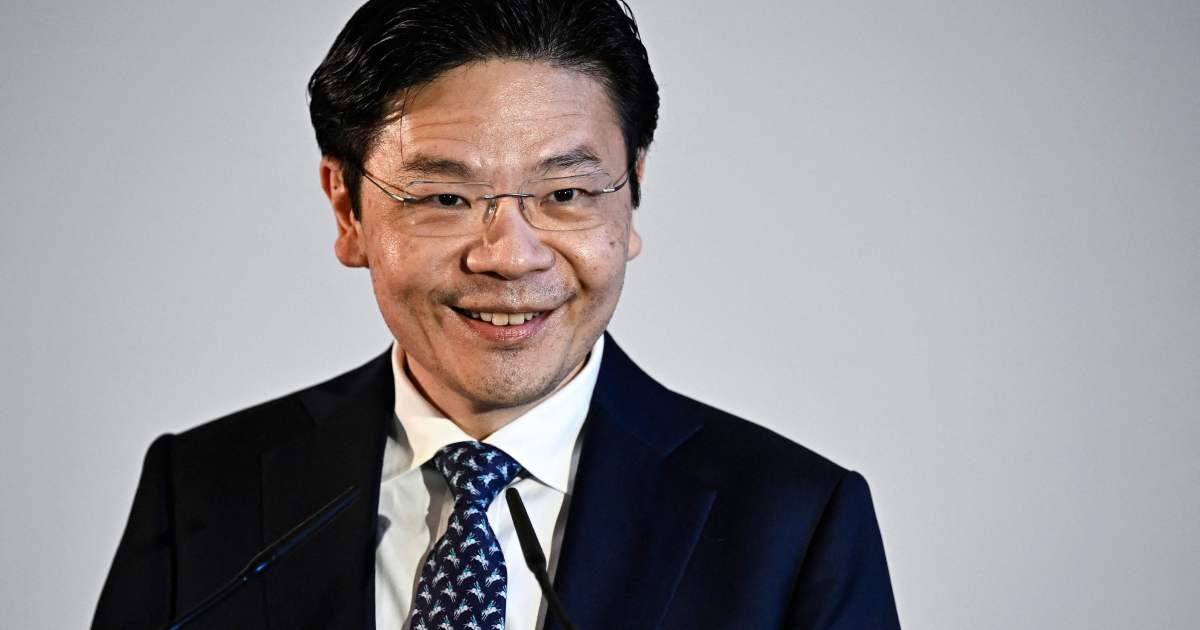
Singapore Prime Minister Lawrence Wong has unveiled a substantial reorganisation of his cabinet, introducing new political appointments and redistributing ministerial portfolios in what represents a critical moment for the city-state's governance structure. The reshuffle comes as the government navigates a period of transition prompted by the recent exits of several high-ranking officials, marking Wong's most significant reshaping of the administration since assuming the role of premier.
The cabinet changes reflect Wong's strategic effort to consolidate leadership while injecting fresh talent into key government departments. Such reshuffles are standard practice in Singapore's political system, typically signalling the government's intention to strengthen institutional capacity in priority areas and accelerate policy implementation across critical sectors. The timing of these announcements demonstrates the administration's commitment to maintaining administrative continuity during a period of personnel flux at senior levels.
Recent departures of political officeholders had created vacancies in several ministerial positions, necessitating a recalibration of responsibilities and reporting lines within Wong's administration. The reshuffle addresses these gaps by promoting competent officials and creating clearer pathways for talented administrators to assume broader responsibilities. This approach ensures that the government can sustain its operational effectiveness while managing the institutional knowledge transfer between outgoing and incoming ministers.
Within Singapore's highly structured political environment, cabinet appointments carry significant weight both domestically and internationally. The composition of Wong's renewed cabinet sends important signals about the government's policy priorities and its vision for addressing contemporary challenges facing the nation. Regional observers and international partners typically analyse such changes to understand Singapore's strategic direction, particularly regarding economic policy, security matters, and regional engagement.
The reshuffle likely reshuffles responsibilities across ministries dealing with finance, transport, health, defence, and other critical portfolios essential to Singapore's functioning as a global financial hub and regional leader. Each appointment represents Wong's assessment of which officials are best positioned to tackle emerging challenges, from managing economic growth during uncertain global conditions to maintaining Singapore's competitive advantage in technology and financial services.
From a Malaysian and broader Southeast Asian perspective, leadership changes in Singapore warrant attention given the city-state's influence on regional affairs. Singapore's government decisions on trade, security cooperation, and regional initiatives directly impact neighbouring economies, including Malaysia. A strengthened or reoriented cabinet can signal shifts in Singapore's approach to bilateral relations, ASEAN engagement, and economic partnerships across the region.
The political succession process in Singapore, while less theatrical than electoral politics elsewhere, reflects carefully calculated decisions about generational transition and institutional renewal. Wong's reshuffle demonstrates how the government manages the delicate balance between preserving institutional continuity and introducing new perspectives and energy into leadership ranks. This approach has historically ensured Singapore's administrative effectiveness through multiple leadership transitions.
Ministerial portfolios in Singapore typically oversee highly complex and interconnected policy domains. Reallocating these responsibilities requires not only identifying capable individuals but also ensuring that ministers possess sufficient expertise and institutional networks to manage their departments effectively. Wong's selections presumably reflect confidence in these individuals' capabilities to navigate their respective sectors during a period when many of Singapore's industries face disruption and transformation.
The cabinet reshuffle also serves a broader purpose in Singapore's political ecosystem by demonstrating that the government remains dynamic and responsive to contemporary challenges. By refreshing its leadership structure, the administration can project an image of vitality and forward-thinking governance, important considerations in maintaining public confidence and international credibility. For Singapore's competitive standing in the region, maintaining a high-calibre administration remains essential to preserving its status as a premier financial and trading centre.
For observers across Southeast Asia, including Malaysia, Singapore's administrative changes offer insights into how a highly centralised government manages succession planning and institutional renewal. Singapore's approach contrasts sharply with more democratic systems elsewhere in the region, where electoral cycles and party politics shape leadership transitions. Understanding these differences helps Malaysian policymakers and observers appreciate the distinct governance models operating across ASEAN and their respective strengths and constraints.
The reshuffle's ultimate impact will depend on how effectively the newly appointed officials execute their portfolios and drive policy implementation. Wong's selections represent an implicit statement of confidence in these officials' abilities to serve Singapore's national interests and maintain the government's reputation for competence and integrity. Whether the cabinet reshuffle successfully navigates the government through its current transition period will likely influence public perception of Wong's leadership and the government's capacity to address Singapore's evolving challenges.
As Singapore continues positioning itself within an increasingly multipolar Asian landscape, the strength and coherence of its cabinet becomes increasingly important for coordinating complex policy responses across economic, security, and diplomatic domains. The reshuffle thus represents not merely an internal administrative matter but a significant moment in Singapore's efforts to maintain its influence and prosperity amid rapid regional change.

