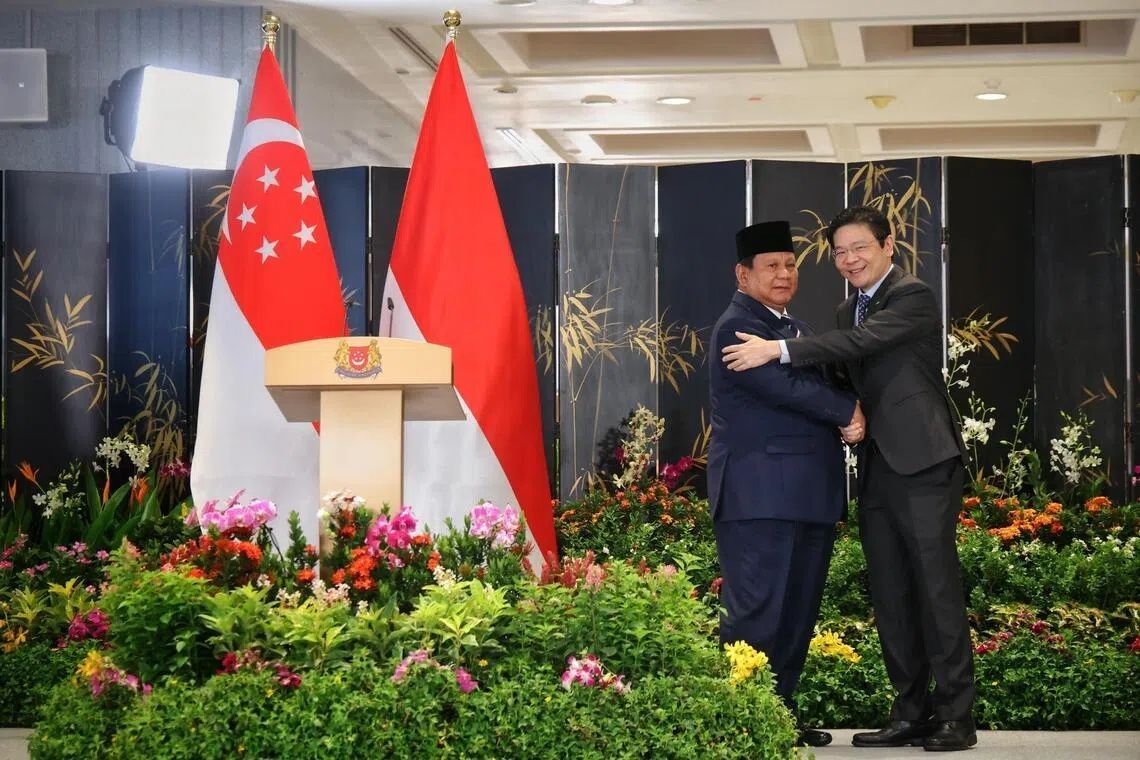
Prime Minister Lawrence Wong will travel to Jakarta on Monday, July 6 for a high-level bilateral meeting with Indonesian President Prabowo Subianto, reinforcing the strategically important partnership between Southeast Asia's two island economies. The Singapore-Indonesia Leaders' Retreat, hosted by President Prabowo, represents the second iteration of this flagship annual engagement format and reflects the deepening institutional commitment both governments have made to their relationship.
This particular retreat holds added significance as it marks the first such gathering under PM Wong's leadership and President Prabowo's presidency. The previous retreat took place in Singapore in June 2025, demonstrating the alternating venue arrangement that underscores the balanced, reciprocal nature of the bilateral relationship. According to the Prime Minister's Office, the gathering will serve as an occasion for both leaders to reaffirm the "deep and enduring bilateral ties" and recommit to expanding cooperation across multiple domains.
The agenda extends well beyond ceremonial pleasantries. Both leaders will conduct a comprehensive review of bilateral projects initiated since their last meeting, providing an opportunity to assess progress and identify implementation challenges. This project-oriented approach reflects a pragmatic focus on delivering tangible outcomes rather than simply exchanging diplomatic niceties. The retreat also functions as a forum for strategic dialogue, with both leaders expected to share assessments of significant regional and global developments that may affect Singapore and Indonesia's mutual interests.
Singapore and Indonesia have been actively broadening their cooperation framework into emerging economic sectors that promise substantial long-term gains. Beyond traditional pillars such as trade, investment and defence cooperation, the two countries are now exploring collaboration in the green economy transition, cross-border electricity trading mechanisms, carbon capture and storage technologies, artificial intelligence development and digital infrastructure connectivity. This sectoral expansion reflects both nations' recognition that 21st-century economic prosperity depends on strategic positioning in transformative industries.
The scale and seniority of PM Wong's delegation underscores the importance Singapore places on the Jakarta visit. Accompanying the Prime Minister will be Deputy Prime Minister and Minister for Trade and Industry Gan Kim Yong, Coordinating Minister for Public Services and Minister for Defence Chan Chun Sing, Foreign Minister Vivian Balakrishnan, Minister for Social and Family Development Masagos Zulkifli and Minister for Manpower and Minister-in-charge of Energy and Science and Technology Tan See Leng. This ministerial lineup ensures that substantive discussions can occur across multiple policy portfolios simultaneously, maximising the diplomatic utility of the retreat.
Investment flows underscore the economic interconnectedness binding both nations. In 2025, Singapore maintained its position as Indonesia's largest source of foreign direct investment, channelling US$17.4 billion into the Indonesian economy. This substantial capital inflow reflects Singapore's confidence in Indonesia's investment climate whilst simultaneously benefiting Singapore-based enterprises seeking regional expansion platforms. The investment relationship extends across manufacturing, services, financial sectors and increasingly into green technology and digital economy segments.
The Leaders' Retreat represents the apex of bilateral diplomatic architecture between the two countries, providing an exclusive setting where heads of government and senior cabinet ministers conduct wide-ranging strategic reviews. Unlike lower-level bilateral meetings or working groups that focus on specific sectoral issues, the retreat offers a comprehensive platform for examining the entire relationship and charting long-term cooperative directions. This elevated institutional mechanism reflects the maturity and stability of Singapore-Indonesia relations.
Historical context illuminates the evolving nature of these bilateral summits. The previous retreat held in Indonesia occurred in April 2024 at the Bogor Presidential Palace, bringing together then Prime Minister Lee Hsien Loong and then President Joko Widodo. Notably, both PM Wong and President Prabowo were present at that gathering—Wong as deputy prime minister and finance minister, and Prabowo as president-elect—suggesting continuity in leadership relationships and institutional knowledge regarding bilateral cooperation priorities.
During PM Wong's absence from Singapore, Coordinating Minister for National Security and Minister for Home Affairs K. Shanmugam will assume the role of acting prime minister, ensuring continuous governance and decision-making capacity during the retreat. This succession arrangement reflects standard governmental protocols whilst enabling the Prime Minister to conduct extended international engagement without compromising domestic administrative functions.
For Malaysia and the broader Southeast Asian region, the Singapore-Indonesia bilateral retreat carries significance beyond the dyadic relationship. Both nations are influential pillars of the Association of Southeast Asian Nations, and their coordinated approach to regional challenges—whether concerning maritime security, economic integration, climate transition or digital governance—shapes wider regional trajectories. The outcome of these high-level dialogues often influences positions adopted in multilateral forums such as ASEAN meetings and East Asia Summit discussions.
The timing and substance of this retreat also reflect both governments' awareness that the geopolitical and economic landscape is shifting rapidly. Global supply chain reorganisation, the accelerating energy transition, technological competition between major powers and demographic shifts across the region are compelling Singapore and Indonesia to strengthen their partnership as a stabilising force within Southeast Asia. By deepening bilateral cooperation in emerging sectors whilst maintaining traditional security and economic relationships, both nations are positioning themselves to navigate an increasingly complex international environment effectively.

