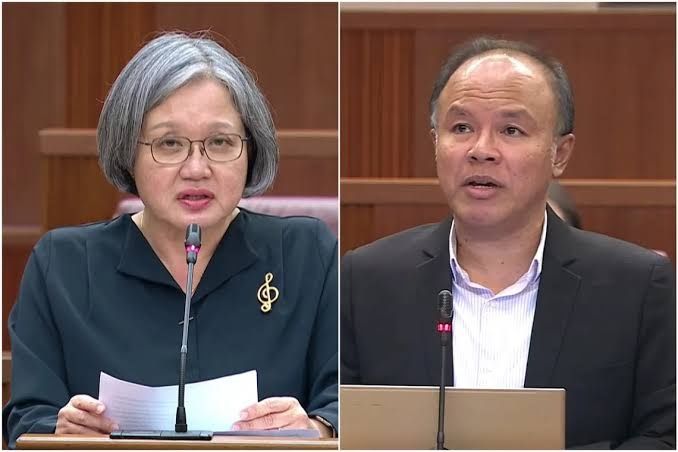
A protracted political controversy in Singapore has effectively concluded following a ministerial statement that precludes Parliament from imposing penalties on Workers' Party leaders Sylvia Lim and Faisal Manap. Leader of the House Indranee Rajah announced on July 7 that although the two opposition figures had been found to have lied to a parliamentary committee, the statutory window for the legislature to enforce sanctions had already closed. This outcome marks the final chapter of a saga that began in 2021 and has occupied Singapore's political landscape for several years, yet concludes through procedural rather than substantive resolution.
The controversy originated with former Workers' Party MP Raeesah Khan, who fabricated an anecdote about police conduct during a parliamentary speech. Subsequent investigations by Parliament's Committee of Privileges uncovered that three party figures—Pritam Singh, Sylvia Lim, and Faisal Manap—had provided false testimony to the committee while it examined Khan's misconduct. The inquiry revealed that during an August 2021 meeting, Singh had reportedly instructed Khan to conceal her falsehood, and when questioned by the committee, both Lim and Manap denied that such a conversation had taken place, thereby compounding the initial breach of parliamentary integrity.
The committee identified significant differences in culpability among the three accused. Pritam Singh's alleged instruction to Khan to "take her lie to the grave" was deemed the gravest violation, prompting Parliament to refer his case to the public prosecutor for independent criminal investigation. By contrast, Lim and Manap were characterised as playing secondary roles, having adopted a more circumspect approach. Parliament consequently chose to defer action against the junior figures pending the outcome of Singh's criminal proceedings, a decision framed as fair treatment rather than reluctance to enforce standards. This graduated response reflected institutional pragmatism—distinguishing between initiators and participants while maintaining overall accountability.
Pritam Singh's legal journey extended across four years, culminating in his conviction by the District Court in February 2025 for lying to Parliament. Significantly, he appealed this conviction, and the High Court upheld the guilty verdict in December 2025. Indranee Rajah emphasised that Singh's conviction at both court levels substantiated the Committee of Privileges' earlier findings, thereby confirming that Lim and Manap had indeed breached parliamentary standards. The courts' validation of the committee's investigation provided legal reinforcement for Parliament's initial determinations, even though this vindication arrived too late to permit enforcement action.
The fundamental impediment to further sanctions resides in the Parliament (Privileges, Immunities and Powers) Act, which establishes temporal constraints on the legislature's enforcement authority. Section 22 of this statute permits Parliament to punish offences committed during either the immediately preceding parliamentary session or the second-to-last session of the prior Parliament. Because the original lying occurred during the first session of the 14th Parliament, which commenced in 2021, the 15th Parliament—which began in September 2025 following the general election—no longer possesses legal jurisdiction to impose discipline under these provisions. This strict temporal architecture, while ensuring finality and preventing indefinite prosecution, operates with mechanical indifference to the substantive merits of particular cases.
Indranee acknowledged the constraints while noting that Parliament ordinarily resolves privileges breaches swiftly within the same session or soon thereafter. She observed that circumstances occasionally prevent timely proceedings, yet the PPIPA incorporates safeguards against protracted exposure to potential penalties. The rationale underlying such time bars reflects conventional parliamentary practice—maintaining certainty whilst preventing members from existing in perpetual jeopardy. Had the 14th Parliament remained in session or Parliament taken action sooner, a different outcome would have materialised. The dissolution of the 14th Parliament and convening of the 15th effectively reset the temporal calculation, rendering Lim and Manap unreachable within the statutory scheme.
While the Parliament (Privileges, Immunities and Powers) Act prevents formal disciplinary action, Indranee noted that alternative remedies remain theoretically available. Parliament could pass a motion expressly recording disapproval of Lim and Manap's conduct. However, she observed that Parliament had already articulated its disapproval in January 2025 when it passed a motion declaring Pritam Singh unsuitable to serve as Leader of the Opposition—a judgment that implicitly encompassed broader organisational failures within the Workers' Party leadership. This prior motion thus rendered an additional gesture largely redundant from a political standpoint, even if technically permissible.
The Workers' Party itself had independently addressed the controversy during internal proceedings one week prior to Indranee's statement. At the party's annual meeting and elections on June 28, members voted to retain Pritam Singh in his leadership position despite his criminal conviction. This internal validation signalled that party cadres either disagreed with the courts' determination or believed Singh deserved retention notwithstanding the conviction. The confluence of the Workers' Party's internal resolution and Parliament's procedural closure effectively foreclosed any meaningful disciplinary consequences, leaving both the accused opposition leaders and their party essentially vindicated by attrition and technical expiration rather than exoneration.
For Malaysian and broader Southeast Asian observers, this denouement illustrates the tension between substantive parliamentary accountability and procedural regularity. The case demonstrates how strictly applied temporal constraints can produce outcomes where liability is established yet unenforced, potentially undermining public confidence in institutional governance. Singapore's approach prioritises legal certainty and finality over indefinite exposure to potential sanctions, reflecting a particular constitutional philosophy. In Malaysia's context, where parliamentary privileges and contempt standards similarly structure legislative authority, the Workers' Party saga offers instructive lessons about timeline management and the importance of expeditious enforcement.
Sylvia Lim subsequently rose in Parliament to clarify that she was not objecting to the ministerial statement, adding that she had already provided her substantive response during the January proceedings concerning Singh's suitability. She underscored that adverse references to her in Singh's appeal judgment derived from prosecution evidence, and she had not been afforded opportunity to present her account in court as a defence witness. This final intervention allowed her to position herself as a participant rather than a principal architect of the deception, reinforcing the committee's characterisation of her secondary role whilst implicitly contesting the inference of culpability.
The closure of this episode through procedural expiration rather than disciplinary enforcement leaves unresolved the deeper question of accountability standards within opposition politics. While Parliament has technically lost jurisdictional authority over Lim and Manap, the High Court's confirmation of lying allegations has established their misconduct as a matter of public record. Opposition figures in Westminster-influenced systems inhabit a peculiar position where credibility and trustworthiness constitute their primary political currency. The Workers' Party's retention of Singh and the legislative inability to sanction his colleagues may ultimately inflict reputational costs exceeding those any formal parliamentary punishment could impose. The passage of time and procedural closure thus concludes the legal saga whilst leaving political consequences to operate through less formal but potentially more durable mechanisms of public judgment and electoral accountability.

