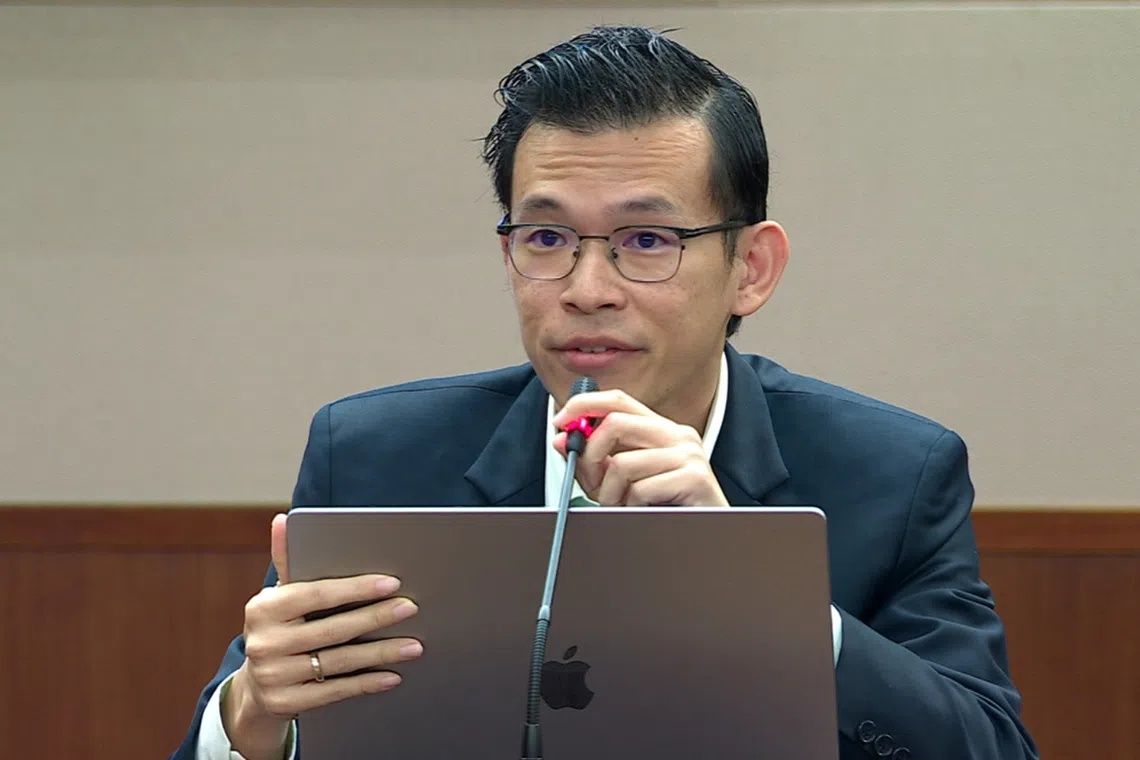
Singapore's Parliament has endorsed an amended motion on the country's economic future following an extensive parliamentary debate that underscored divergent views on how the island nation should reshape its development strategy. The affirmed motion, originally tabled by Workers' Party MP Kenneth Tiong, sparked nearly nine hours of discussion involving 23 speakers before Trade and Industry Minister Tan See Leng's closing remarks. The Workers' Party, which opposed the final version after the ruling People's Action Party introduced four amendments, abstained with all 12 of its MPs voting against the motion as modified.
At the heart of the debate lies a fundamental question facing Singapore's policymakers: whether the long-standing economic model centred on attracting large foreign multinational corporations remains fit for purpose in generating quality employment and fostering local enterprise growth. Minister Tan defended the government's approach, asserting that Singapore's strategy has never pursued growth as an end in itself, but rather as a vehicle for improving living standards across the population through employment opportunities, wage growth, and genuine social advancement across generations. He framed the government's immediate challenge as preserving this model's relevance despite a dramatically altered global environment characterised by greater economic uncertainty and geopolitical volatility.
The Workers' Party's critique carries particular weight in Malaysian and Southeast Asian contexts, where similar tensions between foreign investment-led development and domestic entrepreneurship have become increasingly contentious. Tiong articulated a vision in which equitable wealth distribution is embedded within growth mechanisms rather than addressed retroactively through government vouchers and rebates. This distinction represents more than semantic reframing; it signals fundamental disagreement about whether Singapore's present institutional arrangements adequately ensure that economic gains reach ordinary citizens without requiring subsequent corrective mechanisms. The opposition party argued that the existing model, predicated on hosting multinational companies, has failed to generate sufficient quality employment for younger workers while simultaneously constraining the development of dynamic homegrown enterprises.
Minister Tan acknowledged the legitimate concerns voiced across parliamentary lines while emphasising shared values regarding economic outcomes. Despite differing diagnoses and proposed solutions, he noted substantial consensus on the importance of fulfilling careers, competitive incomes for Singaporeans, and the development of globally competitive domestic enterprises. This rhetorical move attempts to reframe disagreement as a matter of implementation rather than fundamental principle—a common parliamentary technique yet one that glosses over substantive divisions about the pace and nature of economic restructuring required. For Southeast Asian observers, this interplay between government and opposition reveals how even high-performing economies grapple with distributional concerns and the sustainability of growth models established during earlier development stages.
Drawing on his personal entrepreneurial background, Tan deployed a lived narrative to illustrate his economic philosophy. He recounted founding Healthway Medical Group alongside fellow physicians at age 27 without formal business training, describing how the company discovered a niche serving corporate healthcare needs in HDB and industrial premises before subsequently attracting multinational corporations as clients. Rather than viewing MNC presence as competitive threat, Tan characterised these global companies as enablers of local firm growth, providing access to demanding quality standards and customer networks that enhanced his enterprise's credibility and expansion prospects. This account reflects Singapore's historical development strategy wherein foreign investment served as an incubator for local business sophistication.
However, Tiong's implicit challenge to this narrative—that the model now stifles rather than nurtures local enterprise—cannot be dismissed as merely philosophical disagreement. The assertion that the multinational-centric approach has squeezed homegrown companies warrants serious policy consideration, particularly as several Southeast Asian nations pursue similar diversification strategies away from excessive foreign investment dependence. Singapore's prosperity, while undeniable, coexists with structural characteristics that may limit opportunities for local entrepreneurial initiative, a tension that becomes more politically salient as younger cohorts increasingly question whether inherited development models serve their interests.
Minister Tan's articulation of government's proper economic role emphasises the importance of establishing foundational conditions—sound institutions, open markets, transparent regulation, and friction reduction—rather than direct business creation. This philosophy positions government as architect of enabling infrastructure rather than active market participant, reflecting broader ideological commitments to market mechanisms and private sector dynamism. Government support should function as springboard for enterprise, Tan insisted, explicitly rejecting models wherein state direction supplants entrepreneurial decision-making. He cautioned against the notion that larger government expenditures automatically produce competitive champions, a proposition resonating with debates throughout the region regarding the effectiveness of industrial policy and state-directed development.
The government outlined five critical gaps that entrepreneurs and firms encounter across their development trajectory: from aspiration to first venture, research translation to commercial innovation, product refinement to customer acquisition, early traction expansion to sustainable scaling, and domestic consolidation to international expansion. To address these sequential challenges, Singapore has deployed an array of programmes spanning early-stage support through advanced scaling assistance. Startup SG Founder provides capital, mentorship, and networking for incubation purposes, while the Partnerships for Capability Transformation scheme facilitates linkages between local firms and multinationals, enabling SME participation in established supply chains. At maturation stages, the Startup SG Equity scheme catalyses private investment in deep-technology enterprises.
Tangible outcomes from these initiatives suggest measurable economic contribution. The Scale-Up programme, targeting accelerated local companies toward global championship status, saw 80 participating firms generate SGD 2.5 billion in additional revenue within three-year periods, with approximately SGD 1 billion derived from overseas expansion activities. These figures demonstrate that deliberate policy intervention, appropriately calibrated, can enhance entrepreneurial outcomes without violating principles of market-driven development. Yet such metrics simultaneously raise questions about programme selectivity and whether support structures adequately serve enterprises beyond high-growth technology sectors.
The parliamentary affirmation of the amended motion represents procedural victory for the government while highlighting persistent opposition perspectives on economic model adequacy. The Workers' Party's rejection and dissenting vote, despite losing the final parliamentary tally, preserves political space for continued critique and alternative policy advocacy. This dynamic proves particularly relevant for Malaysia and other regional economies similarly questioning whether historical development approaches remain optimal for contemporary circumstances. As Southeast Asian nations navigate transition toward higher-value activities, technological disruption, and changing global investment patterns, Singapore's parliamentary debate reflects broader regional anxieties about balancing foreign capital attraction against domestic enterprise nurturing.
Minister Tan's closing philosophical position—that government establishes runway conditions while entrepreneurs must actually run and take flight—encapsulates the Singapore government's preferred balance between state and market. The burden placed on private actors to identify opportunities, build teams, secure customers, and persevere through inevitable setbacks reflects assumptions about entrepreneurial capacity and motivation that warrant continuous validation against actual economic outcomes. For Malaysian policymakers observing Singapore's ongoing economic debate, the exchange offers instructive lessons regarding how even successful economies must periodically reassess whether institutional arrangements and policy frameworks remain well-suited to contemporary challenges and aspirations.
The motion's passage, despite opposition dissent, provides political cover for continuing current policy directions while acknowledging legitimate concerns about model sustainability. However, the extended parliamentary discussion and Workers' Party's principled rejection suggest that questions about economic restructuring will likely intensify rather than resolve, particularly if employment quality concerns or local enterprise growth metrics disappoint expectations. The coming years will reveal whether Singapore's refined growth model, operating through existing institutional frameworks with enhanced support programmes, adequately addresses the distributional and opportunity concerns that motivated the parliamentary motion in the first instance.

