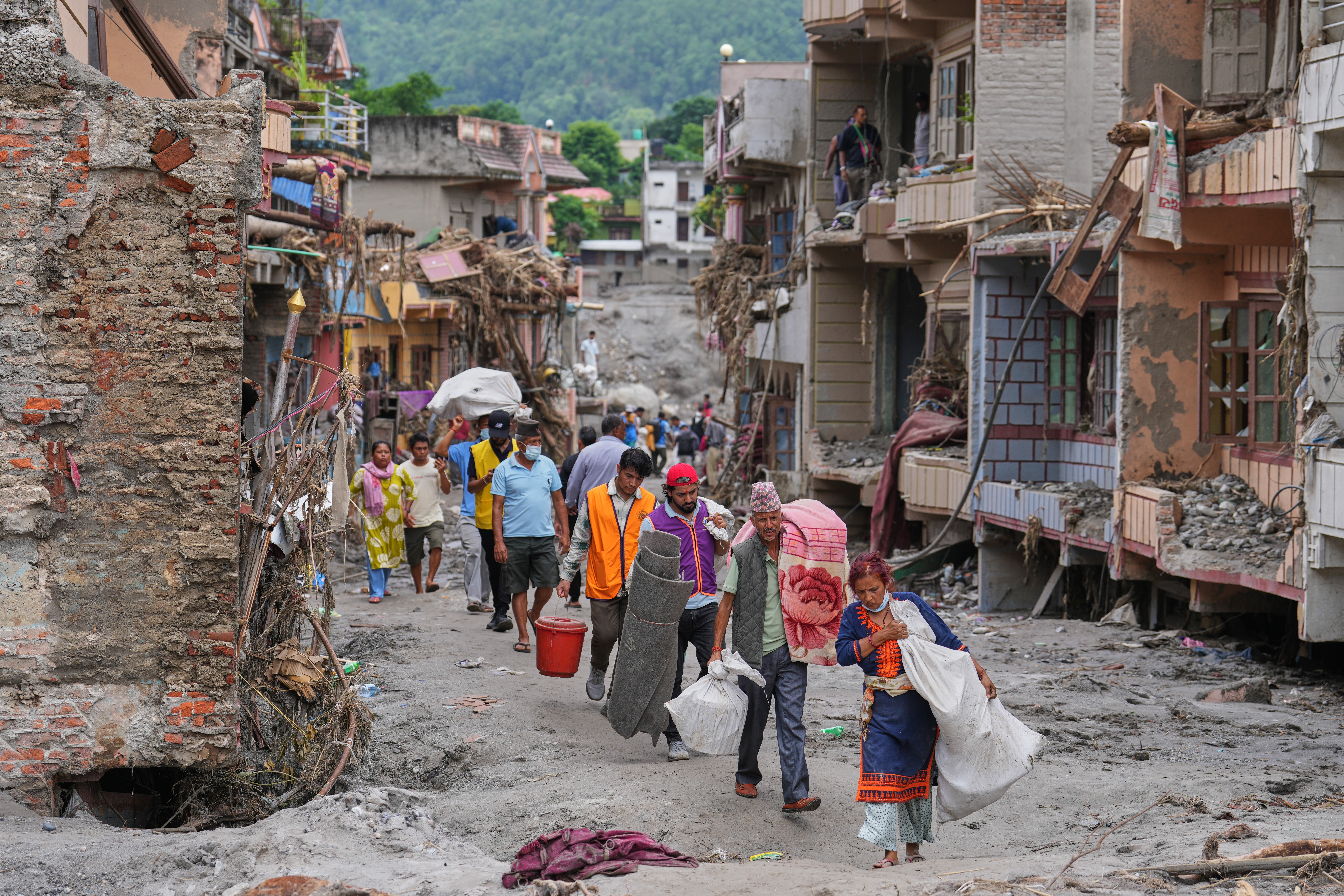
Singapore has announced a comprehensive humanitarian response to the catastrophic flooding that has devastated Nepal's border regions, committing specialist personnel alongside material aid to support the country's overwhelmed relief operations. Foreign Minister Dr Vivian Balakrishnan conveyed Singapore's commitment during a telephone discussion with Nepalese Foreign Minister Shisir Khanal on Monday, outlining the multi-faceted nature of the assistance that reflects the severity of the unfolding crisis in the Himalayan nation.
The cornerstone of Singapore's intervention involves deploying specialised Disaster Victim Identification (DVI) officers from the Singapore Police Force, deployed explicitly at Nepal's formal request. These forensic and identification specialists represent one of the most critical resources in the aftermath of major natural disasters, as the scale of casualties and the challenging terrain around the Nepal-China border have created extraordinary difficulties in documenting fatalities and locating missing persons. The deployment of such technical expertise underscores the profound need in affected areas where local capacity has been overwhelmed by the magnitude of the catastrophe.
Beyond personnel, Singapore's government is channelling both civilian and Singapore Armed Forces supplies to Nepal through official channels. The decision to mobilise SAF logistics capacity indicates the scale of material requirements on the ground, as humanitarian organisations face unprecedented demand for emergency supplies including food, water, medical equipment, and shelter materials across the affected zone. This approach mirrors Singapore's established practice of leveraging its military infrastructure for civilian disaster relief when situations demand rapid, large-scale logistical support.
The humanitarian initiative builds upon Singapore's earlier financial commitment announced on Friday, when the government contributed US$100,000 (RM403,000) to the Singapore Red Cross' public fundraising drive dedicated to Nepal relief. This initial monetary donation reflected rapid governmental recognition of the crisis's magnitude, even as the full extent of damage remained unclear. Complementing these government contributions, the Singapore Red Cross has successfully mobilised public generosity, with fundraising efforts having accumulated approximately S$1 million (RM3.16 million) thus far—a figure that demonstrates substantial community engagement with Nepal's plight among the Singapore-based diaspora and the broader public.
The deployment of Singapore's Crisis Response Team to Nepal since August 27 has provided essential on-ground capacity for consular support to Singaporean nationals caught within the disaster zone. This logistical and administrative foundation has enabled the government to coordinate relief efforts more effectively while ensuring direct assistance reaches Singapore's citizens and their families affected by the flooding. Such forward-deployed teams prove invaluable in the chaotic immediate aftermath of major disasters, when communication infrastructure collapses and civilian populations face acute vulnerability.
The underlying catastrophe driving this international response remains extraordinarily severe, with authorities confirming that the death toll has reached at least 919 people across the six days following the initial disaster. The figure represents one of Nepal's most devastating natural calamities in recent memory, reflecting both the intensity of the flash flooding and mudslides and the remote, mountainous terrain where many communities remain cut off from aid access. The Nepal-China border region's topography, characterised by steep valleys and limited road infrastructure, has substantially complicated rescue and recovery operations, making international assistance particularly vital.
The missing persons count adds another dimension to the tragedy, with nearly 4,800 individuals unaccounted for six days after the initial flooding event. Among these missing are 853 foreign nationals, a factor that has prompted responses from multiple countries beyond Singapore and heightened the international dimension of relief coordination. The presence of significant numbers of foreign tourists and trekkers in Nepal's mountain regions, particularly during the peak season, has intensified the complexity of search-and-rescue operations and expanded the international political engagement with Nepal's crisis response.
Singapore's multifaceted response reflects the broader Southeast Asian stakes embedded within Nepal's disaster. As a regional power with substantial technological and logistical capabilities, Singapore recognises that effective humanitarian coordination serves both immediate humanitarian imperatives and longer-term regional stability. The deployment of DVI expertise particularly signals Singapore's role as a regional knowledge hub, positioning its technical capabilities as assets available to neighbouring countries confronting overwhelming circumstances.
The coordination between Singapore's Foreign Ministry and its security and defence agencies demonstrates integrated whole-of-government crisis response architecture. Such coordination proves essential when disaster relief requires simultaneous diplomatic engagement, material logistics, specialist personnel deployment, and sustained on-ground presence. The phone conversation between Foreign Ministers Balakrishnan and Khanal exemplifies how diplomatic channels facilitate rapid, tailored assistance responsive to Nepal's stated priorities rather than external assumptions about needs.
For Malaysian readers, Singapore's response offers instructive comparison regarding regional disaster preparedness frameworks and international humanitarian cooperation mechanisms. Nepal's catastrophe underscores the vulnerability of mountainous regions to flash flooding and mudslides, circumstances directly relevant to Malaysia's own terrain and climate patterns. The mobilisation of regional expertise and resources demonstrates how Southeast Asian nations increasingly cooperate on natural disaster response, creating mutual support networks that transcend bilateral relationships to address shared environmental challenges.
The trajectory of Singapore's engagement—from initial financial contribution through diplomatic coordination to specialist personnel deployment—illustrates how sophisticated crisis response unfolds across multiple temporal phases. Initial rapid financial commitments demonstrate concern and mobilise public resources, while subsequent technical expertise deployment addresses medium-term stabilisation requirements. This staged approach, refined through Singapore's experience with regional disasters and international crisis response, provides a model for understanding how middle-income countries optimise their humanitarian impact when confronting crises beyond their direct borders.
Government statements indicating Singapore's intention to maintain close coordination with Nepal's authorities throughout the relief operation signal sustained commitment extending beyond initial response phases. The emphasis on ongoing partnership rather than short-term gestures acknowledges that post-disaster recovery spans months and years, requiring persistent international engagement. For Nepal facing 919 confirmed deaths and nearly 5,000 missing persons, such sustained attention from regional partners proves essential for mobilising resources sufficient to address both immediate survival needs and longer-term reconstruction requirements across affected communities.

