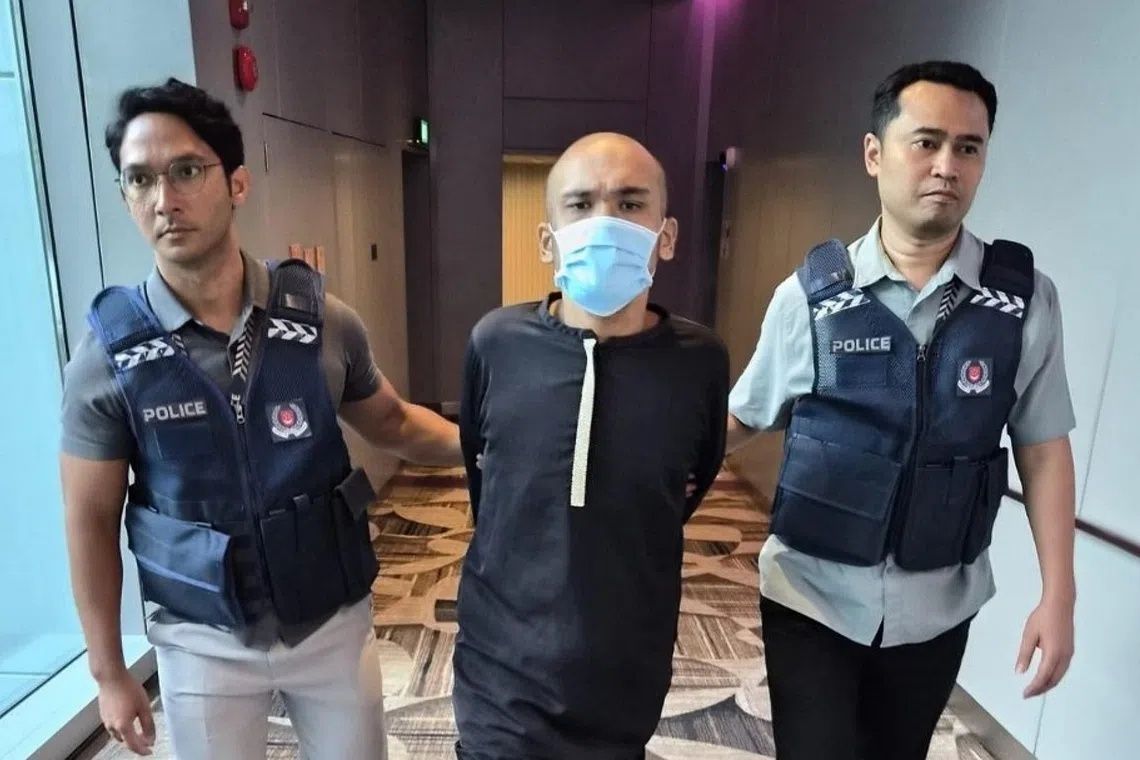
Singapore authorities will bring a 27-year-old man before the courts on Friday, August 7, to face charges related to offensive and profane statements made against the Muslim community in videos shared on social media platforms during the early part of 2026. The case underscores growing concerns across Southeast Asia about the use of digital platforms to spread content that inflames religious and communal tensions, an issue that resonates strongly in Malaysia and other multiethnic societies in the region where religious harmony remains a sensitive matter.
The authorities became aware of the man's actions only several weeks after they occurred. Police received the initial report documenting his conduct on March 1, but by that time the individual had already left Singapore, complicating immediate enforcement action. The delay in reporting and the accused's departure created investigative challenges that required regional cooperation to resolve. This situation highlights how easy it has become for those seeking to evade accountability for inflammatory online speech to cross borders, particularly within Southeast Asia where land borders and maritime routes provide relatively accessible escape routes.
Cross-border police cooperation proved essential in apprehending the suspect. The Royal Malaysia Police played a crucial role in locating the man and facilitating his deportation from Malaysian territory on August 6. He was taken into custody the same day upon arriving back in Singapore, allowing authorities to move swiftly with the charging process. This successful collaboration between Singapore and Malaysia demonstrates the region's capacity to coordinate enforcement efforts when addressing serious matters affecting public order and community relations, though such coordination remains inconsistent across different types of offences and jurisdictions.
The formal charges carry significant potential consequences. If convicted, the man faces imprisonment for up to five years, substantial financial penalties, or a combination of both sanctions. These penalties reflect Singapore's determination to treat religiously offensive content as a serious criminal matter rather than merely a civil or administrative violation. The severity of potential punishment sends a clear signal that authorities will not tolerate attempts to deliberately provoke religious communities through digital platforms.
Beyond the primary charges, investigators are simultaneously examining the man's involvement in another serious incident. The same individual is suspected of being the person shown in a separate video that has circulated widely on social media, depicting someone deliberately desecrating a Quran on a public bus in Singapore. This additional investigation suggests a pattern of behaviour rather than isolated incidents, which typically aggravates charges and increases the likelihood of harsher sentencing should convictions result. The public nature of the bus incident makes it particularly inflammatory, as it occurred in a shared space used by diverse populations and was deliberately recorded for online distribution.
Police investigations determined that the video showing disrespect to the Quran was filmed aboard a public bus in Singapore, making it not merely a private expression but a deliberate public act designed to provoke. The choice to film and distribute such content amplifies the offender's intent to inflame rather than merely expressing a private opinion. This distinction between private speech and public acts designed to incite reaction forms a crucial element in how Singapore's legal system approaches religious harmony offences.
Authorities moved quickly to contain the spread of inflammatory material across digital platforms. On March 7, following the emergence of the offensive videos, police issued five separate disabling directions to Meta, Facebook's parent company, requiring the social media giant to prevent users within Singapore from accessing the problematic content. This mechanism of directly ordering technology platforms to restrict content availability within specific jurisdictions has become an increasingly common enforcement tool in Singapore, though it raises ongoing questions about content moderation, free speech, and the proper boundaries of government authority over digital spaces.
The incident reflects Singapore's broader zero-tolerance approach to any speech or conduct that authorities deem threatening to the delicate balance of racial and religious coexistence in the city-state. Officials issued a formal statement on August 6 emphasizing that any individual making statements or engaging in behaviour calculated to generate hostility between different ethnic or religious communities will face prompt and severe legal consequences. This hardline stance reflects the historical experience of religious and communal violence in Singapore and the region more broadly, creating a legal and social environment where such offences are treated as direct threats to national stability.
For Malaysian observers and the broader Southeast Asian region, this case carries important implications. Malaysia itself grapples with comparable challenges regarding online religious content and social media's role in amplifying communal tensions. The successful deportation and prosecution mechanism demonstrates how regional legal frameworks can work together, though questions persist about whether such frameworks adequately balance security concerns with individual rights and free expression protections. The incident also illustrates how digital platforms enable individuals to reach wide audiences with divisive content before authorities can intervene, creating asymmetries between the speed of online dissemination and the pace of legal investigation and response.
The authorities' willingness to pursue regional cooperation and invoke legal mechanisms that restrict platform access reveals official determination to prevent religiously offensive content from spreading unchecked through digital spaces. However, the case simultaneously raises broader questions about the appropriate scope of government authority over online speech, the role of technology companies in enforcing local laws, and how societies can protect genuine religious harmony while preserving space for legitimate expression and dissent. As Southeast Asian governments increasingly adopt similar approaches to content moderation and legal enforcement, these tensions will likely intensify, requiring ongoing dialogue between authorities, technology platforms, civil society organizations, and the public about principles governing digital expression in multiethnic democracies.

