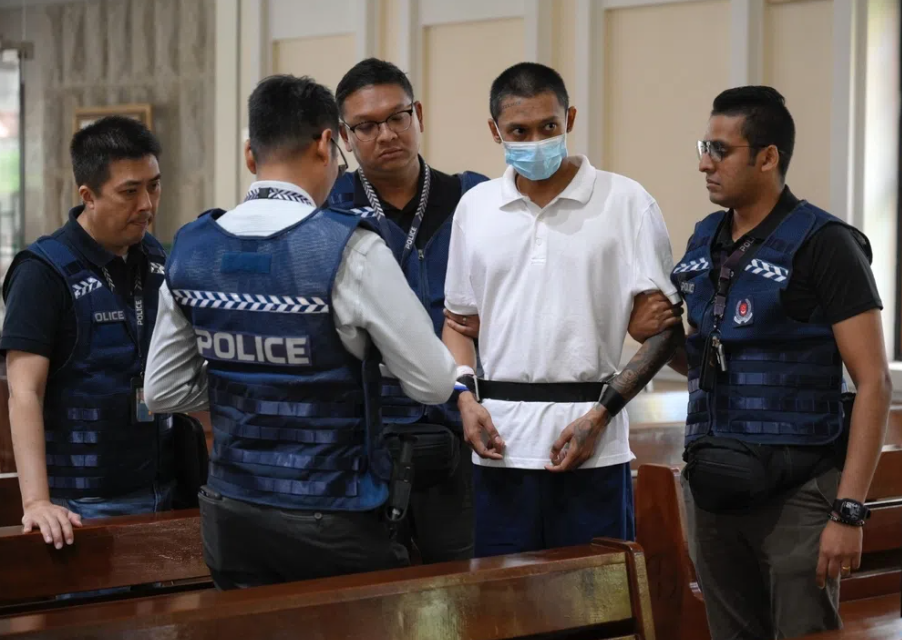
A 38-year-old Singapore resident has received a substantial prison sentence following his guilty plea to stabbing a Catholic priest during a children's service at St Joseph's Church. Basnayake Keith Spencer was sentenced on August 21 to four years and three months' jail alongside nine strokes of the cane. The courts found him guilty of voluntarily causing grievous hurt with a dangerous weapon and illegal possession of weapons.
The attack occurred during the evening mass on November 9, 2024, when around 900 parishioners had gathered at the church. Reverend Christopher Lee, then aged 57, was administering communion when Spencer suddenly produced a 23-centimetre foldable knife with a 10-centimetre blade and drove it into the priest's mouth. The assault shocked the congregation and triggered an immediate response from attendees, including an off-duty police officer, who physically restrained Spencer until authorities arrived.
Spencer's actions inflicted severe physical injuries on Father Lee. The priest sustained an 8-centimetre laceration on his tongue, a 3-centimetre cut on his upper left lip, and a 4-centimetre laceration at the corner of his mouth. He was transported to hospital with blood pooling in his mouth and required emergency treatment. Father Lee spent six days hospitalised before his discharge on November 15, 2024, and subsequently underwent extensive speech therapy to address the trauma and physical damage from the stabbing.
The court documents reveal concerning details about Spencer's mental state and drug use at the time of the incident. In the hours before the attack, he consumed multiple pills while seated in the church, initially taking two tablets to maintain focus before consuming three more to calm himself once he realised children would be present at the service. The prosecution characterised Spencer as being in a drug-induced psychotic state during the assault, though they noted he retained sufficient awareness to deliberately target the priest.
Spencer's history of violence proved significant to the sentencing. In 2019, he had been convicted for voluntarily causing hurt with a dangerous weapon after stabbing his then-girlfriend in the buttocks with a kitchen knife whilst under the influence of methamphetamine. That conviction resulted in a one-year jail sentence. The earlier incident demonstrated a concerning pattern of knife violence, particularly when his substance abuse was involved.
Investigations following his arrest uncovered additional weapons in Spencer's possession, amplifying concerns about his dangerousness. Police discovered a 14.5-centimetre penknife, a flip knife, and a fishing gaff—a pole equipped with a sharp hook—among his belongings. This arsenal suggested premeditation or at minimum a propensity to carry multiple weapons, raising questions about his intent and planning before entering the church.
The district judge's remarks during sentencing underscored the gravity of the offence. District Judge Shaiffudin Saruwan emphasised that the attack was entirely unprovoked and targeted a defenceless person administering a sacred religious ritual. The judge highlighted that the timing of the assault—directly during the communion rite—created substantial risk of mass panic within the crowded church, potentially triggering further injuries and chaos among the congregation.
Spencer remained in remand custody for more than a year and nine months awaiting trial and sentencing, having been denied bail in December 2024. The prosecution had argued successfully that he represented a highly dangerous individual with elevated risk of reoffending. The lengthy remand period reflected the seriousness with which authorities viewed the threat he posed to public safety.
The prosecution had sought a sentence ranging from four years and three months to four years and eleven months, coupled with nine strokes of the cane. Spencer's defence counsel, Ashwin Ganapathy of the Public Defender's Office, argued for a shorter jail term of less than four years, emphasising his client's remorse, shame, and desire for a proportionate sentence. However, the court ultimately aligned with the prosecution's recommendation on the lower end of their proposed range.
The incident reflects ongoing concerns about weapon violence and the intersection of substance abuse with criminal behaviour in Singapore. The case demonstrates how public spaces, even places of worship during religious observances, can become targets for violent individuals experiencing psychological disturbances. For the Southeast Asian region, the sentencing represents a firm judicial stance on unprovoked violence with weapons, particularly when directed at vulnerable individuals and within community gathering spaces.
Father Lee's recovery extends beyond his physical wounds. The requirement for extended speech therapy indicates lasting trauma affecting his ability to perform his pastoral duties. The psychological impact on the congregation and the broader Catholic community in Singapore cannot be overlooked. The attack during a children's mass amplified the violation felt by families and the violation of a sacred space dedicated to worship and spiritual formation.
The case reinforces Singapore's zero-tolerance approach to weapon-related violence. The sentencing, combining substantial imprisonment with caning—a form of punishment employed in Singapore for serious violent crimes—reflects judicial determination to deter similar offences. For readers across Malaysia and the broader region where religious communities remain concerned about safety and security, the case underscores the importance of access controls and security measures even within traditional places of worship.

