Pradave Shashi Kumar, 22, has been handed a 17-month jail sentence after admitting guilt to voluntarily causing hurt through use of a dangerous weapon. His guilty plea, entered on Tuesday, August 4, relates directly to his role in a violent street altercation that claimed the life of Dhinessh Vasie, 25, on the night of September 22, 2024, in Singapore's Kitchener Road area.
The victim's death resulted from a stab wound to the heart sustained during the chaotic brawl, which unfolded in the early morning hours as multiple groups became embroiled in a confrontation. Pradave was the first of four accused individuals to face judicial proceedings in connection with the incident, with the remaining defendants facing substantially more serious charges. Muhammad Sajid Saleem, 24, stands accused of murder, while Satish Jason Prabhas and Kirrthik Roshan Prem Ananth, both 23 years old, have been charged with rioting offences.
Reconstruction of events revealed that the violence originated from a night out that began at a Golden Mile Tower nightclub. Pradave, Sajid, Satish, Kirrthik and two accompanying women departed in a private-hire vehicle around 4am, heading to a pub located on Sam Leong Road to extend their evening. As they walked through a back alley near their destination, they encountered a larger group of eight men who were engaged in a heated dispute with three women. Dhinessh formed part of this eight-member contingent.
Despite being outnumbered, Pradave's group initiated physical confrontation when Satish verbally challenged one of the men in Dhinessh's group before escalating to punches. This initial spark rapidly developed into a broader melee involving multiple combatants. The situation intensified when Dhinessh's group attempted to retreat toward the Verdun Road direction, but the pursuit that followed would prove fatal. Multiple witnesses reported observing Sajid brandishing a small knife with a 7.5-centimetre blade held in a downward position throughout the fracas.
As the four assailants chased their quarry, Sajid's knife came into repeated contact with fleeing victims. According to Deputy Public Prosecutor Jonathan Tan, Sajid slashed Dhinessh and two other individuals as they attempted to escape. The chase culminated near a coffee shop positioned at the Verdun Road and Sam Leong Road intersection. As Dhinessh's pace slackened and he came to a halt, this gave Sajid the opportunity to catch him. The prosecutor told the court that Sajid then drove his knife into Dhinessh's upper back with deliberate force.
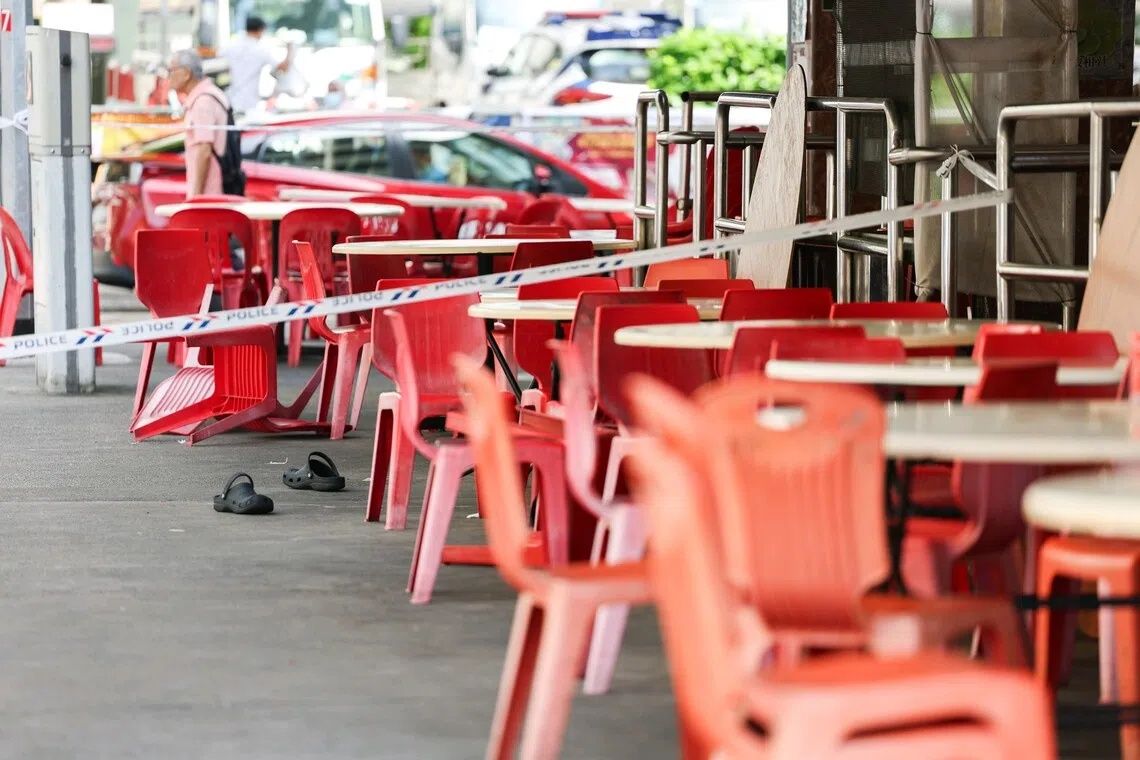
What followed represented a particularly brutal phase of the assault. Kirrthik seized a chair from the nearby coffee shop and commenced striking the wounded Dhinessh repeatedly. Pradave, observing this, obtained a second chair and delivered two forceful blows directly targeting Dhinessh's head and chest. The victim, having already sustained a life-threatening stab wound, offered no resistance during this sustained assault. According to the court's account, Dhinessh remained slumped and incapacitated throughout, unable or unwilling to defend himself against the chair attacks.
Following their violent outburst, the four men departed the scene on foot, making their way toward City Square Mall. Emergency services responded rapidly to reports of the incident, with police and paramedics arriving within minutes of the assault's conclusion. Pradave's arrest occurred at approximately 5.15am on the same day, within hours of the incident. The swift apprehension reflected efficient police work in identifying and locating him while the trail remained fresh.
The sentencing of 17 months, while substantial, falls within the sentencing range established for voluntarily causing hurt using a dangerous weapon—a charge that carries maximum penalties of seven years imprisonment, fines, caning, or any combination thereof. The relatively lower sentence compared to potential maximums reflects several factors, including Pradave's guilty plea and cooperation with authorities. However, the gravity of the circumstances surrounding the incident cannot be understated, particularly given that his actions occurred in direct connection with a fatal stabbing and during a sustained violent attack on an already incapacitated victim.
The fragmented prosecution approach, with Pradave sentenced first and the remaining three defendants still awaiting trial outcomes, underscores the complexity of assigning individual responsibility within multi-perpetrator violence. Sajid's murder charge suggests prosecutors view the stabbing itself as the primary fatal act, while Pradave and Kirrthik's actions are characterized as subordinate assaults occurring after the critical injury had been inflicted. Nevertheless, the law recognizes that continued violence against an already gravely wounded person constitutes serious criminal conduct worthy of substantial punishment.
For Malaysian observers and regional readers, this case illustrates broader concerns about escalating street violence in Southeast Asian urban centres, particularly violence involving young men during late-night entertainment venues. The speed with which a confrontation between groups of intoxicated individuals transformed into lethal violence raises questions about security protocols at entertainment precincts and the adequacy of law enforcement presence in high-risk areas during peak incident times. The incident also demonstrates how easily secondary actors in violent incidents—those who may not deliver the fatal blow—can nonetheless receive substantial prison sentences, a principle applicable across Southeast Asian jurisdictions with comparable criminal codes.

