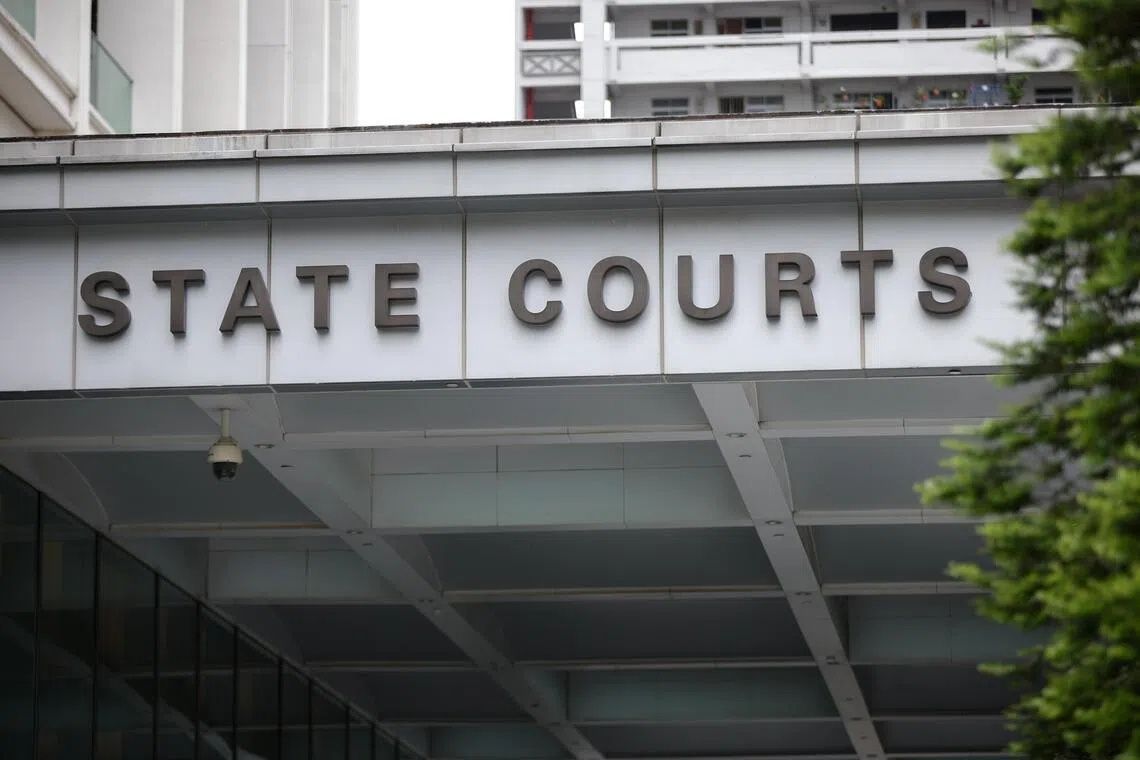
A Singapore court has sentenced a man to two years and eight months in jail and two strokes of the cane for distributing intimate recordings of his ex-girlfriend without consent, in what prosecutors described as a particularly egregious case of revenge pornography. The offender, now 27, uploaded videos of his former partner performing sexual acts, including images showing her wearing full religious garb, after she refused his attempts to reconcile their relationship. The case highlights the enduring trauma inflicted by non-consensual sharing of intimate content and raises important questions about digital harm that resonate across Southeast Asia, where similar legislation remains inconsistent or underdeveloped.
The relationship between the offender and victim began in 2016 when both were attending a religious school. She was 15 years old and he was 17 when they started dating. During their time together, he encouraged her to send him photographs and at least two videos of herself engaged in sexual acts. The victim complied with his requests, a pattern common in relationships where one party exerts controlling influence over the other. More than a year into the relationship, she came to recognise his possessive and toxic behaviour and decided to end things. In an effort to move forward, she deleted all intimate images and videos she possessed of him and explicitly asked him to do the same. He gave her his word that he had, but in reality retained the material for his own gratification.
Approximately five years after the original distribution of the intimate content, the victim continues to experience direct harassment and humiliation as a result of the offender's actions. When she received an unsolicited message from a stranger on Instagram who had viewed her nude images and made sexual propositions, she initially did not know how such material had circulated. Upon asking the stranger for the source, he provided her with a link to a social media group with nearly 80,000 members where her videos had been posted. The discovery that her intimate material was accessible to tens of thousands of people triggered her investigation into the matter. Using a fake identity, she infiltrated the group and was shocked to find it contained numerous obscene images and videos of women depicted in religious attire, with her own material prominently featured among these posts.
The offender's motivation for committing this crime was unmistakably vengeful. In April 2021, while already in a relationship with another person, he attempted to contact his ex-girlfriend to explore reconciliation. When she did not respond and subsequently blocked him across platforms, he sought to punish her for this rejection. Rather than accept her refusal, he masqueraded as her online and uploaded her intimate videos to the large social media group, an act designed specifically to humiliate and demean her by portraying her as a promiscuous individual in religious contexts. This weaponisation of her religious identity alongside her sexuality represents a particularly calculated form of psychological harm. The Deputy Public Prosecutor, Chong Kee En, argued that the consequences of this crime have extended far beyond the initial act, stating that nearly five years later, the impact continues to reverberate through the victim's life in profound ways.
The ramifications for the victim have extended into virtually every aspect of her existence. Her relationships with family members have suffered significantly, with her becoming estranged from her own mother as a result of the material's circulation. Friendships have been damaged as peers who encountered the videos online have confronted her or distanced themselves. Her career trajectory has been fundamentally altered by the trauma and her fear of public exposure within her professional community. Most notably, she abandoned her aspiration to become a religious teacher specifically because she feared that the discovery of her intimate images by members of her religious community could result in public shaming and professional ruin. These consequences demonstrate how revenge pornography does not merely violate privacy but can permanently restructure a person's life opportunities and relationships.
During sentencing deliberations, the court heard arguments from both the prosecution and defence regarding appropriate punishment. The Deputy Public Prosecutor sought a sentence of 30 to 36 months imprisonment coupled with three strokes of the cane, emphasising the severity and ongoing nature of the victim's suffering. The defence counsel, Sean Marican, presented a markedly different perspective, arguing for leniency based on his client's youth at the time of the original offence and characterising the crime as an impulsive act committed in anger following rejection. He urged the court to impose only one year's imprisonment with no caning and a substantially lower compensation order of $500. This divergence in sentencing positions reflects broader debates within criminal justice systems regarding proportionality, deterrence, and rehabilitation in digital crime cases.
Principal District Judge Toh Han Li's judgment ultimately reflected the seriousness of the transgression while falling between the two extremes advocated by prosecution and defence. The judge explicitly noted that the offender's actions were motivated by a deliberate desire to exact revenge and to cause harm and humiliation to his ex-girlfriend, particularly by depicting her in a manner that combined her religious identity with sexual conduct. The court recognised that the victim's images and videos remain in circulation even years after the crime's commission, as evidenced by her continued receipt of propositions and advances from strangers who have accessed the material. This ongoing circulation means the harm is not confined to a discrete moment but represents a form of perpetual victimisation that extends indefinitely into the future.
Beyond the immediate sentencing, the court ordered the offender to pay $4,000 as compensation to his victim, acknowledging the tangible and intangible harms she has endured. For Malaysian readers and those across the Southeast Asian region, this case underscores several critical issues within contemporary digital society. The ease with which intimate content can be captured, stored, and distributed without consent creates unprecedented opportunities for intimate partner violence and harassment. The involvement of religious imagery adds a layer of cultural violation that compounds the sexual violation, rendering the harm particularly acute within conservative religious communities. Furthermore, the fact that the victim's material continues circulating nearly five years after the crime and despite law enforcement intervention highlights the challenges of truly removing non-consensual intimate content from digital platforms.
The Singapore case also reveals significant gaps in preventative justice and victim protection mechanisms. The victim had to undertake her own undercover investigation to identify her attacker and gather evidence, placing additional burden on someone already traumatised by violation. The massive scale of the social media group hosting the content—with millions of users on the parent platform—demonstrates how quickly such material can spread beyond any individual's ability to contain or remove it. For policymakers and legal professionals across Southeast Asia, where many countries are still developing or refining their approaches to cyber harassment and non-consensual pornography offences, this case provides important lessons about the necessity for robust legislative frameworks that address both the distribution of intimate content and the ongoing harm caused by its circulation.
The sentencing also reflects evolving judicial understanding of revenge pornography as a form of gender-based violence with long-term psychological and social consequences. By rejecting the defence's request for minimal punishment and instead imposing a substantial custodial sentence with corporal punishment, the court signalled that such crimes warrant serious sanctions. The judge's analysis of the offender's deliberate intent to humiliate and harm, combined with his awareness that the victim would suffer lasting damage, demonstrates that courts are moving away from characterising such offences as private matters or impulsive mistakes toward recognising them as calculated assaults on dignity and autonomy. However, the gap between the prosecution's initial request for 30-36 months and the final sentence of 32 months suggests continuing judicial caution regarding maximum severity in digital crime cases.

