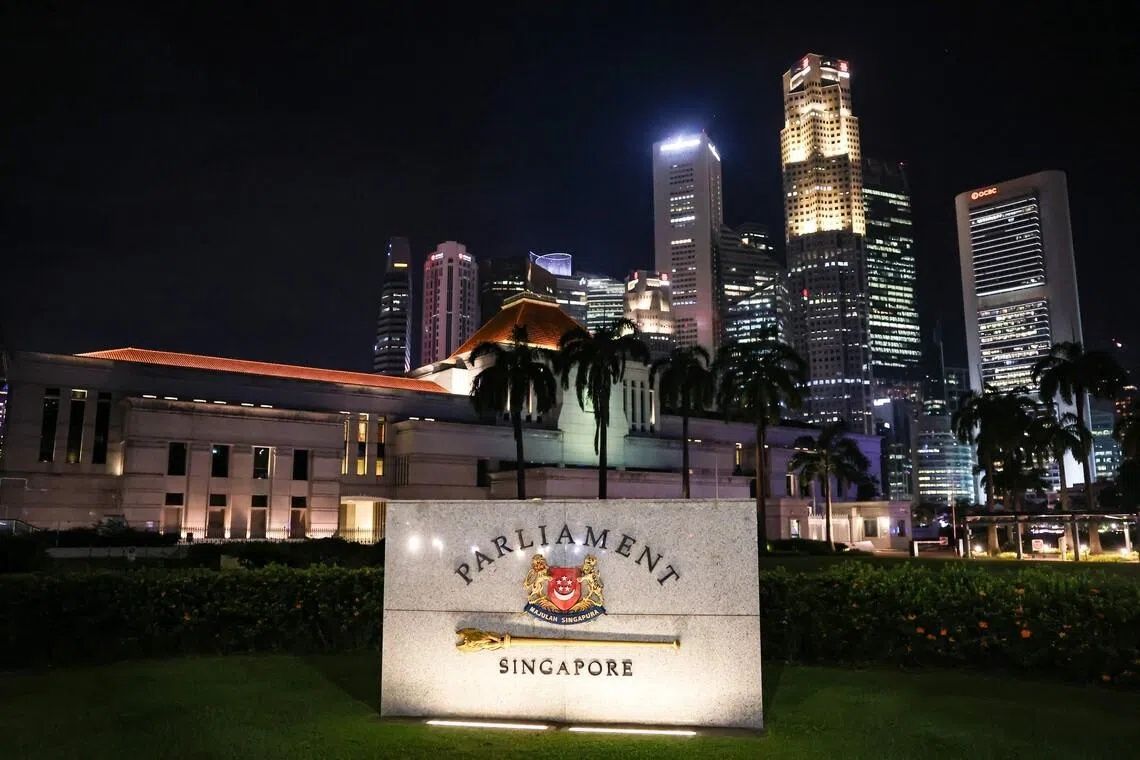
A 40-year-old Singaporean faces court proceedings over a series of fabricated bomb threats directed at two prominent government facilities, including the nation's Parliament House, in what authorities describe as a deliberate misuse of security procedures that diverted critical public resources. The man is scheduled to be charged on July 9 following his arrest on July 7, when police arrested him the same day a second anonymous threat was reported to the Prime Minister's Office.
The first incident occurred on July 3 when the Home Team Science and Technology Agency, located at One North, received an online form submission falsely claiming that an explosive device had been placed within its building. This initial report triggered a comprehensive security response involving thorough physical sweeps of the premises and surrounding areas. Despite the intensity of the investigation and the deployment of security personnel, no suspicious items or devices were discovered during the systematic checks, indicating the threat's false nature.
Four days later, on July 7, police received a report of an anonymous email sent to the Prime Minister's Office making an identical claim about a bomb allegedly planted at Parliament House. Once again, authorities conducted exhaustive checks of the parliamentary complex and its perimeter, ultimately confirming that no credible threat existed. The sequential nature of these incidents, occurring within a short timeframe and directed at high-profile government institutions, suggested a coordinated campaign rather than isolated incidents.
Investigators from the Criminal Investigation Department and Central Police Division worked rapidly to link the two threats through digital forensics and analysis of the communications. Their efforts quickly established that both bomb threats originated from the same individual, providing a critical breakthrough that allowed police to focus their manhunt. The speed of this determination—achieving attribution within days—reflects the sophistication of Singapore's cybercrime investigative capabilities and the value of digital evidence in tracing anonymous online communications.
Police apprehended the suspect on July 7, the very day the second threat was communicated, suggesting intelligence-led policing and rapid coordination between agencies. During the arrest, officers seized several electronic devices believed to have been used to execute both threats, removing potential tools that could have been used for further misconduct. The recovery of these devices preserves crucial evidence for the prosecution while preventing any possibility of continued harassment through similar channels.
The suspect will face charges under Singapore's Communications Act for communicating false information regarding a harmful thing. This specific offence carries substantial penalties reflecting the seriousness with which the legal system treats such hoaxes. Upon conviction, the individual faces a maximum imprisonment term of seven years, a monetary fine not exceeding S$50,000, or a combination of both penalties. The severity of these potential consequences underscores the state's determination to deter similar offences.
False bomb threats represent a significant concern for security agencies across Southeast Asia, as they consume vast resources, create public panic, and potentially mask genuine threats through desensitisation. In Singapore's context, where security is a paramount concern given its strategic location and high-profile status, such hoaxes carry particular weight. The incident demonstrates how a single individual's actions can trigger extensive security mobilisation involving multiple agencies, specialised equipment, and trained personnel—resources that could otherwise be deployed to address genuine security concerns.
The police statement accompanying the announcement emphasised the broader implications of such false reporting. Authorities noted that fabricated threats generate unnecessary public anxiety, disrupting normal business operations at targeted institutions and creating widespread concern among citizens. Beyond the immediate psychological impact, such hoaxes divert finite security resources away from legitimate investigative work, placing strain on already stretched law enforcement capabilities. For a city-state like Singapore with limited geographic space and high population density, the inefficient deployment of security resources carries magnified consequences.
This case also highlights the digital dimension of modern security threats. The use of online forms and anonymous emails to communicate threats demonstrates how perpetrators exploit electronic communication channels to maintain distance from their crimes. However, as this case illustrates, such digital breadcrumbs ultimately proved traceable, suggesting that those committing such offences cannot rely on anonymity as protection. The successful attribution serves as a cautionary tale for potential offenders considering similar actions.
Regional authorities across Southeast Asia have increasingly grappled with similar incidents of false threat reporting, reflecting growing awareness of hoaxes as a criminal tool. Malaysia and other neighbouring countries have implemented comparable legislative frameworks with substantial penalties to discourage such behaviour. The Singapore prosecution therefore contributes to a broader regional narrative emphasising zero tolerance toward false security threats, potentially influencing potential offenders' risk calculations.
For Malaysian observers, the incident carries relevance beyond mere curiosity about a neighbouring jurisdiction's law enforcement operations. It illustrates the sophisticated investigative techniques deployed to prosecute digital-era crimes and the legal frameworks emerging to address evolving security challenges. As Malaysia develops its own cybercrime and digital security capabilities, case studies like this provide instructive examples of how agencies can successfully attribute and prosecute electronically-mediated offences. The coordination between multiple agencies evident in the Singapore investigation also underscores the importance of inter-departmental cooperation in addressing complex security incidents.

