A 59-year-old man has been brought before Singapore's courts after authorities charged him with the murder of his neighbour in what appears to be a tragic incident rooted in residential proximity and personal conflict. Ng Swee Seng made his initial appearance via video link in district court on July 22, facing allegations that he unlawfully killed Thiyagarajan Karunakaran, who was also 59 years old. Both men resided at Block 55 Lengkok Bahru, a residential development situated near Redhill Road in Singapore's Bukit Merah neighbourhood, making the case particularly poignant given that neighbours are expected to coexist peacefully within the confines of Singapore's densely populated residential blocks.
Emergency services responded to multiple distress calls shortly before 5 o'clock in the afternoon on July 20, when the incident unfolded. Responding officers discovered Thiyagarajan motionless in the lift lobby on the 16th floor of the block, indicating the confrontation had taken place in a common area of the building rather than within a private residence. This detail underscores the public nature of the alleged crime, suggesting witnesses may have been present or nearby during the incident. The victim was immediately transported to the National University Hospital, where despite medical intervention, he succumbed to his injuries.
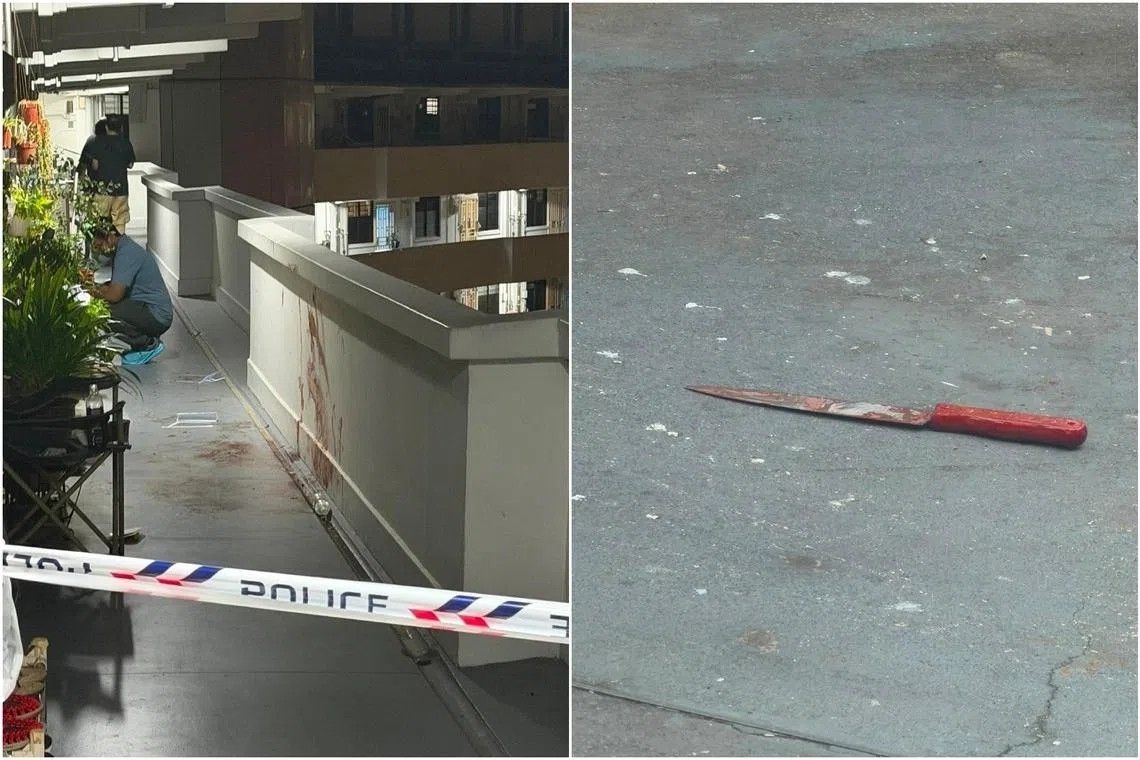
Investigators examining the crime scene found physical evidence consistent with a violent altercation. Blood staining marked the 16th-floor corridor, with a bloodied footprint visible along the passageway, painting a disturbing picture of the struggle that unfolded in the shared residential space. These forensic details, documented when journalists visited the block the following day, provided tangible confirmation of the severity of the incident and suggested a physically violent confrontation rather than any accidental occurrence. The presence of such evidence in a common corridor raises questions about the intensity of the conflict and whether bystanders may have witnessed events.
According to residents familiar with the building, the two men maintained separate households several units apart on the same floor, positioning them as neighbours who would have encountered each other with some regularity. One long-term resident, who has occupied the block for approximately four years, recounted this spatial arrangement, suggesting that proximity and repeated interaction may have contributed to underlying tensions. In Singapore's high-density housing environment, where residents from diverse backgrounds share common facilities and corridors, interpersonal disputes between neighbours occasionally escalate into serious confrontations.
The circumstances that led to this fatal encounter remain under investigation, with authorities working to establish the precise sequence of events and motivations underlying the alleged crime. While initial police statements confirm the basic facts of the incident and the charge brought against Ng Swee Seng, deeper investigative work continues to determine what triggered the confrontation and whether previous incidents between the two men had occurred. Such contextual information will likely prove crucial both to the prosecution's case and to the defence's arguments regarding intent and culpability.
For residents of Block 55 Lengkok Bahru, the incident serves as a sobering reminder of how personal disputes in close-quarter residential settings can deteriorate rapidly. The building, like thousands of similar housing developments across Singapore, houses hundreds of residents who navigate daily interactions within confined spaces. Safety within residential blocks typically depends on mutual respect and conflict resolution mechanisms, making violent incidents particularly distressing within such communities. Residents may now grapple with concerns about security and the prevalence of unresolved tensions among their neighbours.
The case also reflects broader discussions in Singapore concerning neighbour disputes and community safety within residential developments. While Singapore maintains one of the world's lowest violent crime rates, incidents involving neighbours occasionally capture public attention because they occur within spaces intended to be safe havens. The investigation into what transpired between Ng Swee Seng and Thiyagarajan Karunakaran will likely provide insights into whether warning signs had been overlooked or whether the conflict emerged suddenly without prior indication.
The legal proceedings against Ng Swee Seng will proceed through Singapore's courts, where evidence will be presented to establish whether he committed the alleged murder. The charge of murder carries severe penalties under Singapore law, reflecting the state's stringent approach to violent crime. As the case develops, details regarding possible disputes, communications, or earlier confrontations between the two men may emerge, potentially illuminating the circumstances that culminated in the tragic death of Thiyagarajan Karunakaran.

