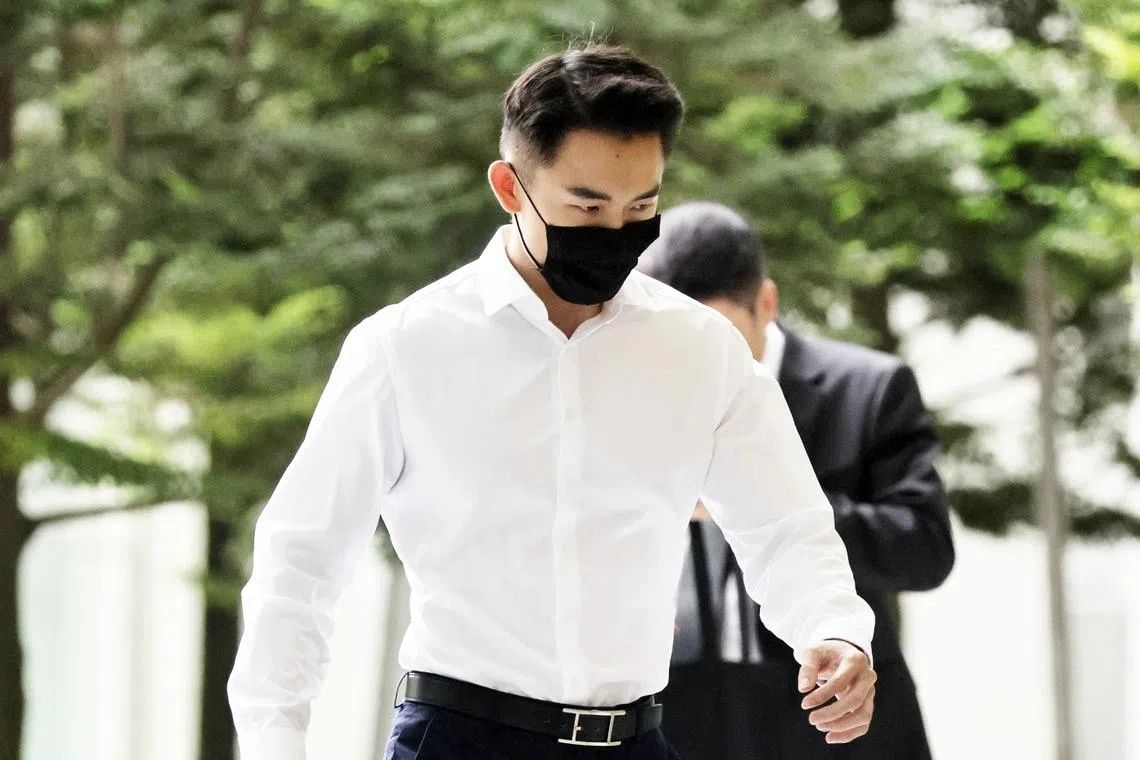
A 36-year-old doctor in Singapore has been convicted of drug consumption after being caught at a private party held at a villa within the Sofitel Singapore Sentosa hotel. Rayson Lee Rui Sheng was among 49 men arrested when authorities raided the premises in August 2023, uncovering what police suspected to be a significant drug operation. The conviction, handed down on Tuesday, June 30, marks the conclusion of a legal battle in which Lee maintained his innocence throughout the proceedings.
Lee was convicted alongside a 29-year-old acquaintance, Tan Li Ming, each receiving a single count of drug consumption. The Health Sciences Authority's testing of biological samples proved pivotal to the case, with both urine and hair analysis revealing the presence of MDMA, commonly known as ecstasy, as well as ketamine. The forensic evidence established that the substances had been in the men's systems, providing the prosecution with tangible proof of consumption. District Judge A Sangeetha presided over the case, ultimately ruling that the defendants' testimonies lacked credibility and that their hair sample analysis indicated a pattern of prior drug use extending beyond this single incident.
The circumstances surrounding the August 9, 2023 raid revealed a sophisticated drug scene at what appeared to be a high-end hospitality venue. Police received information suggesting illegal activity and conducted checks at the hotel shortly after 5.30 in the morning. Upon their arrival, officers discovered substances they believed to be controlled drugs, prompting them to call the Central Narcotics Bureau to the scene. During the operation, authorities uncovered not only ecstasy and ketamine but also drug paraphernalia, painting a picture of a well-organised gathering where recreational drugs were being distributed and consumed.
Lee's defence strategy centred on the assertion that his drink had been spiked without his knowledge or consent. He claimed that while at the villa, he had consumed three beverages handed to him by individuals he did not recognise. His account suggested he was an unwitting victim who saw neither pills nor evidence of drug use during the evening. Similarly, Tan alleged he had witnessed unknown men drawing liquid from a bottle using a syringe and injecting the mixture into plastic cups in a pantry area. Tan further claimed that after consuming from one of these cups, he observed white residue at the bottom, and when he questioned an unidentified person about the syringe activity, was told it contained "G-water" that would produce a "drunk feeling."
The prosecution, represented by Deputy Public Prosecutors Jocelyn Teo and Dhiraj G Chainani, systematically dismantled these claims during trial proceedings. They argued that the pair's defence strategy amounted to presenting "hypothetical scenarios and unexplained possibilities" rather than concrete evidence. Most significantly, the prosecution highlighted a critical logical flaw in the defendants' narratives: neither man could identify with any specificity who had allegedly spiked their drinks, what these individuals looked like, or other distinguishing characteristics that would allow for corroboration. The prosecutors noted that if the two had genuinely been victims of deliberate drugging by identifiable individuals, they should have been able to provide at least some concrete details about their alleged perpetrators.
Judge Sangeetha's ruling on the credibility of the defence was damning. The judge observed that despite both men claiming their drinks had been spiked, they continued to consume additional beverages throughout the evening, behaviour inconsistent with someone who suspected their drinks of being tampered with. This pattern suggested awareness rather than victimisation. The hair sample analysis proved particularly conclusive, revealing evidence of both MDMA and ketamine consumption at points preceding the August party, establishing what the judge described as a pattern demonstrating that "neither man was a stranger to drug use."
The prosecution further challenged claims about plastic silver cups that were allegedly not seized by police, suggesting these could have contained drug residue. The DPPs countered that even if such cups had tested positive for drugs, this would merely confirm the defendants had consumed drug-laced beverages, not that such consumption was without their knowledge. They emphasised that the defendants presented no credible evidence identifying specific individuals responsible for any alleged spiking, a striking absence in their testimony given the gravity of the accusation.
Lee's narrative regarding the events leading to his arrest revealed the social context of the evening. He attended the villa initially to celebrate a friend's birthday, arriving around 8 pm on August 8. After mingling with acquaintances, he left for a club in Clarke Quay where he was introduced to Tan. The two subsequently made their way separately to the villa in the early morning hours, where Lee encountered a larger gathering that included people unknown to him. During cross-examination, it emerged that Lee had admitted to consuming a pill on two separate occasions while in Thailand in June 2023, information that further undermined his credibility as someone unfamiliar with drug use.
The broader context of this case reflects growing concerns in Singapore regarding drug distribution at high-end venues and social gatherings. The Sentosa hotel raid, which netted 49 arrests of men aged between 21 and 46, suggests the authorities have stepped up surveillance of locations suspected of facilitating illegal drug activity. The case carries particular significance for Southeast Asian readers given Singapore's strict drug laws and the region's ongoing struggles with substance abuse, often centring on synthetic drugs like MDMA and ketamine. The conviction demonstrates that Singapore's courts maintain rigorous standards for establishing drug consumption, and that defendants cannot simply claim unknowing ingestion without substantiating evidence.
The judgment also highlights the limitations of the "spiked drink" defence in drug prosecution, particularly when biological evidence combined with witness inconsistencies creates insurmountable obstacles to credibility. The defendants' legal team, led by Tania Chin, had not disputed the HSA's findings but concentrated their efforts on challenging the foundation of their clients' guilt. However, the prosecution's emphasis on the logical implausibility of the defendants' accounts—their inability to name, describe, or identify anyone who allegedly dosed their beverages—proved more persuasive to the court than speculation about missing evidence.
For Malaysia and other Southeast Asian countries observing Singapore's approach to drug enforcement, the case underscores the importance of scientific evidence and the risks posed by recreational drug scenes in tourist and hospitality destinations. The Sofitel venue, located in one of Singapore's premium resort areas, was effectively transformed into a crime scene, raising questions about security protocols at high-end hotels and the challenges hospitality operators face in preventing their facilities from being used for illegal activities. The conviction serves as a cautionary tale for both visitors to the region and residents regarding the serious consequences of drug consumption in jurisdictions with uncompromising drug laws.

