Singapore's security authorities have issued Internal Security Act orders against two residents whose extremist ideologies were ignited by the ongoing Israeli-Palestinian conflict, marking the seventh and eighth cases since the October 2023 Hamas attacks on Israel. The cases underscore an evolving security challenge across Southeast Asia, where young people absorb radicalising content from fragmented online communities that blend multiple, sometimes contradictory violent ideologies into personalised extremist worldviews.
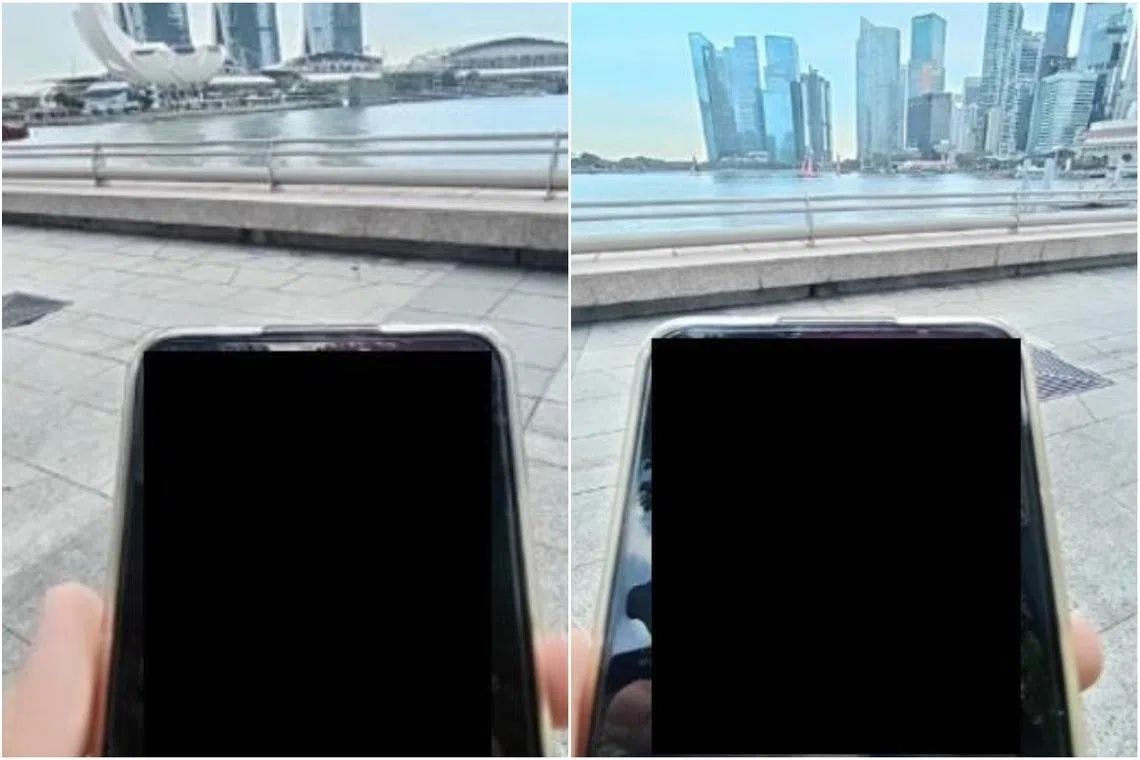
Cyrus Dzulqarnain Al-Shahriar, a 19-year-old student, was placed under a restriction order by Singapore's Internal Security Department on June 24. The teenager had photographed an extremist e-publication against the backdrop of Marina Bay Sands and shared the image on social media, declaring his allegiance to a private online extremist group. The case gained public attention when a vigilant citizen reported his anti-Semitic and pro-Hamas social media posts to authorities, triggering the investigation that would expose a pattern of violent rhetoric spanning from support for militant organisations to threatening messages directed at women.
Simultaneously, Tarmizi Mohd Taha, a 30-year-old customer service officer, was issued a detention order after admitting to authorities that he would execute attacks inside Singapore if instructed to do so by Hamas. Tarmizi, who previously served as a logistics assistant during his national service in the Singapore Police Force, believed that leveraging those skills to assist Hamas would earn him martyrdom. His case reveals how individuals with access to sensitive knowledge or positions within state institutions can become vectors for potential harm if radicalised.
The radicalisation pathway for Cyrus began innocuously in 2022 when he joined online religious communities to deepen his Islamic knowledge. However, the digital spaces he encountered exposed him to anti-Western and anti-LGBTQ extremist content, leading him to post inflammatory material inciting violence against the LGBTQ community. When Hamas launched its October 2023 attacks, narratives supporting the militant group proliferated across social platforms, and Cyrus absorbed pro-Hamas messaging that reframed the killing of civilians as a legitimate form of religious struggle.
By 2024, Cyrus had begun contemplating travel to Gaza to join Hamas fighters, though practical constraints—lack of funds and personal fear of physical combat—prevented him from acting on the impulse. His ideological evolution accelerated in early 2025 when he discovered a niche online group practising what security analysts term "violent accelerationist thinking." These adherents believe that generating chaos through violence will collapse the current global system, allowing Islam to emerge as the dominant civilisation. They viewed Singapore and other developed nations as extensions of American and Zionist dominance, a conspiracy narrative that resonated with Cyrus's expanding worldview.
What distinguishes Cyrus's case is the eclecticism of his extremism, a phenomenon authorities describe as Composite Violent Extremism or "salad bar" ideology. After joining the group's encrypted chat platform, he began glorifying historical terrorist attacks including al-Qaeda's September 11 operations and the 2002 Bali Bombings, events that killed thousands and traumatised the region. He participated in the group's "digital jihad," harassing online critics of Islam, fabricating defamatory content, and inciting violence. Simultaneously, he became absorbed in incel ideology—a male-dominated subculture of individuals who attribute romantic and sexual rejection to societal failure—and began posting threats against women using dehumanising language such as "foid."
The convergence of Hamas support, accelerationist thinking, and incel misogyny in a single young mind illustrates how digital radicalisation operates in the 2020s. Rather than adhering to a coherent ideological framework, Cyrus constructed a personalised hybrid belief system that allowed him to justify violence against multiple targets: Western institutions, Israeli entities, LGBTQ individuals, and women. Singapore's Internal Security Department noted that while Cyrus did not progress beyond ideation and did not share his views with family or classmates, his online activities—glorifying terrorism, inciting violence, and threatening harm—constituted sufficient security concern to warrant intervention.
For Malaysian and Southeast Asian observers, the case highlights vulnerabilities in how young people navigate online spaces during periods of geopolitical tension. The October 2023 Gaza conflict generated unprecedented digital content consumption across the region, with some individuals encountering radicalising material through social media algorithms designed to maximise engagement. The emotional intensity surrounding Palestinian civilian casualties created fertile ground for extremist recruiters operating in private chat groups and encrypted forums, where moderation is minimal and ideological boundaries blur.
Tarmizi's detention reveals another dimension: the potential threat from individuals whose professional backgrounds could facilitate harmful acts. His willingness to leverage logistics expertise gained through national service in Singapore's police force demonstrates how radicalisation can penetrate even those with state security connections. This pattern—where individuals in sensitive positions or with valuable skills become recruitment targets—has surfaced in terror cases across Malaysia, Indonesia, and the Philippines, prompting security agencies throughout Southeast Asia to heighten vetting and monitoring of personnel with access to critical infrastructure or information.
Singapore's authorities attribute both cases to the Gaza conflict's radicalising effects, yet the underlying vulnerability extends beyond geopolitical events. The availability of extremist content online, the algorithmic amplification of polarising narratives, and the existence of online communities that validate violent ideation create persistent conditions for self-radicalisation. Young people navigating identity questions, social alienation, or romantic frustration encounter spaces where extremism offers simple answers and community belonging. For Cyrus, multiple vulnerabilities—youthful idealism about Islam, exposure to anti-Western narratives, and incel resentment—coalesced into a dangerous composite ideology.
The rehabilitation regime that Cyrus will undergo represents Singapore's approach to counterterrorism that emphasises intervention, deradicalisation, and disengagement rather than purely punitive responses. Similar programmes operate across Malaysia and other Southeast Asian nations, though their effectiveness remains debated. The challenge lies in reaching individuals whose radicalisation occurs entirely online, in communities that deliberately evade government detection, and whose ideological commitments lack institutional anchors that might be leveraged for change.
For regional policymakers, the cases underscore the necessity of addressing digital radicalisation through multiple channels: media literacy programmes that help youth critically evaluate extremist narratives; mental health support for socially isolated individuals susceptible to online communities; and international cooperation to disrupt the networks distributing radicalising content. The emergence of composite violent extremism—where individuals selectively combine jihadist, accelerationist, and misogynistic ideologies—suggests that countering terrorism requires understanding how extremism has evolved into a more fragmented, personalised phenomenon that traditional counter-narratives may struggle to address.