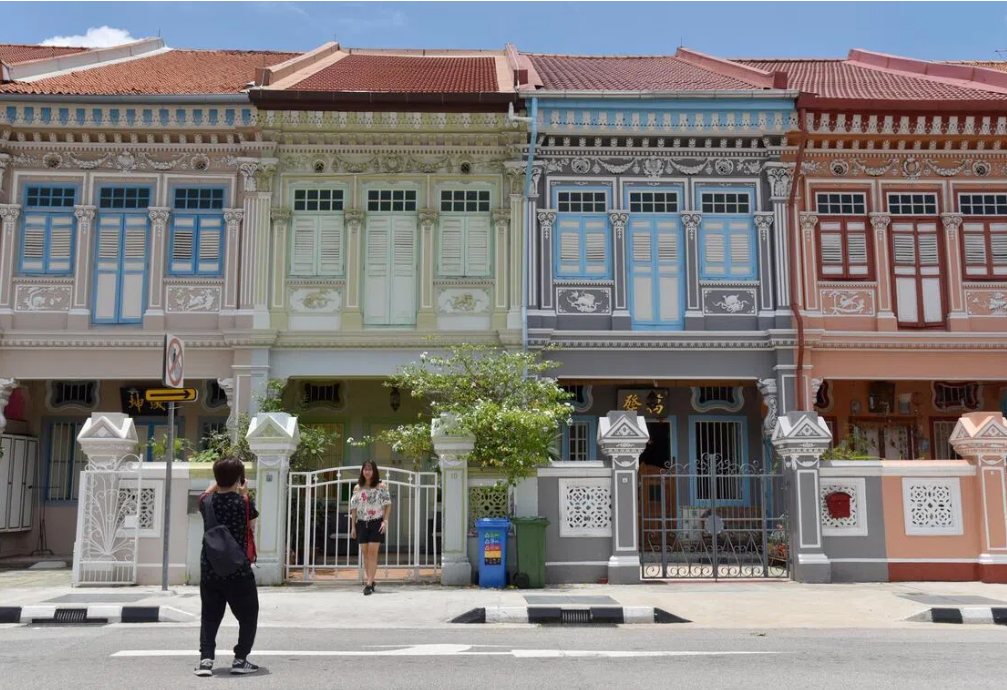
Singapore is launching a three-month promotional drive designed to funnel international visitors toward underexplored neighbourhoods and nightlife districts through targeted ride-hailing incentives. The Singapore Tourism Board and Grab announced on August 11 a dual-voucher scheme bundled within the ride-hailing platform's travel pass, aimed at spreading tourist spending across the island's diverse precincts during the peak August-to-October travel window. The timing capitalises on high-profile events including the Singapore Grand Prix, scheduled for October 2-11, and the Singapore River Festival from September 11-20.
The initiative presents two distinct value propositions tailored to different tourist behaviours. The first voucher extends a 20 per cent discount on rides to and from four heritage and leisure destinations—Katong-Joo Chiat, Tiong Baru, Mandai, and Sentosa—with redemptions capped at two uses per customer. This structure encourages repeat exploration while maintaining budget predictability for the campaign. The second voucher specifically targets after-hours exploration, offering a one-time 20 per cent discount on any Grab ride to or from four established nightlife precincts—Holland Village, Clarke Quay, Boat Quay, and Robertson Quay—but only between 7pm and 4am. This temporal constraint attempts to extend visitor spending into evening hours when hospitality venues typically generate highest margins.
Accessing these vouchers requires visitors to register for the Singapore Grab Travel Pass upon arrival, positioning the ride-hailing app as the principal transaction gateway. The travel pass bundles discounts across multiple tourism categories including transport, food, and travel activities, creating a unified digital loyalty mechanism. This approach aligns with Singapore's broader digital tourism infrastructure and encourages foreign visitors to engage with local payment ecosystems, potentially generating ancillary spending data for tourism planners and commercial partners.
Grab Singapore's managing director Alejandro Osorio framed the campaign within a neighbourhood-by-neighbourhood discovery narrative, emphasising that different precincts offer distinct experiential value. His statement highlights the company's positioning as an enabler of authentic local exploration rather than mere transport provision. Similarly, the Singapore Tourism Board's executive director for South-East Asia Terrence Voon underscored Grab's reach across the broader region, suggesting that the partnership leverages the platform's existing user base and cross-border marketing channels to funnel travellers from surrounding markets into Singapore.
The campaign's geographical targeting reveals strategic intent to capture tourists from nine key markets including China, Indonesia, Thailand, and Vietnam. These markets represent major inbound sources for Singapore tourism, and digital advertising across these territories will present the travel pass and precinct vouchers to prospective visitors during their planning phase. This pre-arrival marketing approach aims to influence destination selection and itinerary planning before travellers commit to bookings, making Singapore's experience appear more accessible and value-laden than competing destinations.
This voucher initiative extends a broader youth-focused repositioning strategy launched in February under the "We don't wait for fun" campaign. That effort targeted travellers aged 25-39 across nine markets and showcased emerging neighbourhoods including New Bahru and Joo Chiat. The August-October voucher drive can be understood as tactical reinforcement of that positioning, providing concrete financial incentives that translate brand messaging into behavioural conversion.
Singapore's tourism sector has demonstrated robust momentum entering this campaign. In 2025, international visitor arrivals reached 16.9 million, exceeding 2024's 16.5 million and generating record tourism receipts of $32.8 billion. These figures represent substantial recovery and growth following pandemic-era disruptions. The Singapore Tourism Board projects further expansion, forecasting between 17 million and 18 million international arrivals by 2026, with tourism spending reaching $31 billion to $32.5 billion. These projections suggest the board expects the voucher campaign to contribute materially to achieving upper-range visitor targets.
The financial commitment underlying Singapore's tourism ambitions extends beyond promotional campaigns. In May, Minister-in-charge of Trade Relations Grace Fu announced a $740 million injection into tourism projects over the subsequent five-year period. This sustained capital commitment indicates that the Grab voucher initiative represents one component of a multi-pronged strategy encompassing infrastructure, hospitality development, and event programming. The ministerial-level funding announcement signals strategic importance placed on tourism within Singapore's broader economic diversification.
For regional readers in Malaysia and other ASEAN nations, this campaign illustrates Singapore's sophisticated use of platform partnerships and digital loyalty mechanisms to compete for international tourism spending. The approach combines localised incentives with regional digital marketing, creating a template that other destination markets might adapt. The emphasis on neighbourhood discovery and after-dark activation reflects evolving tourist preferences, particularly among younger demographic cohorts seeking authentic experiences and value-based transactions. Malaysian tourism authorities monitoring competitive dynamics may observe how Singapore's integration of ride-hailing partnerships with official tourism promotion reshapes visitor expectations and spending patterns across Southeast Asia.

