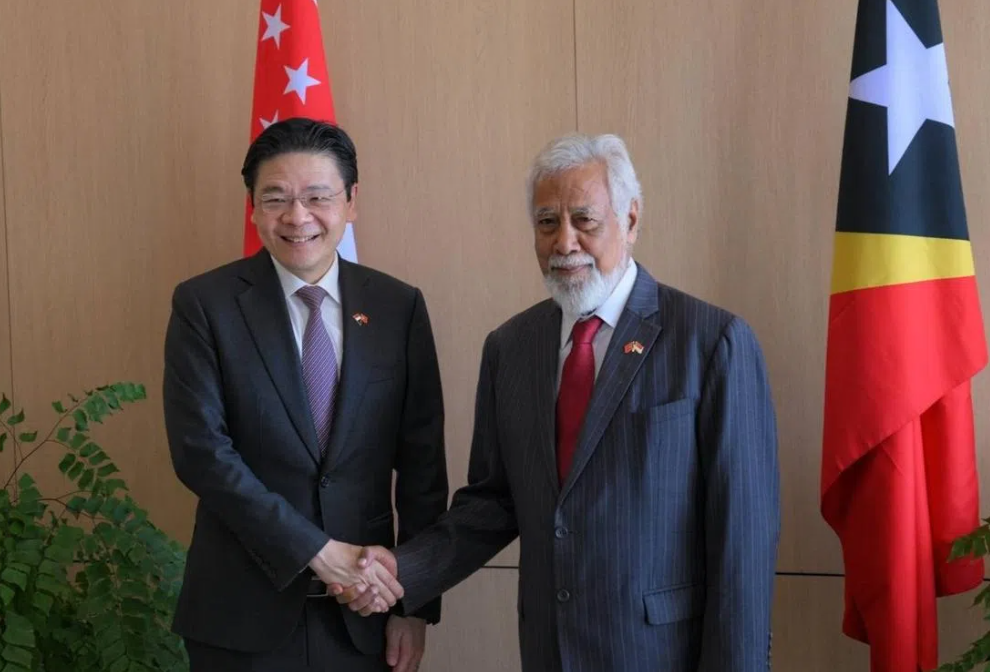
Singapore is moving to cement its relationship with Timor-Leste through an ambitious framework of economic, labour, and institutional cooperation that reflects both nations' commitment to regional integration. Prime Minister Lawrence Wong witnessed the signing of a bilateral cooperation pact with Timor-Leste Prime Minister Xanana Gusmao on July 3 at the Government Palace in Dili, signalling a significant upgrade in ties between the two countries. The visit marks the first time a Singapore prime minister has travelled to Timor-Leste, underscoring the importance Singapore places on strengthening bonds with the region's newest Asean member state, which officially joined the regional bloc in October 2025.
The newly signed agreement establishes a formal mechanism for regular consultation between the foreign ministries of both nations, creating structured channels for dialogue on bilateral matters as well as broader regional and international strategic issues. This institutional framework is designed to facilitate closer government coordination and enable both sides to systematically review existing collaborative efforts while identifying fresh opportunities for mutual benefit. By formalising these consultation processes, Singapore and Timor-Leste are essentially building the administrative infrastructure necessary for sustained, high-level engagement across multiple sectors. PM Wong emphasised during the press conference that despite being relatively small nations, both countries share a conviction that their size need not limit their capacity to shape their own destinies through determined effort and strategic partnerships.
Economically, Singapore already stands as one of the largest foreign investors in Timor-Leste, with Singaporean companies actively pursuing opportunities across diverse sectors ranging from wholesale trade to renewable energy. These investments represent more than mere commercial interest; they reflect confidence in Timor-Leste's economic potential and trajectory. PM Wong framed the partnership as a vehicle for creating fresh business opportunities, fostering economic diversification, and generating sustainable growth that serves the interests of both populations. The emphasis on economic diversification carries particular significance for Timor-Leste, which has historically relied heavily on oil and gas revenues and faces the challenge of building a more resilient, multi-sector economy.
A landmark development announced by PM Wong involves opening Singapore's labour market to Timorese workers beginning in 2027. Singapore will designate Timor-Leste as a non-traditional source of migrant workers for designated sectors and occupations, initially focusing on construction and marine shipyard industries. The Manpower Ministry has already observed early industry interest in recruiting Timorese workers, particularly in construction, suggesting demand is likely to materialise once the policy takes effect in the second half of 2027. This measure addresses practical labour market needs while simultaneously creating employment pathways for Timorese citizens and deepening people-to-people connections between the two societies. For Singapore, the arrangement expands the pool of available workers during a period when many sectors face manpower constraints; for Timor-Leste, it represents income opportunities and potential skills transfer for its workforce.
The healthcare cooperation dimension involves a planned agreement between the National University Hospital and Timor-Leste's Ministry of Health, scheduled for signing in July, to establish a five-year collaborative framework. This partnership focuses on health workforce development, healthcare training systems, public health capability strengthening, and broader health systems improvement. The collaboration is tailored to Timor-Leste's expressed priorities, with NUH prepared to provide support in critical areas including emergency care, pre-hospital care, paediatrics, ophthalmology, obstetrics and gynaecology, and basic supportive care. Such technical cooperation addresses genuine healthcare gaps in Timor-Leste while allowing Singapore's medical institutions to contribute to nation-building in a neighbouring country. The five-year timeframe provides sufficient duration for meaningful capacity-building rather than superficial engagement.
Educational partnership forms another pillar of the expanded relationship, with Singapore committing to support Timor-Leste's national institute for teacher training and education professional development. The focus on developing school leaders carries strategic importance, as quality educational leadership directly influences teaching standards and ultimately shapes the capabilities of future generations. This represents a subtle but significant form of nation-building, working through education systems to strengthen Timor-Leste's human capital and institutional capacity. Such initiatives often yield long-term dividends that extend well beyond immediate measurable outcomes.
Timor-Leste's recent accession to Asean represents a watershed moment for the country and creates a compelling rationale for Singapore's expanded engagement. PM Wong reiterated Singapore's commitment to supporting Timor-Leste's integration into Asean structures and processes. Singapore had previously launched the Singapore-Timor-Leste Asean Readiness Support package in December 2022 to equip Timorese officials with practical skills and knowledge necessary for effective participation in Asean meetings and forums. This package was enhanced in July 2025, and will now be further expanded to encompass additional Asean-related programmes. The timing is strategically shrewd, as Timor-Leste is being prepared not merely to participate in Asean, but to assume the chairmanship of the regional bloc in 2029, a role that demands substantial administrative capacity and institutional knowledge.
As part of the expanded Asean capacity-building initiative, Singapore will conduct tailored workshops for Timorese officials on the specific responsibilities and procedures involved in chairing Asean. Additionally, Singapore will welcome Timorese officials to serve as attachés to Singapore's Asean chairmanship teams when Singapore assumes the chair in 2027, providing hands-on experience in executing the demanding role. This apprenticeship approach ensures that Timorese officials will have practical, real-world exposure to the complexities of managing Asean's machinery and diplomatic protocols before Timor-Leste itself takes the helm. Such foresight reflects sophisticated understanding of institutional development and prepares the newest member state to contribute effectively to regional governance.
PM Gusmao characterised Singapore as a trusted friend and partner, acknowledging Singapore's historical support for Timorese people and institutions and its advocacy for Timor-Leste's Asean membership. His remarks reflect the genuine appreciation within Timor-Leste's leadership for Singapore's consistent backing during the country's path to regional integration. For Timor-Leste, Asean membership represents fulfilment of a national aspiration and integration with its Southeast Asian neighbours, a matter of profound symbolic and practical importance. The bilateral framework announced during PM Wong's visit positions Singapore as a primary facilitator and supporter of Timor-Leste's integration process, enhancing Singapore's influence and influence within Asean.
PM Wong's receipt of the Order of Timor-Leste (Grand Collar) from President Jose Ramos-Horta during the visit provides ceremonial acknowledgement of Singapore's contributions to Timor-Leste's national development and Asean integration efforts. In accepting the honour, PM Wong redirected credit to Singaporeans who have served in Timor-Leste in various capacities, conducting training programmes, sharing professional expertise, building institutional capabilities, and working alongside Timorese counterparts in support of nation-building objectives. This collective framing reflects the reality that bilateral relationships rest upon thousands of individual interactions and exchanges rather than merely high-level political gestures.
The comprehensive nature of the partnership unveiled during PM Wong's visit—spanning labour mobility, healthcare, education, economic investment, and Asean capacity-building—demonstrates a strategic approach to bilateral engagement that addresses multiple dimensions of national development simultaneously. For Malaysia and other Southeast Asian nations, the Singapore-Timor-Leste partnership model offers insights into how established regional powers can facilitate the integration and development of newer member states. The emphasis on practical capacity-building, labour market access, and institutional support creates tangible benefits while advancing broader regional stability and development. As Timor-Leste matures as an Asean member and prepares to assume the chairmanship in 2029, the institutional knowledge and practical experience garnered through partnerships like Singapore's will prove increasingly valuable for the region as a whole.

