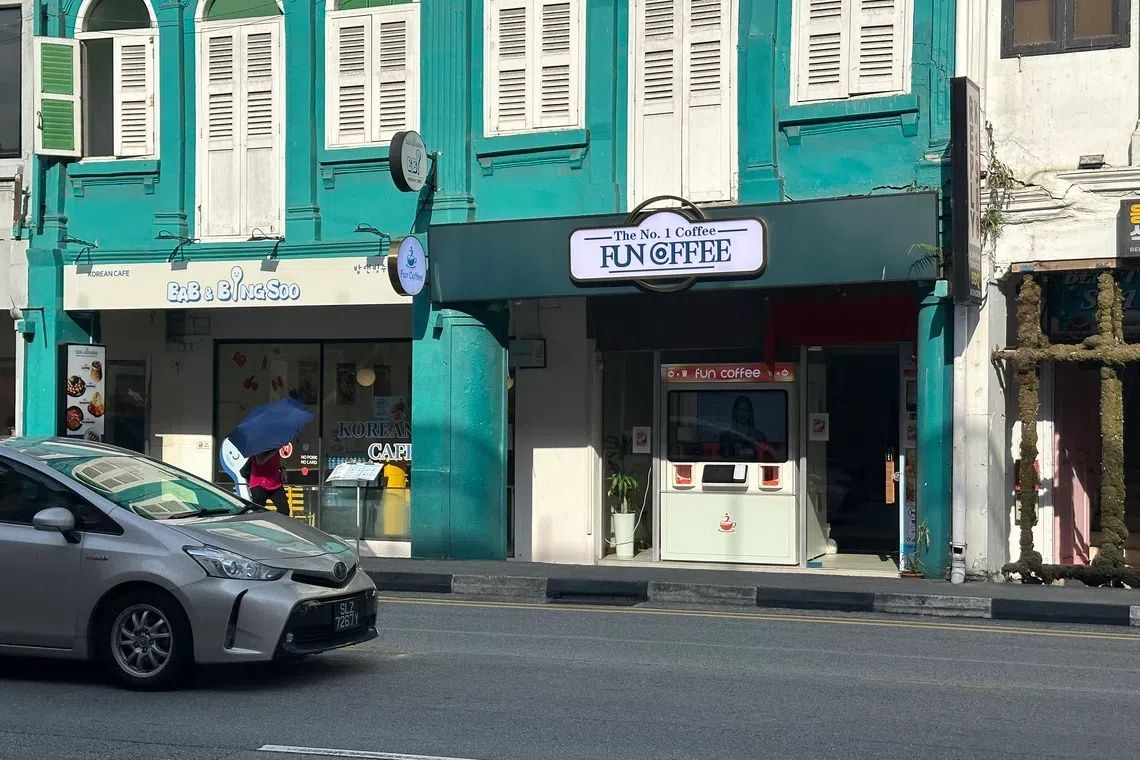
Singapore's police force has moved against a growing cryptocurrency-fuelled investment scam originating from Vietnam that has ensnared hundreds of victims across Asia. On August 6, a 49-year-old woman was detained in connection with Fun Coffee, an illegal multilevel marketing operation that exploited sophisticated digital infrastructure to solicit deposits from unsuspecting investors. The arrest signals an escalating crackdown on transnational financial crime in the region, where such schemes increasingly exploit the opacity of blockchain transactions and cross-border enforcement gaps.
The scheme's mechanics reveal how modern fraud has adapted to digital-age vulnerabilities. Prospective members downloaded a smartphone application and transferred Tether (USDT), a cryptocurrency maintaining a one-to-one peg with the US dollar, into wallet addresses controlled through the platform. The woman under arrest had actively marketed the programme and recruited fresh participants, deriving personal commissions from their investments while promising returns far exceeding legitimate financial instruments. Once capital entered the system, withdrawal mechanisms mysteriously failed, trapping participants' funds within the Fun Coffee application.
What distinguishes Fun Coffee from conventional Ponzi schemes is its sophisticated use of cryptocurrency and the deliberate construction of legitimacy through manufactured corporate infrastructure. The organisation claims Vietnamese registration in Phu Quoc and boasts reported assets exceeding US$1 billion alongside a purported operational team exceeding 5,000 members. Upon investigation, The Straits Times discovered that Fun Coffee maintained a registered address at 202 Jalan Besar in Singapore featuring a coffee vending machine with handwritten payment instructions directing customers to scan QR codes. This superficial veneer of commercial normalcy obscures the complete absence of genuine business operations or asset backing.
The geographical reach of the scheme demonstrates how digital platforms transcend traditional law enforcement boundaries. Hong Kong and Macau authorities have arrested eight individuals linked to the operation, with approximately 200 victims in those jurisdictions reporting losses aggregating nearly HK$100 million. The consistency of victim testimonies and simultaneous arrests across multiple jurisdictions suggests coordinated international operations, likely overseen by senior figures remaining beyond Asia's immediate reach. One Singapore participant reported investing approximately S$400,000 with zero recovery prospects, exemplifying the devastating personal impact inflicted on ordinary citizens seeking financial advancement.
The Fun Coffee case illustrates a troubling pattern emerging throughout Southeast Asia and East Asia, where cryptocurrency's technical complexity and regulatory ambiguity create fertile ground for organised fraud. Perpetrators leverage the immutability of blockchain transactions to extract deposits while maintaining plausible deniability regarding criminal intent. The multilevel recruitment structure ensures that early participants receive distributions drawn from later entrants' capital, creating temporary perceived legitimacy that facilitates exponential growth before inevitable collapse. This cyclical pattern has repeated across dozens of schemes targeting the region's growing middle class.
Singapore's legal response reflects regional authorities' awakening to the scale and sophistication of such crimes. The arrested woman faces potential prosecution under the Multi-Level Marketing and Pyramid Selling (Prohibition) Act, exposing her to imprisonment of up to five years and financial penalties reaching S$200,000. However, such individual-level enforcement represents merely symbolic action against transnational criminal networks whose architects remain sheltered by jurisdictional complexity. Vietnam's regulatory environment and the Phu Quoc location's relative isolation from centralised oversight have historically attracted financial crime operators seeking refuge from scrutiny.
The scheme's timing proves particularly significant given Fun Coffee's documented entry into Singapore sometime during 2025. The compressed timeline between market entry and law enforcement intervention suggests that Singaporean investors, despite the country's sophisticated financial literacy and regulatory framework, remain vulnerable to carefully constructed deception. This reality carries troubling implications for less developed markets across Southeast Asia, where cryptocurrency adoption rates climb rapidly without proportional increases in regulatory capacity or consumer awareness of predatory schemes.
Author authorities have issued explicit public warnings regarding payment methodologies commonly utilised by fraudulent schemes. Citizens receiving requests for transfers via private PayNow QR codes, personal mobile numbers, or overseas accounts should treat such solicitations as definitive red flags. The police have instructed the public against making additional payments or transfers to Fun Coffee, explicitly cautioning that such requests may originate from individuals falsely claiming representation of the organisation or emerge through the Fun Coffee application itself. These warnings reflect the difficulty confronting enforcement agencies attempting to disrupt operations whose participants may themselves become unwitting propagandists.
The implications for Malaysian consumers warrant particular consideration, given that domestic capital markets have attracted comparable schemes leveraging sophisticated digital marketing and social proof mechanisms. The Fun Coffee case demonstrates how regional proximity and shared digital ecosystem facilitate rapid cross-border penetration of fraudulent operations. Malaysian investors should exercise extreme caution regarding any investment platform promising returns substantially exceeding conventional financial instruments, particularly those necessitating cryptocurrency transfers or recruitment of additional participants. The absence of verifiable regulatory licensing and transparent business operations should prompt immediate disengagement.
Broader systemic vulnerabilities require regional policy responses transcending individual nation-state enforcement. Cryptocurrency exchanges, particularly those facilitating USDT transactions, could implement enhanced customer verification protocols and flag suspicious patterns indicative of multilevel marketing structures. International cooperation frameworks between Southeast Asian financial intelligence units remain underdeveloped, allowing perpetrators to exploit gaps between jurisdictions. The Fun Coffee investigation represents merely a symptom of deeper challenges confronting regulators attempting to balance financial innovation's legitimate benefits against predatory exploitation of emerging technologies.
Looking forward, the arrest of individual participants in such schemes yields diminishing returns without simultaneous dismantling of the infrastructure enabling cross-border capital flows and cryptocurrency conversions. Law enforcement agencies throughout the region possess limited tools for tracing USDT movements once they enter decentralised exchanges, while legitimate users benefit from cryptocurrency's privacy features that simultaneously shield criminal operators. This fundamental tension between innovation and consumer protection will likely intensify as cryptocurrency adoption accelerates throughout Southeast Asia.
For Malaysian authorities, the Fun Coffee case underscores the necessity of proactive consumer education campaigns detailing the telltale characteristics of investment fraud, particularly schemes targeting digital-native demographics. Bank Negara Malaysia and the Securities Commission should consider enhanced coordination regarding cryptocurrency-facilitated schemes, potentially establishing regional task forces with counterparts in Singapore, Hong Kong, and Vietnam. The reputational and financial damage inflicted by such operations extends beyond immediate victims to encompass broader loss of confidence in digital financial innovations and legitimate blockchain applications.

