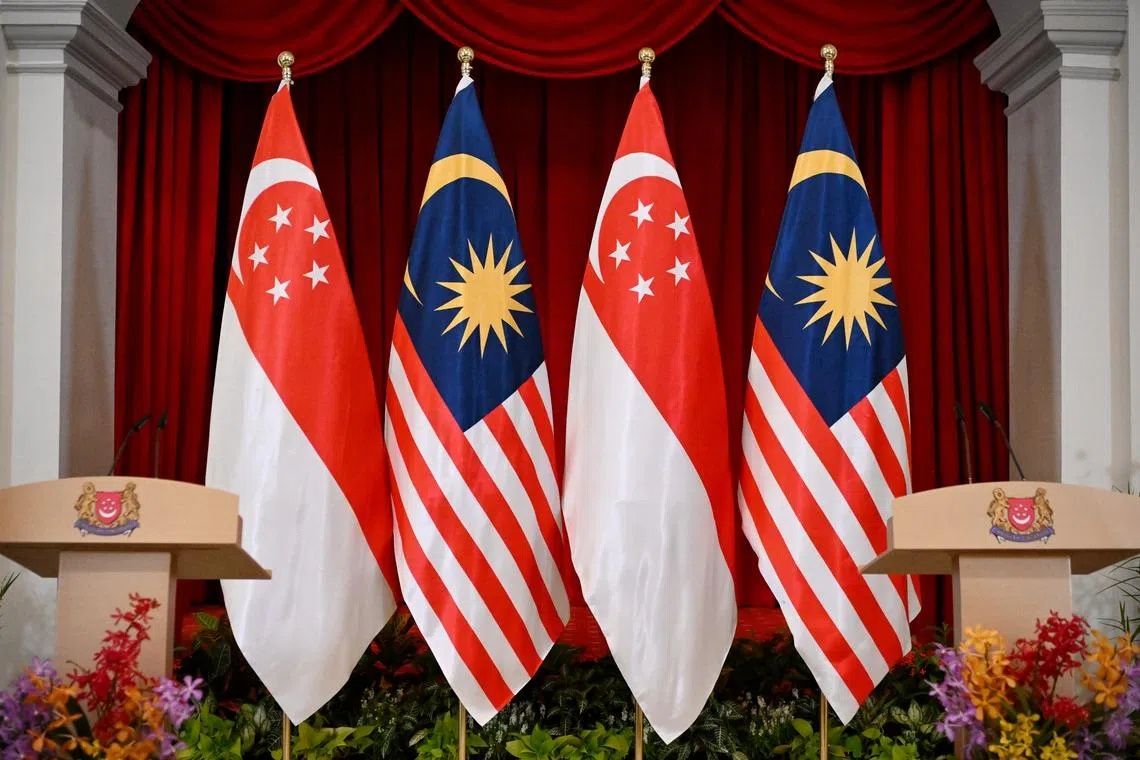
President Tharman Shanmugaratnam has characterized the Singapore-Malaysia relationship as fundamentally grounded in mutual respect and shared regional interests, rather than narrow commercial calculation, ahead of his state visit to Malaysia at the invitation of King Sultan Ibrahim Sultan Iskandar. In remarks to Malaysian news agency Bernama, the President stressed that while occasional disagreements are inevitable between neighbouring countries, these should not undermine the broader partnership that has matured over six decades into one built on deep trust and goodwill.
The framework that Singapore and Malaysia have established for managing their relationship reflects a deliberate choice by successive governments to confront bilateral complexities rather than sidestep them. Both nations have adopted a disciplined approach centred on calm resolution rooted in mutual respect and adherence to international law, avoiding the temptation to allow contentious matters to fester or poison the overall dynamic. This methodology has proven particularly valuable given the complex historical legacy shared by the two countries and their immediate geographical proximity, which naturally creates competing interests and occasional friction.
President Tharman's visit continues a formal ritual of state engagement that underscores the symbolic and practical importance both nations attach to maintaining high-level diplomatic contact. The King's reciprocal visit to Singapore in May 2024, his first overseas state journey following his accession to the throne in January of that year, demonstrated the Malaysian monarchy's commitment to preserving these ties at the highest level. Such exchanges serve not merely as ceremonial gestures but as opportunities to reinforce understanding and address emerging challenges through direct dialogue between leaders.
The President articulated a nuanced understanding of regional dynamics, arguing that stability in Southeast Asia does not emerge from the absence of disputes but rather from the institutional capacity and political will to manage disagreements responsibly. The high level of familiarity and trust cultivated between officials, business figures, and citizens on both sides has created the psychological and diplomatic space necessary for disputes to be resolved through dialogue rather than confrontation. This accumulated social capital becomes increasingly valuable in a region facing mounting external pressures and internal complexity.
Singapore and Malaysia's approach to bilateral relations carries implications that extend well beyond their immediate interests, serving as a model for Asean cohesion during a period of considerable international turbulence. The President highlighted how their example reinforces the importance of dialogue, restraint, respect for sovereignty, and adherence to rules-based order at both regional and global levels. As great power competition intensifies and the multilateral trading system faces increasing fragmentation, the demonstrated ability of two neighbouring states to cooperate despite differences becomes particularly instructive for other regional actors navigating similar pressures.
Regular engagement across multiple levels—among political leaders, officials, business communities, and ordinary citizens—represents not a luxury but a necessity for maintaining relationship resilience over the long term. President Tharman noted that what came naturally to earlier generations of Singaporeans and Malaysians must now be actively encouraged through structured bilateral exchange programmes, youth leadership initiatives, and community-level projects. The danger of complacency looms as historical memory fades and the generations that experienced the intensity of the separation era diminish in number, necessitating deliberate institutional mechanisms to sustain understanding.
The economic dimension of the partnership offers compelling opportunities for deeper integration that benefits both populations. President Tharman identified renewable energy cooperation, supply chain resilience, talent development, and greater market integration as areas where complementary strengths can generate shared prosperity. The Johor-Singapore Special Economic Zone and the Rapid Transit System Link exemplify how strategic projects combining respective comparative advantages can yield win-win outcomes that transcend zero-sum competition. These initiatives demonstrate that cooperation need not require either country to compromise core interests; rather, joint ventures can multiply the benefits available to both.
Climate change and energy transition present a particularly urgent platform for deepened cooperation. As both nations face pressure to reduce carbon emissions and transition to renewable energy sources, partnership in developing green technologies, establishing carbon credit mechanisms, and building renewable energy infrastructure becomes mutually advantageous. Malaysia's significant potential in renewable energy combined with Singapore's technological sophistication and capital markets creates natural complementarities that neither country can fully exploit in isolation.
The broader Asean context frames the significance of Singapore-Malaysia cooperation. President Tharman highlighted Malaysia's stewardship of the regional grouping in 2025, during which Timor-Leste was welcomed as the 11th member state, as a demonstration of Asean's capacity for institutional renewal and expansion. The two nations bear particular responsibility for ensuring the grouping maintains its coherence, reliability, and central role in regional architecture as Singapore approaches its own Asean chairmanship in 2027. The transition between Malaysian and Singapore leadership offers an opportunity to demonstrate continuity and purposefulness in Asean's evolution.
President Tharman's invocation of the Malay proverb "jiran sepakat membawa berkat"—neighbours in agreement bring blessings—encapsulated the philosophical foundation underlying bilateral engagement. This appeal to shared cultural wisdom, expressed in the language of Malaysia, underscores that the partnership transcends institutional mechanics to rest on deeper affective ties and common values. The President's emphasis on hearts shaking hands alongside formal diplomatic protocols reflects an understanding that sustainable international relationships require emotional resonance alongside rational calculation of interests.
The President's articulation of partnership principles carries particular relevance as geopolitical competition intensifies and regional powers face pressure to align with competing great powers. By demonstrating that neighbouring countries can maintain genuine friendship while managing disagreements, Singapore and Malaysia offer an alternative model to confrontational approaches increasingly prevalent elsewhere. This becomes especially significant for smaller nations that can ill afford the costs of sustained conflict with immediate neighbours while navigating pressure from larger powers with global strategic interests in the region.

