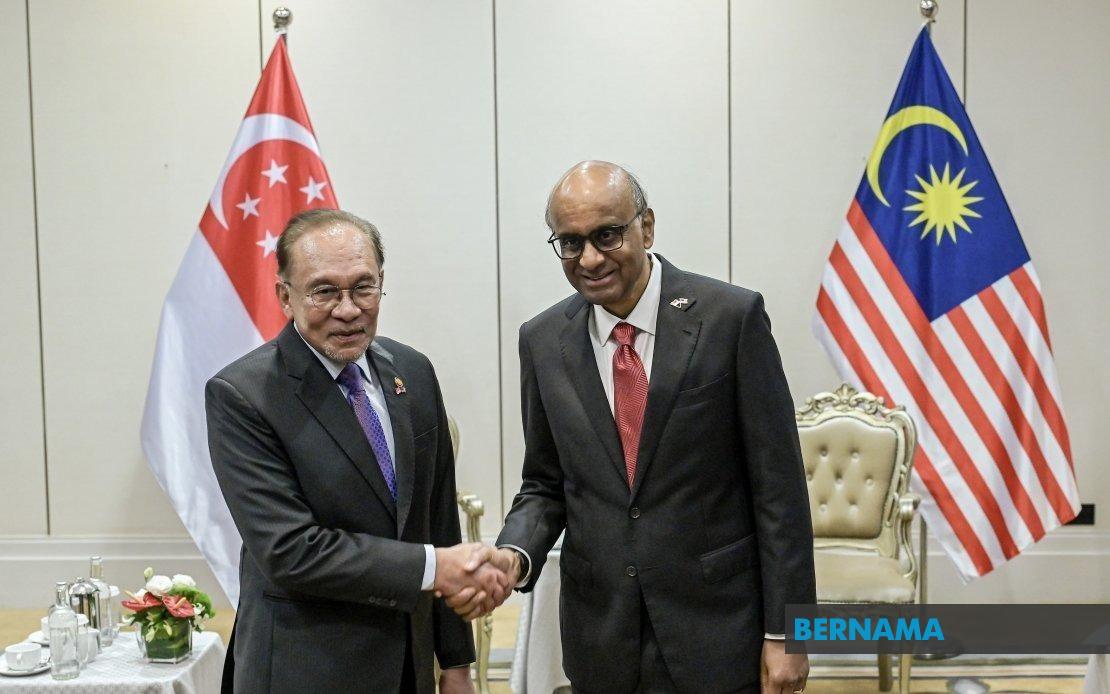
Singapore and Malaysia have committed to expanding their partnership across multiple strategic sectors, with both nations emphasizing the urgency of closer collaboration on food security and energy resilience. The pledge emerged during a high-level bilateral engagement on Monday, when Prime Minister Datuk Seri Anwar Ibrahim received Singapore's President Tharman Shanmugaratnam at a courtesy call. The timing reflects growing recognition across Southeast Asia that regional stability and prosperity depend on nations working together to address shared challenges, particularly as supply chain vulnerabilities and energy demands reshape the region's economic landscape.
President Tharman is conducting an inaugural state visit to Malaysia from July 12 to 15, marking a significant diplomatic moment for both countries. The visit underscores Singapore's pivot toward deeper engagement with its closest neighbor and largest trading partner. Upon arrival, Tharman and his wife Jane Ittogi Shanmugaratnam were formally received at Istana Negara with a state welcoming ceremony, where they met with His Majesty Sultan Ibrahim, King of Malaysia, and Her Majesty Raja Zarith Sofiah, Queen of Malaysia. This ceremonial protocol signals the high importance both governments place on strengthening bilateral relations at this juncture.
Beyond the capital, President Tharman extended his engagement to Selangor, one of Malaysia's most economically dynamic states. On Tuesday, he held an audience with the Sultan of Selangor, Sultan Sharafuddin Idris Shah, and met with Selangor Menteri Besar Datuk Seri Amirudin Shari. These interactions illustrate a broadening of Singapore-Malaysia cooperation beyond federal-level discussions to include state governments, a development that could unlock new avenues for targeted collaboration at the subnational level. Such decentralized engagement has become increasingly important as Malaysian state governments pursue their own economic development strategies.
The two leaders discussed geopolitical developments affecting the broader region, with particular focus on implications stemming from the evolving situation in West Asia. This conversation reflects the reality that Southeast Asian nations cannot remain insulated from Middle Eastern tensions, which reverberate through global energy markets, shipping lanes, and geopolitical alignments. Both Singapore and Malaysia, as trading hubs with significant maritime interests, face direct consequences from instability thousands of kilometers away. The discussion highlighted shared anxieties about how external crises could disrupt regional prosperity.
A cornerstone of their engagement was reaffirming commitment to upholding international law, specifically the United Nations Convention on the Law of the Sea (UNCLOS), and safeguarding freedom of navigation. These principles carry profound significance for both countries, which depend heavily on unobstructed maritime trade. For Malaysia, with its lengthy coastlines and significant offshore resources, UNCLOS protections are essential to its sovereignty and economic interests. For Singapore, a city-state whose survival depends on open sea lanes, the principle of freedom of navigation is non-negotiable. Their joint emphasis on these norms sends a message of solidarity amid regional tensions over maritime claims.
Food security emerged as another priority area for deepened cooperation. Southeast Asia has increasingly recognized that agricultural vulnerabilities pose systemic risks to national development and social stability. Both Singapore and Malaysia face different but complementary challenges: Singapore, with limited arable land, must secure reliable food imports and develop innovative production methods, while Malaysia, with substantial agricultural capacity, seeks to modernize its sector and reduce post-harvest losses. Collaboration could involve technology transfer, joint research initiatives, and supply chain agreements that benefit both parties while enhancing regional food resilience.
Energy cooperation represents an equally critical dimension. As Southeast Asia pursues energy transitions toward renewable sources while managing rising electricity demand, bilateral projects could accelerate progress. Singapore's advanced energy technology sector and Malaysia's renewable energy potential create natural synergies. Discussions on this front likely encompassed both conventional energy security and emerging opportunities in green energy infrastructure, battery storage, and grid interconnection that could benefit the wider region.
Beyond these headline areas, the two sides identified collaboration opportunities in technical and vocational education, reflecting recognition that human capital development remains central to long-term competitiveness. They also discussed climate adaptation and flood mitigation, matters of acute relevance given Southeast Asia's vulnerability to climate impacts and both countries' experience with severe flooding. President Tharman's specific welcome for enhanced exchanges between Singapore and Selangor in these domains suggests potential for pilot programs and knowledge-sharing arrangements that could later expand across Malaysia.
The growth of start-ups and innovation ecosystems featured prominently in deliberations. Both nations have established themselves as regional innovation hubs, and deeper collaboration could involve venture capital flows, talent exchange, and joint incubation programs. Selangor's ambitions to develop itself as a technology and innovation center align well with Singapore's existing capabilities and networks, creating opportunities for complementary development.
This state visit and its substantive outcomes come amid broader regional realignments where Southeast Asian nations are recalibrating partnerships to navigate multipolar competition and shared transnational challenges. For Malaysia, closer engagement with Singapore on these fronts strengthens its position as a serious stakeholder in regional architecture. For Singapore, the inaugural state visit by a president represents renewed commitment to its most vital bilateral relationship. Both countries recognize that their prosperity remains intertwined, and that strategic cooperation—whether on food, energy, maritime law, or innovation—serves mutual and regional interests more effectively than competitive isolation. The breadth of topics covered during this visit suggests both leaderships view the bilateral relationship not as a static arrangement but as a dynamic partnership requiring continuous deepening and adaptation to emerging realities.

