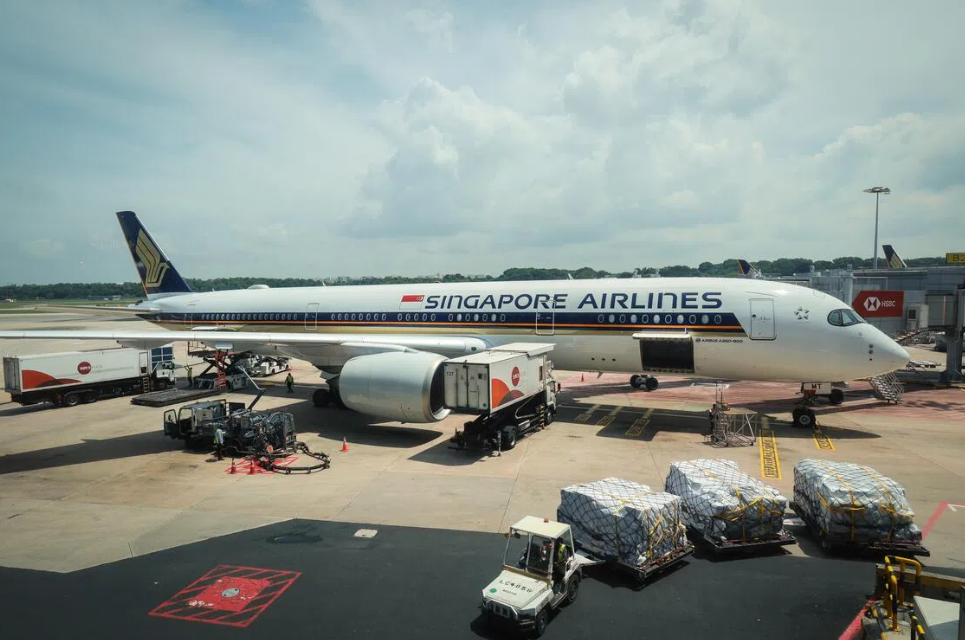
Singapore Airlines' ultra-long-range service to New York encountered an unexpected disruption in mid-August when one of its flagship aircraft was forced to return to Changi Airport just hours into what should have been one of the world's longest non-stop commercial routes. Flight SQ22, which had departed late evening on August 12 bound for Newark, reversed course at 3.06am the following morning due to what the carrier described as a technical matter, leaving passengers stranded and prompting a complex operational response involving replacement aircraft and crew rotations.
The affected service operated an Airbus A350-900, a sophisticated ultra-long-range aircraft specifically designed to handle extended transoceanic journeys spanning more than 18 hours. SQ22 normally traverses approximately 16,700 kilometres between Singapore and New York, positioning itself among the world's longest commercial flights. This particular route exemplifies the technical capabilities of modern aviation and the strategic importance of such services for connecting Asian and American markets, particularly for premium carriers seeking to establish direct connectivity between major business hubs.
When the technical problem emerged during the flight's initial phase, the decision was made to divert immediately back to Singapore rather than attempt an emergency landing at an intermediate point. The aircraft was subsequently towed to a remote parking bay at Changi Airport to undergo necessary repairs, a standard procedure when grounding a large commercial jet for maintenance work. This routing decision meant that 133 passengers and 17 crew members had to disembark through buses rather than jetways, a process that, while operationally necessary, created additional inconvenience for those already experiencing an unexpected delay to their journey.
Singapore Airlines did not publicly disclose the specific nature of the technical issue, citing standard operational protocols around aircraft maintenance reporting. This lack of transparency, while understandable from a corporate perspective given potential liability and regulatory considerations, frustrated some passengers who took to social media platforms seeking clarification. One traveller posting on Reddit acknowledged that the airline's ground crew performed admirably under challenging circumstances but expressed disappointment at the absence of detailed technical briefings about why the aircraft required towing and why checked baggage could not be readily accessed during the transition period.
The replacement of both aircraft and crew reflects the complexity of operating ultra-long-haul services across time zones and international airspace. The original flight crew would have exceeded regulatory duty time limitations had they continued on the replacement aircraft, necessitating a complete crew change. This regulatory framework exists to ensure pilot fatigue does not compromise flight safety, a principle that takes precedence over schedule adherence. The replacement aircraft ultimately departed Changi at 5.41am on August 13, reaching Newark at 12.15pm local time, meaning the final arrival occurred only nine hours later than originally scheduled despite the complete restart of the journey.
Passengers endured several hours of uncertainty and airport confinement during the interim period between the return and the departure of the replacement service. The airline provided food vouchers to address immediate passenger needs, though this modest compensation reflects the limited obligations carriers typically assume for technical failures rather than operational cancellations. Affected customers received continuous updates regarding their situation and rebooking options, with Singapore Airlines facilitating connections to downstream destinations where passengers' original itineraries required onward travel.
The incident highlights the vulnerability of ultra-long-range operations to unexpected technical complications. While modern aircraft like the A350-900 are engineered to extraordinary reliability standards, even minor systems issues detected during flight necessitate comprehensive investigation and potentially extensive repairs. The decision-making process around whether to continue, divert, or return home involves complex calculations balancing safety imperatives, fuel reserves, crew fatigue regulations, and availability of suitable airports for emergency landing.
For Singapore Airlines, maintaining confidence in its flagship long-haul service remains commercially critical. The SQ22 service attracts premium passengers willing to pay substantial fares for direct connectivity, and operational disruptions damage the airline's reliability reputation despite being unavoidable when safety concerns arise. The carrier's response to this incident, characterised by passenger-focused rebooking and ground-handling support, aimed to mitigate reputational damage whilst prioritising the fundamental principle that aircraft safety cannot be compromised for schedule compliance.
From a regional aviation perspective, this incident underscores the operational challenges faced by carriers maintaining some of the world's most demanding air services. Southeast Asian airlines operating long-haul routes must balance modern aircraft capabilities against regulatory requirements designed to protect passenger safety, particularly on journeys where crew fatigue becomes a measurable risk factor. The technical sophistication of aircraft like the A350-900, while enabling these extraordinary routes, also means that complex systems interactions can occasionally produce failures requiring immediate return to base rather than continuation to distant destinations.
The transparency question raised by affected passengers reflects broader expectations among flying publics for detailed communication about technical issues. While airlines understandably exercise caution in disclosing maintenance specifics that might invite speculation or litigation, modern passengers increasingly expect substantive explanations rather than generic acknowledgements. Future incidents of this nature may prompt airlines to balance security and liability considerations against the reputational benefits of transparent passenger communication regarding technical circumstances.

