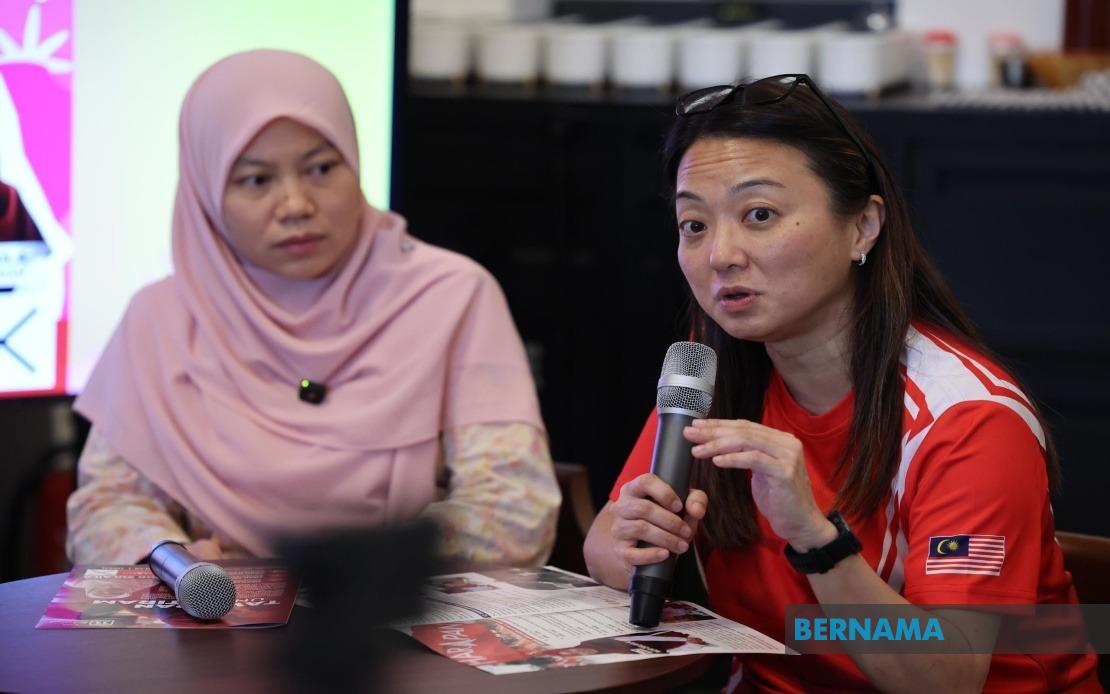
Accusations that contesting parties in the Johor state election are merely reproducing each other's policy documents ignore a straightforward reality, according to DAP deputy secretary-general Hannah Yeoh. Speaking in Johor Bahru ahead of the July 11 polling day, the Minister in the Prime Minister's Department (Federal Territories) dismissed concerns that Pakatan Harapan's manifesto represents a carbon copy of Barisan Nasional's platform, framing the overlap instead as a natural consequence of both coalitions tackling the same underlying community challenges.
When manifestos converge on welfare provisions and housing availability, this convergence should be celebrated rather than scrutinised, Hannah contended. The observation reflects a political reality often overlooked in campaign discourse: voters raise consistent concerns across geographic and demographic lines, and parties responding to those concerns will inevitably identify similar solutions. The fact that multiple parties pledge action on housing security or social safety nets does not suggest intellectual theft—it demonstrates that candidates have listened to what Johorians actually want addressed during their time in office.
Hannah elaborated on this reasoning during remarks made after presiding over the "Chit Chat Wanita" programme and launching the "Offer for Tiram" initiative in the state capital. She emphasised that infrastructure, economic security, and quality of life improvements appear in nearly every campaign platform because these are the legitimate grievances mobilising voters. Rather than treating manifest similarities as grounds for criticism, voters should interpret widespread policy overlap as evidence that political leaders across the spectrum recognise shared obligations to their constituents. This framing transforms a common campaign allegation into a validation of democratic responsiveness.
Beyond manifesto substance, Hannah used her campaign engagements to highlight DAP's approach to candidate selection and party renewal. The party fielded eight women among its 17 candidates contesting in the 16th Johor state election, demonstrating what Hannah characterised as institutional commitment to gender balance in elected office. This figure carries symbolic weight in Malaysian politics, where female representation in state legislatures remains uneven, and DAP's conscious effort to expand women's presence reflects broader discussions about inclusive governance across Southeast Asia's democratic systems.
Hannah framed female candidates not merely as representative symbols but as capable administrators equipped for major responsibilities. She noted that women candidates possess the potential to serve as policymakers and to occupy significant ministerial portfolios, including potentially the office of Menteri Besar should voters grant their party a mandate. This argument addresses persistent stereotypes about women's suitability for executive roles and attempts to reposition the conversation around female participation from tokenism to competence and leadership capacity.
The DAP leader pointed to Tiram candidate Nor Zulaila Abd Ghani as a concrete example of the calibre of women contesting under the party banner. Nor Zulaila brings twelve years of accumulated experience across local authority, state, and federal administrative structures—a professional trajectory that substantiates claims about women candidates' readiness for high office. Hannah highlighted Nor Zulaila's background as particularly illustrative of how candidates can challenge conventional identity categories. With a Malay mother and Chinese father, Nor Zulaila embodies Malaysia's multicultural reality in a way Hannah suggested could contribute meaningfully to resolving racial tensions through lived example rather than rhetoric alone.
The Tiram constituency itself reflects competitive dynamics in the broader election. Nor Zulaila contests in a four-cornered race against representatives of Barisan Nasional, Parti Bersama Malaysia, and Perikatan Nasional. This fragmented contest exemplifies the increasingly multipolar nature of Malaysian state-level elections, where traditional two-coalition competition has fractured into more complex electoral arithmetic requiring sophisticated coalition management and voter targeting.
Pakatan Harapan's decision to contest all 56 seats across Johor represents a maximalist strategy aimed at securing control of the state government. The breadth of this approach contrasts with selective participation in some previous contests and signals confidence in both candidate quality and voter receptiveness to the coalition's message. Fielding candidates in every constituency eliminates any perception of territorial concession and forces other coalitions to campaign comprehensively rather than concentrating resources in selected strongholds.
The electoral calendar accelerates toward its climax with early voting scheduled for July 7 and main polling on July 11. These compressed timelines compress campaign seasons into intense periods of candidate engagement, media coverage, and voter mobilisation. For Malaysian observers, the Johor election serves as an important test of sentiment in a state that traditionally influences national political calculations. Johor's political trajectory often foreshadows shifts in broader Malaysian preferences, making outcomes there relevant to discussions of governance quality and political direction far beyond the state's borders.
Hannah's intervention in the manifesto debate highlights how campaign narratives extend beyond specific policy pledges into metatextual arguments about what constitutes legitimate political competition. By reframing manifesto similarities as evidence of democratic attentiveness rather than derivative thinking, she attempts to control how commentators and voters interpret overlapping campaign promises. Whether this framing gains traction depends on whether voters distinguish between genuine policy convergence addressing real needs and opportunistic borrowing of more superficial proposals.

