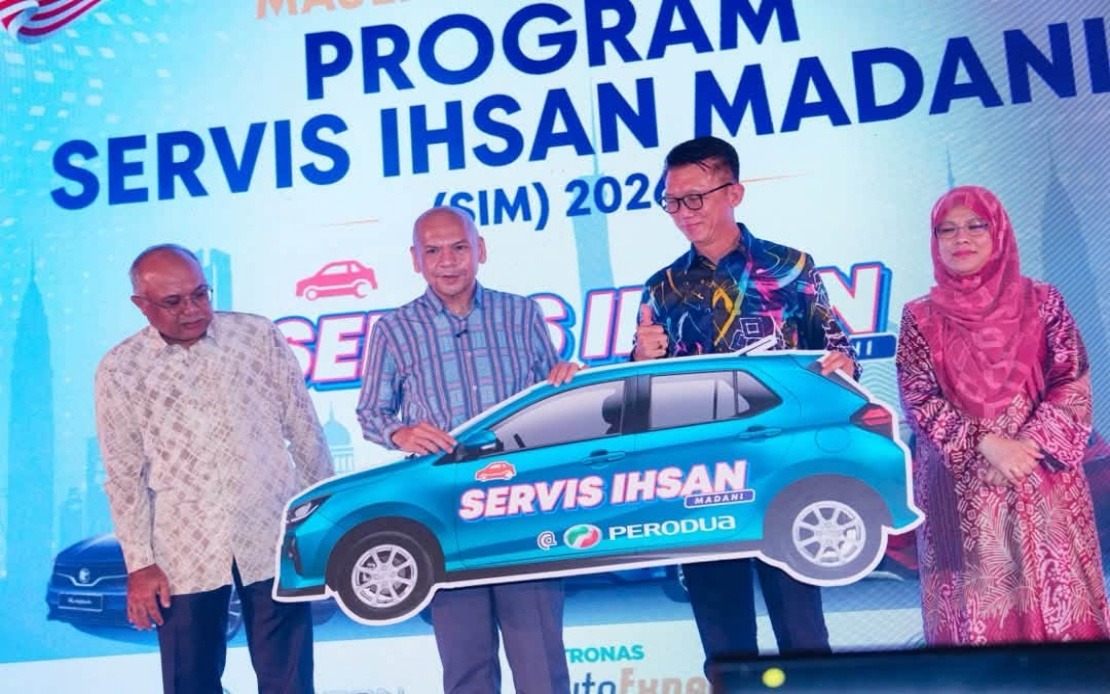
Malaysia's Ministry of Domestic Trade and Cost of Living (KPDN) has significantly expanded its popular SIM maintenance subsidy programme to encompass vehicles from the nation's two automotive champions, Perodua and Proton, marking a substantial step in the government's broader cost-of-living relief initiatives. The expansion, announced by Minister Datuk Armizan Mohd Ali, will enable vehicle owners to claim RM70 subsidies when servicing their cars at participating centres, forming part of the Payung RAHMAH MADANI initiative that aims to translate the government's "Malaysia MADANI: Kesejahteraan Dinikmati" vision into tangible consumer benefits.
The infrastructure supporting this expanded scheme is formidable in scale. A total of 531 service centres and workshops have been enrolled nationwide, creating an unprecedented network of participating locations. The distribution encompasses 221 Perodua service centres, 186 Proton service centres, and 124 PETRONAS AutoExpert workshops, ensuring broad geographic coverage that should reach vehicle owners across urban and rural areas alike. This multi-brand coordination represents a notable achievement in government-industry collaboration, requiring significant logistical coordination among the participating automotive service providers.
Access to the subsidy has been designed with consumer convenience in mind. Vehicle owners wishing to benefit from the RM70 maintenance vouchers can make their service bookings directly through the dedicated mobile applications operated by each service provider, streamlining the process and reducing bureaucratic friction. This digital-first approach aligns with Malaysia's broader digital economy aspirations and removes traditional barriers that might otherwise prevent eligible consumers from claiming their subsidies.
The programme's expansion reflects a dual policy objective within the KPDN's strategic approach. Beyond the immediate financial relief that the RM70 subsidy provides to household budgets, the initiative is explicitly designed to encourage vehicle owners to maintain regular servicing schedules. This preventative maintenance culture carries significant implications for vehicle safety and longevity, reducing the risk of roadside breakdowns and potentially serious accidents caused by poorly maintained vehicles. For a nation with a diverse vehicle fleet ranging from modern imported models to older domestically-produced vehicles, institutionalizing regular maintenance through financial incentives addresses a genuine public safety concern.
The timing of this expansion coincides with Malaysia's National Month and Malaysia Day celebrations in 2026, embedding the subsidy programme within patriotic and nation-building messaging. By linking consumer welfare initiatives to national commemorations, the government attempts to foster a narrative of shared prosperity and collective benefit. For Malaysians, the practical effect is that the expanded SIM scheme becomes available precisely when the nation celebrates its identity and achievements, creating symbolic resonance between economic assistance and national pride.
The broader Payung RAHMAH MADANI framework encompasses multiple consumer benefit initiatives that extend well beyond automotive maintenance. The KPDN has orchestrated a comprehensive National Month RAHMAH MADANI Sales Programme alongside various community competitions, including the Batik Hues Exploration Competition and Patriotic Challenge initiatives. This multi-pronged approach suggests the government recognizes that cost-of-living pressures operate across multiple consumer categories simultaneously, requiring coordinated intervention rather than isolated sector-specific solutions.
Paralleling these direct government initiatives, the KPDN's strategic industry partners are contributing their own promotional activities. TikTok Shop Malaysia will launch the Jualan Ihsan RAHMAH 9.9 online sale on September 9, offering discounts between 10 and 30 percent on selected essential goods. This private-sector participation in the broader RAHMAH MADANI initiative demonstrates how the government has mobilized commercial platforms to amplify the reach of its cost-of-living relief efforts, leveraging e-commerce infrastructure that now represents a substantial proportion of consumer spending patterns, particularly among younger Malaysian demographics.
Prime Minister Datuk Seri Anwar Ibrahim's prior announcement regarding the Jualan Ihsan RAHMAH 9.9 sale established the government's commitment to coordinating relief measures across multiple institutions and timeframes. By synchronizing these initiatives around Malaysia Day celebrations, the government creates psychological momentum around the RAHMAH MADANI brand, potentially encouraging sustained engagement with its various programmes. The coordination between the federal government, relevant ministries, and private-sector participants suggests institutional capacity for managing complex multi-stakeholder initiatives.
For Malaysian motorists, particularly those operating vehicles from domestic manufacturers, the expanded SIM programme addresses a genuine economic concern. Vehicle maintenance represents a recurring household expense that cannot be deferred indefinitely without risking safety and reliability. The RM70 subsidy, while modest compared to typical major service costs, nevertheless provides meaningful relief when aggregated across multiple service visits annually. Regular maintenance cycles typically involve multiple interventions throughout a vehicle's operational life, meaning consistent subsidy availability could accumulate into substantial savings.
The programme's expansion also reflects the government's strategic support for the domestic automotive industry. By making maintenance services more affordable for Perodua and Proton owners, the policy indirectly supports these manufacturers' business models and service networks. For Perodua and Proton, increased service centre utilization generates revenue through maintenance work, replacement parts, and potentially upselling of extended warranty packages. This symbiotic relationship between consumer subsidies and domestic industry support represents a coherent industrial policy approach.
From a regional perspective, Malaysia's SIM programme expansion demonstrates how Southeast Asian governments are experimenting with targeted subsidies to manage cost-of-living pressures without resorting to broad-based price controls that create market distortions. The focus on specific consumer touchpoints—in this case, automotive maintenance—allows for precision targeting that potentially minimizes fiscal burden while maximizing consumer visibility and gratitude. Other ASEAN nations facing similar cost-of-living challenges may observe this model for potential adaptation within their own policy frameworks.
The expansion also positions Malaysia's automotive sector within a broader narrative of government-supported consumer welfare. Unlike some international contexts where automotive maintenance is treated purely as a private consumer responsibility, the Malaysian approach recognizes vehicle ownership as integral to economic participation and social mobility. By subsidizing maintenance costs, the government implicitly acknowledges that vehicle reliability directly impacts earning capacity for many professional and semi-professional drivers, particularly those in transportation, delivery, and logistics sectors who depend on vehicular reliability for their livelihoods.

