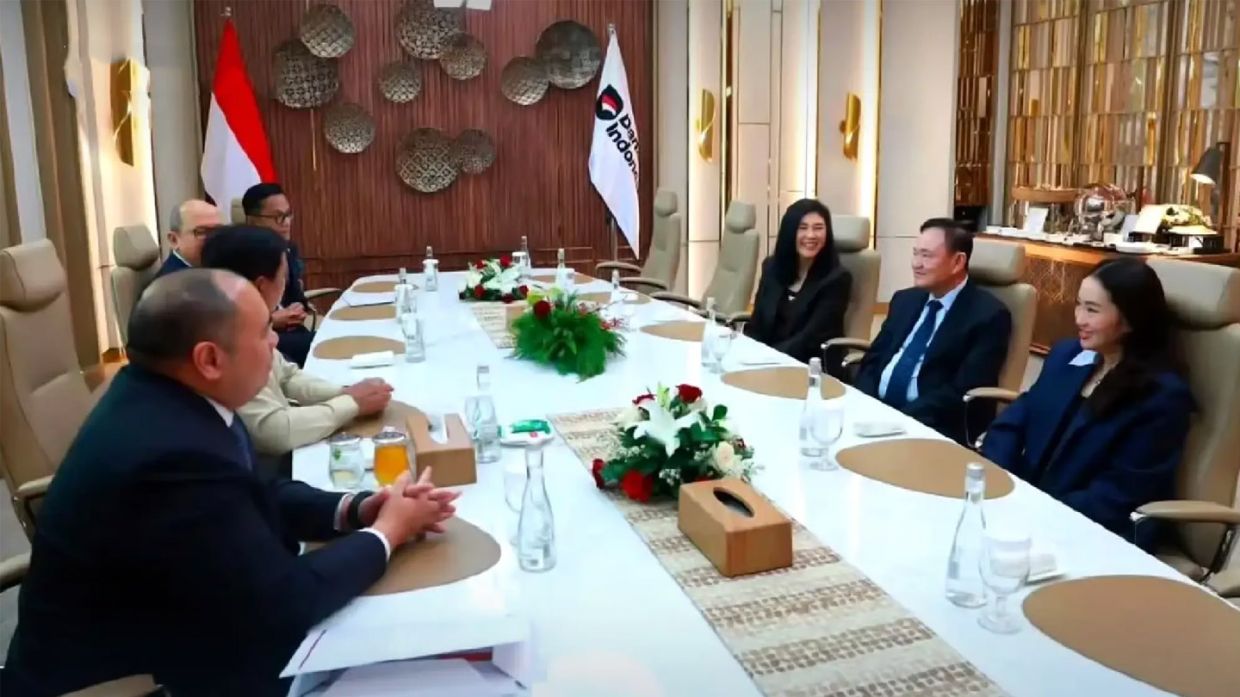
Three members of Thailand's influential Shinawatra family—all former prime ministers—convened with Indonesian President Prabowo Subianto in Jakarta on July 9 for wide-ranging discussions on investment prospects and long-term economic strategy. The gathering brought together Thaksin Shinawatra, his sister Yingluck Shinawatra, and their niece Paetongtarn Shinawatra at the offices of Danantara, Indonesia's prominent state investment management institution, signalling continued high-level engagement between two of Southeast Asia's most significant economies on matters of strategic capital deployment and regional economic development.
The meeting carried particular significance given the stature of the participants and their respective roles in shaping Thai and regional politics over the past two decades. Thaksin served as Thailand's prime minister during the transformative period from 2001 to 2006, a tenure marked by aggressive modernisation policies and significant economic initiatives. Yingluck subsequently held the premiership from 2011 to 2014, inheriting her brother's political network and policy orientation before facing her own constitutional and legal challenges. Most recently, Paetongtarn assumed the Thai premiership in 2024, representing the third generation of Shinawatra family influence over Thailand's political executive. Their collective presence in Jakarta underscored the family's enduring prominence in Thai governance structures and their continued investment in regional economic partnerships.
Thaksin's advisory position within Danantara's governance structure formed a crucial backdrop to these discussions. As a member of the agency's advisory board, Thaksin has cultivated relationships with Indonesia's senior economic policymakers and investment strategists, positioning himself as a bridge between Thai business interests and Indonesian state-directed capital allocation mechanisms. This institutional leverage proved instrumental in facilitating the July 9 meeting and shaping its substantive agenda around asset management approaches, investment opportunity identification, and frameworks for sustainable economic expansion that could benefit both nations.
Danantara itself represents a critical institutional player in Indonesia's economic architecture. The agency functions as the primary vehicle for managing, optimising, and deploying Indonesia's strategic national assets in service of the country's broader economic transformation objectives. By convening the Shinawatra delegation at its headquarters, Danantara signalled Jakarta's interest in learning from Thai economic expertise while simultaneously positioning itself as an attractive partner for significant capital flows and investment collaboration. The presence of the agency's most senior figures—including group chief executive officer Rosan Roeslani, chief operating officer Dony Oskaria, and chief investment officer Pandu Sjahrir—reflected the institutional weight Jakarta attached to these conversations.
The substantive content of the discussions centred on three interconnected domains. Investment opportunities represented the most immediately actionable focus, with conversations likely exploring specific sectoral openings within Indonesia's economy where Thai capital, management expertise, and entrepreneurial networks could create value. Asset management approaches constituted the second pillar, with Thai executives presumably sharing experience in optimising returns from strategic holdings and managing large institutional portfolios across multiple jurisdictions and asset classes. The third dimension involved longer-term economic development frameworks, suggesting discussions extended beyond individual transactions to encompass strategic thinking about how Thailand and Indonesia might coordinate their capital deployment strategies to support broader Southeast Asian economic integration and resilience.
Beyond the formal Danantara meeting, Prabowo hosted Thaksin and his family members at his private Jakarta residence, according to Indonesian Cabinet Secretariat spokesperson Teddy Indra Wijaya. This secondary gathering provided an informal setting for deeper personal engagement and relationship-building, characteristic of how high-level regional diplomacy often operates beyond formal institutional channels. The Cabinet Secretariat's characterisation of these interactions as warm and cordial suggested genuine rapport among the participants, potentially laying groundwork for future cooperation spanning both governmental and private sector domains.
From Jakarta's perspective, these engagements reflected President Prabowo's broader strategic objective of expanding Indonesia's international economic partnerships amid shifting global conditions. The Indonesian government has emphasised that meetings with prominent international leaders and globally recognised economic figures constitute essential components of its capacity-building and partnership-broadening agenda. By hosting the Shinawatra family delegation, Jakarta demonstrated openness to learning from Thai experience while simultaneously reinforcing Indonesia's position as a major regional economic hub capable of attracting high-level international business and political attention.
The timing of these discussions carries implications for Southeast Asian economic cooperation architectures. As ASEAN members, Thailand and Indonesia occupy complementary but distinct positions within regional supply chains, financial networks, and investment flows. Thai expertise in manufacturing, logistics, and financial services could enhance Indonesia's ongoing economic modernisation, while Indonesia's vast resource base and growing consumer market present opportunities for Thai investors seeking regional diversification beyond their home market. Structured dialogue between senior figures from both countries, particularly when conducted through state investment institutions like Danantara, can facilitate the kind of strategic capital allocation necessary for addressing regional development gaps.
The Shinawatra family's continued prominence in Thai governance and their parallel cultivation of regional business networks reflects a broader phenomenon within Southeast Asian political economy: the persistence of family-based business and political structures that transcend formal governmental boundaries. Thaksin's board position at a major Indonesian state institution exemplifies how individual relationships and expertise create channels for regional cooperation that complement official diplomatic and trade mechanisms. For Malaysian observers, such patterns underscore the importance of understanding how personal networks, family enterprises, and institutional positions intersect to shape regional economic decision-making and resource allocation.
Looking forward, these conversations may catalyse concrete collaborative initiatives spanning infrastructure development, capital markets integration, and sectoral partnerships. Thai investors might pursue opportunities in Indonesian real estate, financial services, and manufacturing sectors, while Indonesian state entities could benefit from Thai expertise in managing complex investment portfolios and navigating regional business environments. The involvement of Paetongtarn, now Thailand's sitting prime minister, potentially signals that such cooperation enjoys high-level political backing and governmental commitment beyond the personal business interests of individual family members.
For Malaysia and other Southeast Asian economies, the Shinawatra-Prabowo engagement demonstrates how strategic economic dialogues among major regional players can reshape competitive dynamics and capital flows throughout the region. As Thailand and Indonesia deepen their investment cooperation through institutional mechanisms like Danantara, other nations must consider how they position themselves within these evolving regional partnership networks. The meeting ultimately reflects the reality that Southeast Asian economic integration increasingly occurs through deliberate governmental coordination, state investment vehicles, and high-level political engagement rather than through market mechanisms alone.

