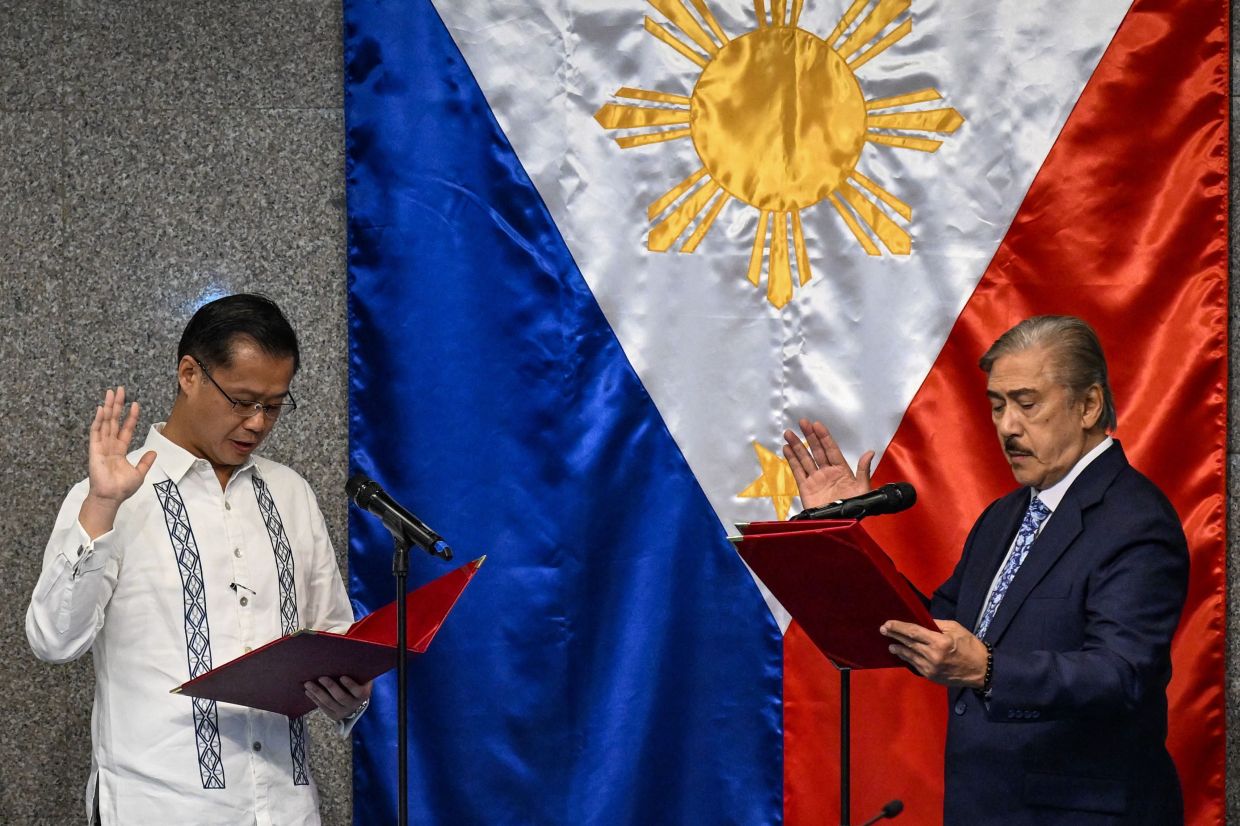
Senator Sherwin Gatchalian has been formally elected as the new president of the Philippine Senate, concluding weeks of political manoeuvring that exposed deep fissures within the chamber's leadership. During a special session on Wednesday, 13 senators cast their votes to install Gatchalian as head of the 24-member legislative body, meeting the constitutional threshold required for such elections. The vote represented a decisive turning point in a protracted struggle for control of the chamber that had gripped Manila's political establishment.
Gatchalian brings significant legislative experience to the position, having previously served as mayor of Valenzuela City in Metro Manila—a substantial commercial hub serving the greater capital region—and as a congressman representing his home locality. His elevation to the Senate presidency marks a considerable advancement in his political career and reflects the confidence placed in him by the majority bloc that secured his victory. The senator's background in municipal governance and national legislative representation suggests he may bring both grassroots perspective and parliamentary sophistication to the role.
The path to Gatchalian's election was neither straightforward nor uncontested. Two weeks prior to the main ballot, on June 3, twelve senators had already moved to elect him as Senate president pro tempore, simultaneously announcing that Alan Peter Cayetano—who had assumed the presidency just over a month earlier on May 11—had abandoned his position. However, Cayetano disputed this characterisation at the time, arguing that the move lacked legitimacy and insisting he retained the presidency. The former president contested the procedural validity of the proceedings, claiming that a minimum of thirteen senators was essential to conduct any formal business related to electing or removing Senate officers.
Cayetano's legal argument about the quorum requirements created significant uncertainty about the legitimacy of competing claims to leadership. This procedural dispute reflected broader questions about how the Senate should function when political blocs fail to maintain unity. The standoff between the two camps suggested that institutional rules alone could not resolve the fundamental disagreement about who possessed the legitimacy to lead the chamber. As the dispute dragged on, observers questioned whether the Senate could effectively discharge its legislative responsibilities amid such uncertainty.
The resolution of this impasse came through a remarkable political realignment that fundamentally altered the balance of power within the Senate. Senator Joel Villanueva, who had previously aligned himself with Cayetano and his supporters, abruptly switched his allegiance to back Gatchalian's faction. This defection proved decisive, as it tipped the numerical advantage decisively in Gatchalian's favour. On Tuesday, before the formal vote, Cayetano acknowledged the changed circumstances, recognising that the arithmetic of Senate support had shifted irreversibly against him following conversations with Villanueva about the political landscape.
Cayetano's decision to step aside rather than force a contested election represented a pragmatic assessment of his political position. Having lost the support of enough senators to maintain his presidency, he recognised that attempting to hold on to the office would likely prove futile and potentially damage his standing among colleagues. By accepting the outcome, he avoided a further deterioration of his political capital and maintained the possibility of cooperation with the Gatchalian-led majority on future legislative matters. This graceful exit, while politically painful, allowed the Senate to move forward and establish clearer leadership.
The timing of this leadership transition arrives at a particularly challenging moment for the Philippine Senate, as the institution faces reduced capacity due to absences among its membership. Currently, only 22 of the 24 senators are actively serving in their legislative roles. Senator Jinggoy Estrada, a prominent and long-serving member, surrendered himself to police custody earlier in June and now faces investigation in the anti-graft court, the Sandiganbayan. That court ordered his suspension from office for ninety days on Tuesday, removing him from legislative business during a critical period.
Additionally, Senator Ronald Dela Rosa remains absent from his duties as a fugitive pursued by the International Criminal Court on undisclosed charges, with authorities and media outlets unable to locate him. His whereabouts remain unknown, raising questions about the circumstances of his flight and the international legal processes underway. These two absences significantly diminish the Senate's numerical strength and working capacity at a time when the Philippines faces numerous pressing legislative priorities ranging from economic governance to security matters.
The power struggle that culminated in Gatchalian's election illuminates the fractious nature of contemporary Philippine politics, where voting blocs prove unstable and individual senators retain considerable discretionary power over their political allegiances. The sudden realignment orchestrated by Villanueva's defection suggests that personal relationships, behind-the-scenes negotiations, and evolving assessments of political viability often matter more than formal party affiliation or ideological consistency. This fluidity creates both opportunities for pragmatic compromise and risks of continued instability.
Gatchalian now faces the substantial challenge of steering the Senate through both legislative priorities and the internal management of diverse political interests. His success in uniting the majority that elected him will depend partly on his ability to accommodate the various factions while advancing a coherent legislative agenda. The reduced membership and ongoing legal troubles affecting other senators will require careful navigation. His leadership style and legislative priorities over coming months will reveal whether his election represents a stable consolidation of power or merely a temporary advantage in ongoing factional struggles.
For observers across Southeast Asia, the Philippine Senate's internal dynamics reflect broader patterns of institutional stress visible throughout the region. The instability in legislative leadership, the challenges posed by legal accountability processes, and the fragility of political coalitions demonstrate how institutional frameworks, while providing formal structure, cannot guarantee stable governance without underlying consensus. Gatchalian's presidency will test whether skilled leadership can restore cohesion to a fractured chamber.