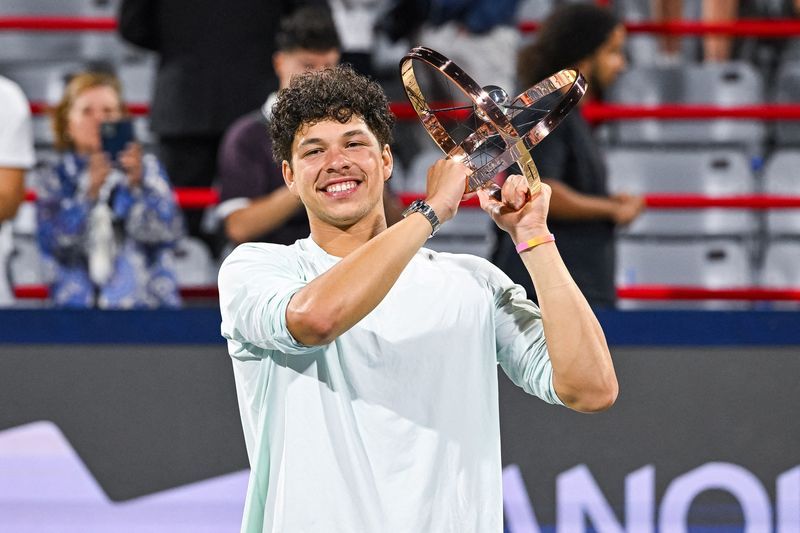
Ben Shelton enters the US Open championships determined to capitalise on a recent resurgence, having regained his footing after a season marked by sharp contrasts between triumph and disappointment. The 23-year-old American, currently ranked ninth in the world, claimed the Canadian Open crown without dropping a single set—a performance that has fundamentally shifted his mindset heading into the final Grand Slam of the calendar year. This victory follows what he himself characterises as a deeply unpredictable campaign, one that has tested his resilience and mental fortitude as he navigates the demanding professional tour.
Shelton's Grand Slam record in 2024 reveals a pattern of inconsistency that has frustrated both him and observers. While he managed to reach the Australian Open quarter-finals in January, his performances deteriorated significantly at subsequent majors. The French Open saw him eliminated in the second round, and Wimbledon proved even more disastrous, with his campaign ending in the opening round at the All England Club. For a player of his calibre and potential, these results have raised questions about his ability to sustain peak performance across different court surfaces and tournament conditions over an extended season.
The Montreal triumph, however, represents something qualitatively different from his title wins earlier in the season. Shelton attributes his undefeated run through the Canadian draw to a marked improvement in his tactical execution and mental clarity. Speaking to journalists after defeating Brandon Nakashima in the final, he highlighted specific dimensions of his game that have evolved. His return of serve reached elite levels, whilst his capacity to break his opponent's delivery improved substantially. He notes that this enhancement extends beyond raw power or aggression—it encompasses the full technical and strategic arsenal, including his defensive capabilities and the seamless transition between offensive and defensive positions.
Showing remarkable analytical self-awareness, Shelton believes he has not yet reached his performance ceiling. He describes a progressive improvement throughout hard court tournaments in the latter half of the season, suggesting that each week on this surface has brought incremental gains. This trajectory suggests he is ascending toward a more complete version of himself as a competitor. His explicit optimism about future potential indicates he views Montreal not as a pinnacle but as a platform from which to launch even higher ambitions at Flushing Meadows.
The US Open carries particular significance for American tennis and Shelton personally. The tournament represents the sole remaining opportunity for a domestic male champion to claim a Grand Slam title on American soil, especially given that no American man has won the championship since Andy Roddick's triumph over Juan Carlos Ferrero in 2003. This two-decade drought has become a touchstone for national sports discourse, making Shelton's participation freighted with expectation and historical weight. At just 23 years old, he represents the most viable prospect to end this drought, a responsibility that extends beyond individual achievement to collective national pride.
Former world number one Andy Roddick, himself the last American male to claim a Grand Slam singles title, has publicly endorsed Shelton's candidacy. In a podcast appearance released before top-ranked Jannik Sinner withdrew from this year's tournament, Roddick assessed the competitive landscape with insider knowledge. He argued that if the sport's two dominant figures—Sinner and Spain's Carlos Alcaraz—were operating below their customary standards, Shelton possessed the attributes to genuinely contend for the championship. This endorsement from tennis royalty carries weight, suggesting that elite observers recognise something substantive in Shelton's game that extends beyond statistical rankings.
Shelton's prior experience at the US Open provides legitimate grounds for optimism. He reached the semi-finals during last year's iteration of the tournament, demonstrating that he can perform competitively against the sport's finest competitors in a major championship environment. That accomplishment alone distinguishes him from most of his generational cohort and suggests he possesses the temperament and skill set necessary to navigate the knockout format of Grand Slam tennis. The question is whether his current momentum and refined technical execution can propel him beyond that previous career milestone.
The broader context of Shelton's season reveals tennis as an environment of perpetual opportunity and vulnerability simultaneously. The professional calendar extends across nearly the entire year, creating a complex psychological dynamic where players must manage hope and disappointment across multiple competitions. Each setback presents the possibility of redemption through another tournament; conversely, the relentless schedule means that poor results cannot be compartmentalised or forgotten, but rather demand immediate re-evaluation and adjustment. For a young player like Shelton, this structure demands emotional maturity and the capacity to process failure without becoming overwhelmed by it.
Shelton's perspective on competition reflects this understanding. He recognises that in professional tennis, the sheer frequency of events means that singular performances, whether victorious or defeated, need not determine entire trajectories. However, he also comprehends that major championships occupy a different category of significance. The US Open represents the kind of venue where individual matches can fundamentally alter career narratives. A deep run could validate the promise that scouts and analysts identify in him; conversely, an early exit would reinforce questions about his consistency at the highest level. This concentration of consequence makes the US Open categorically different from regular tour events, and Shelton's frame of mind suggests he understands the stakes perfectly.
As Shelton prepares for Flushing Meadows, he carries multiple layers of motivation: personal redemption following Grand Slam disappointments, confidence from his Canadian success, the weight of American tennis history, and the conviction that his game continues evolving toward something exceptional. Whether this combination proves sufficient to end the American men's championship drought remains to be seen, but his current trajectory and heightened self-belief suggest he will enter the competition as a genuine threat to the favoured players.

