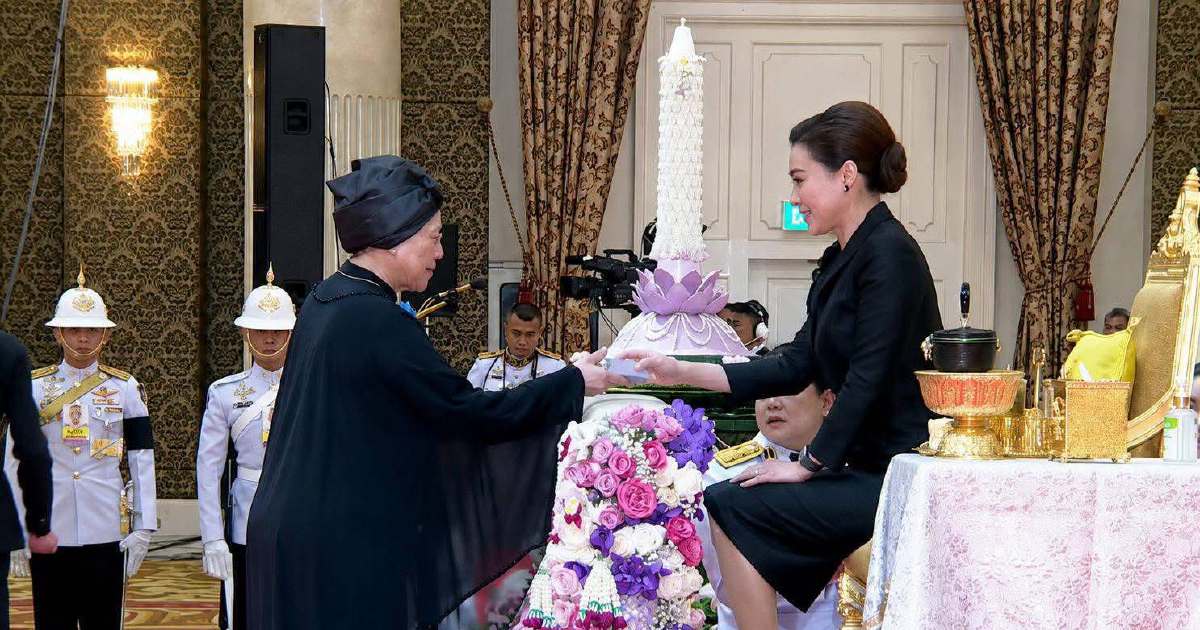
Prime Minister Datuk Seri Anwar Ibrahim and his wife Datuk Seri Dr Wan Azizah Wan Ismail have extended their congratulations to Prof Emerita Tan Sri Datuk Seri Dr Sharifah Hapsah Syed Hasan Shahabudin following her conferment of the Outstanding Woman Award for Social Development, an accolade that underscores the increasingly prominent role played by Malaysian women in addressing pressing social challenges across the region and beyond.
The recognition bestowed upon Sharifah Hapsah serves as a testament to decades of dedicated work in advancing social development initiatives. Her career trajectory represents a broader narrative of Malaysian women breaking through institutional barriers to assume leadership positions in fields traditionally dominated by men, particularly in academia and social policy formulation. The award speaks to her sustained commitment to translating research and theoretical frameworks into tangible improvements in community welfare and social cohesion.
For Malaysia, such international acknowledgement carries particular significance in a regional context where women's participation in decision-making roles remains uneven. The accolade demonstrates that Malaysian women scholars and practitioners are not merely keeping pace with global standards but are actively shaping discourse and setting benchmarks that influence policy approaches across Southeast Asia. This recognition validates the contributions of women who have chosen to dedicate their careers to understanding and resolving complex social problems rather than pursuing more lucrative corporate pathways.
Prime Minister Anwar Ibrahim's public acknowledgement of this award reflects the government's stated commitment to gender equality and women's empowerment as core pillars of national development strategy. By specifically highlighting Sharifah Hapsah's achievement, the Prime Minister signals that women's accomplishments in intellectual and development spheres merit the same national pride and celebration as achievements in commerce or politics. This messaging is particularly important for younger Malaysian women considering careers in academic research and social services, fields where remuneration and public visibility often lag behind other professions.
Sharifah Hapsah's work in social development carries direct implications for Malaysian policymaking. Her research and advocacy have likely influenced governmental approaches to issues ranging from community resilience to inclusive growth strategies. When such scholars receive international recognition, it enhances Malaysia's reputation as a source of serious thinking on development challenges, potentially attracting greater scholarly exchange and collaboration with regional and global institutions. This intellectual soft power translates into tangible benefits for the nation's diplomatic standing and capacity to shape regional norms around social policy.
The timing of this award also merits consideration within Malaysia's broader development trajectory. As the nation continues its transition toward high-income status, social development challenges have become increasingly complex, requiring sophisticated understanding of demographic shifts, urbanisation pressures, and changing family structures. Experts like Sharifah Hapsah provide the analytical foundations upon which governments can build evidence-based responses to these challenges, moving beyond purely economic metrics toward more holistic measures of wellbeing.
Furthermore, the visibility of accomplished women academics and development practitioners serves an important symbolic function in reshaping societal perceptions of women's roles and capabilities. Each such recognition reinforces the message that women's intellectual contributions are indispensable to national progress. This matters not only for young women considering their career paths but also for organisational cultures within universities, government agencies, and non-profit sectors, which increasingly recognise that gender diversity strengthens institutional performance and decision-making quality.
The award also reflects international recognition of Malaysian women's standing within global scholarly networks. For a developing nation, having its women scholars acknowledged by international bodies signifies that Malaysia's educational institutions are producing world-class thinkers capable of competing on global stages. This has implications for Malaysia's ability to attract international research funding, collaborate with leading universities, and position itself as a knowledge economy anchored in serious intellectual work across multiple disciplines.
Sharifah Hapsah's career demonstrates the multiplicative impact of sustained engagement with social development issues. Her academic work likely extends beyond published papers to influence graduate students, policy discussions, and institutional practices within her fields of expertise. When such figures receive international recognition, it amplifies the reach and legitimacy of their contributions, potentially shifting how development challenges are understood and addressed not just within Malaysia but across the broader Southeast Asian region.
As Malaysia seeks to deepen its developmental transformation and address persistent social inequalities, the contributions of scholars and practitioners like Sharifah Hapsah become increasingly vital. International recognition of their work validates the importance of investing in social science research and supporting women's advancement into leadership positions across knowledge-producing institutions. The award thus carries significance extending far beyond individual achievement to reflect Malaysia's evolving capacity to tackle development challenges through serious scholarship and inclusive policy-making that harnesses the talents of all its citizens regardless of gender.

