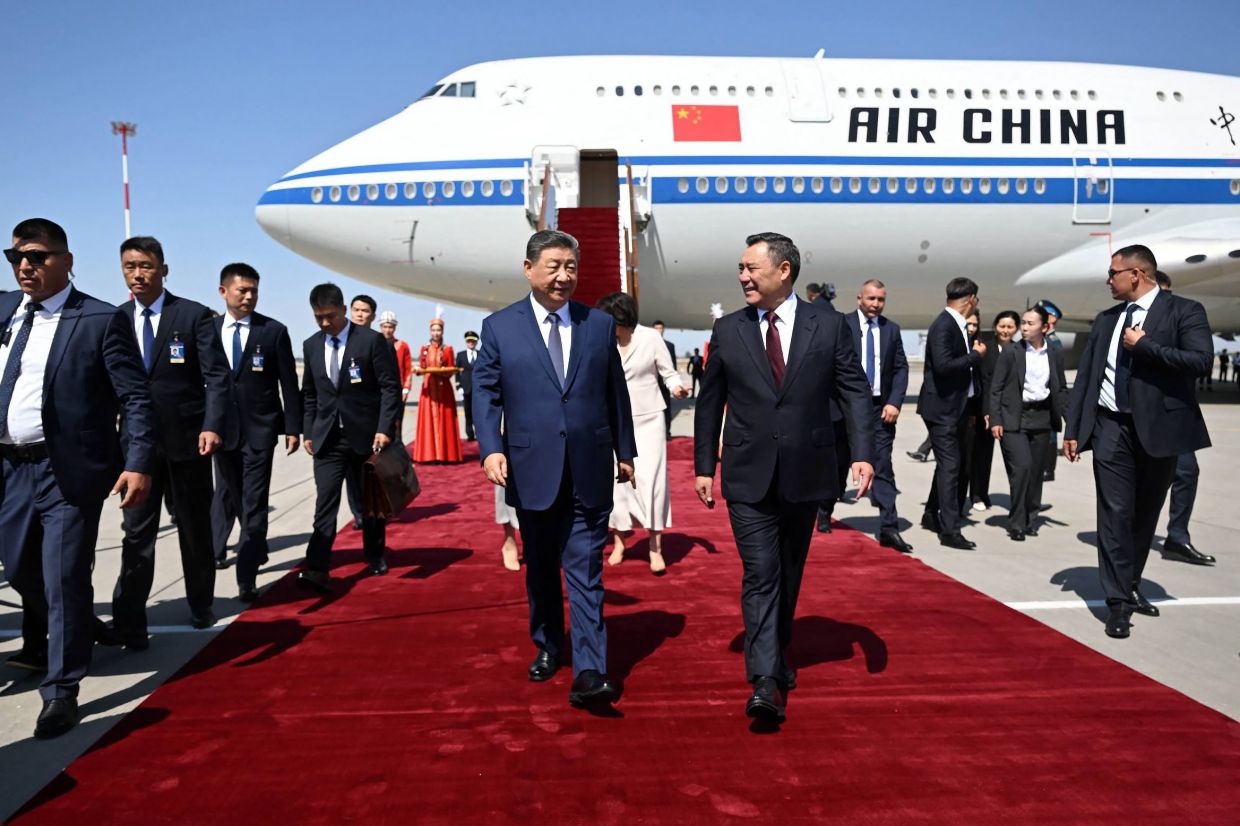
The Shanghai Cooperation Organisation is convening in Bishkek, Kyrgyzstan this week for a significant gathering of Asian and Eurasian leaders intent on demonstrating alternatives to the Western-led international order. Chinese President Xi Jinping, Russian President Vladimir Putin and Indian Prime Minister Narendra Modi headline the attendance, marking a pivotal moment for the 23-year-old bloc that has increasingly positioned itself as a foil to United States global dominance and the influence of traditional Western institutions.
The summit's timing carries particular weight given the turbulent geopolitical environment. Russia remains deeply committed to its conflict in Ukraine, now spanning over four years of full-scale military operations, while Iran has engaged in direct confrontation with American and Israeli forces for approximately six months. For both nations, the SCO platform offers a valuable venue to solidify relationships with countries outside the Western orbit and to project an image of robust international standing despite isolation or sanctions from Western powers. The schedule reflects this strategic imperative, with Putin and Xi planning bilateral talks on Monday and the Russian leader set to meet Iranian President Masoud Pezeshkian on Tuesday, the formal opening day of the multilateral sessions.
The Shanghai Cooperation Organisation emerged in 2001 as a collaborative security mechanism, founded initially by China, Russia and four Central Asian republics seeking regional stability and counterbalance to American influence in the post-Cold War era. Over two decades of operation, the organisation has substantially expanded both in membership and stated ambitions, though observers note that its institutional structures remain comparatively opaque and its public messaging often lacks clarity about concrete deliverables. The current membership encompasses ten nations: Russia, China, India, Iran, Pakistan, Belarus, Kazakhstan, Kyrgyzstan, Tajikistan and Uzbekistan, with numerous additional countries holding observer or dialogue partner status, creating a sprawling network that Beijing increasingly seeks to leverage for broader geopolitical advantage.
China and Russia have deliberately framed the SCO as a genuine alternative to Western institutional architecture such as the Group of Seven, with Beijing particularly aggressive in promoting the organisation as the vanguard of a reimagined international system based on non-interference and multipolarity. Chinese officials have publicly credited the SCO with discovering innovative pathways for regional cooperation, language that reflects Beijing's broader strategy of constructing institutional alternatives to American-dominated frameworks. This positioning aligns with China's consistent advocacy for what officials term a new world order, a concept that Russia enthusiastically supports as both nations confront declining influence in traditional Western-led forums and face coordinated economic and diplomatic pressure from the United States and its allies.
Yet beneath this unified rhetorical presentation lies significant fragmentation that analysts caution against overlooking. The SCO functions neither as a tightly coordinated political alliance nor as a military bloc comparable to NATO or formal mutual defence arrangements. Member states harbour profound disagreements on numerous issues and maintain competing national interests that frequently diverge from the collective messaging emanating from Beijing and Moscow. The organisation's effectiveness in advancing substantive policy initiatives remains constrained by these internal contradictions, limiting it to largely ceremonial and symbolic functions despite aspirations to greater influence.
For India, participation represents a calculated exercise in strategic positioning rather than ideological commitment to the anti-Western framing promoted by China and Russia. New Delhi must navigate the inherent tensions of simultaneously developing relations with both Beijing and Moscow while contending with the reality that Pakistan, a regional adversary and rival for influence across South Asia, holds full SCO membership alongside China, India's principal great power competitor. Security scholars observe that India's engagement reflects pragmatic calculation: the summit provides an essential forum for monitoring shifts in regional power dynamics, maintaining a seat at consequential discussions about Eurasian development, and demonstrating to international partners that India commands respect across multiple geopolitical camps.
Dinakar Peri, a fellow at Carnegie India specialising in security matters, characterises the SCO summit as permitting India to hedge its strategic position while acquiring direct intelligence about evolving regional alignments. Though India cannot reshape the fundamental trajectory of SCO initiatives, the platform grants New Delhi an invaluable vantage point from which to observe power competition among larger regional actors and protect its own distinct interests without appearing isolated from emerging Eurasian partnerships. This reflects India's broader approach of maintaining simultaneous engagement with Russia, China, and Western democracies rather than committing to exclusive alignments.
Turkey presents another instructive case of how SCO participation serves multiple strategic objectives simultaneously. Holding dialogue partner status since 2012 under President Recep Tayyip Erdogan, Ankara has pursued SCO membership partly as an expression of Turkish foreign policy ambitions to balance its traditional NATO alignment with deeper engagement across Eurasia and Central Asia. Turkey's overtures toward fuller SCO participation coexist with its continued anchoring to European institutions and its longstanding trade relationship with the European Union under the 1995 customs union agreement. Ankara's persistent efforts to secure EU membership have stalled for more than a quarter-century, creating incentives for Erdogan to cultivate alternative partnerships and demonstrate that Turkey possesses multiple vectors for international engagement and influence.
The SCO summit illustrates how contemporary geopolitical competition increasingly operates through institutional proliferation and strategic signalling rather than through dramatic confrontation or military buildup. Member nations use the forum to communicate commitments to alternative arrangements and to broadcast their relevance within emerging power structures, even where tangible policy coordination remains limited. The gathering serves primarily symbolic purposes: demonstrating solidarity against Western hegemony, projecting unity among diverse partners, and reassuring participants that alternatives to American-led arrangements genuinely exist and merit serious engagement.
For Southeast Asian observers and policymakers, the SCO summit carries implications for regional autonomy and the trajectory of Eurasian integration. As China consolidates influence through multilateral platforms and Russia seeks to reconstruct geopolitical relevance through non-Western coalitions, the institution provides a mechanism through which these powers can advance shared interests in constraining American influence in Asia and Eurasia. Southeast Asian nations themselves maintain varying relationships with SCO mechanisms, with some participating as dialogue partners while others remain external to the framework, navigating the challenge of balancing engagement with rising powers against preserving traditional security relationships with Western partners.
Ultimately, the Bishkek summit represents a moment of continued strategic positioning among major powers seeking to reshape international hierarchies and challenge Western institutional dominance. While the Shanghai Cooperation Organisation may lack the institutional cohesion or enforcement mechanisms characteristic of traditional alliances, its expanding membership and elevated profile reflect genuine shifts in global power distribution and aspirations among diverse nations to construct genuinely multipolar international arrangements less dominated by American preferences and Western institutional norms.

