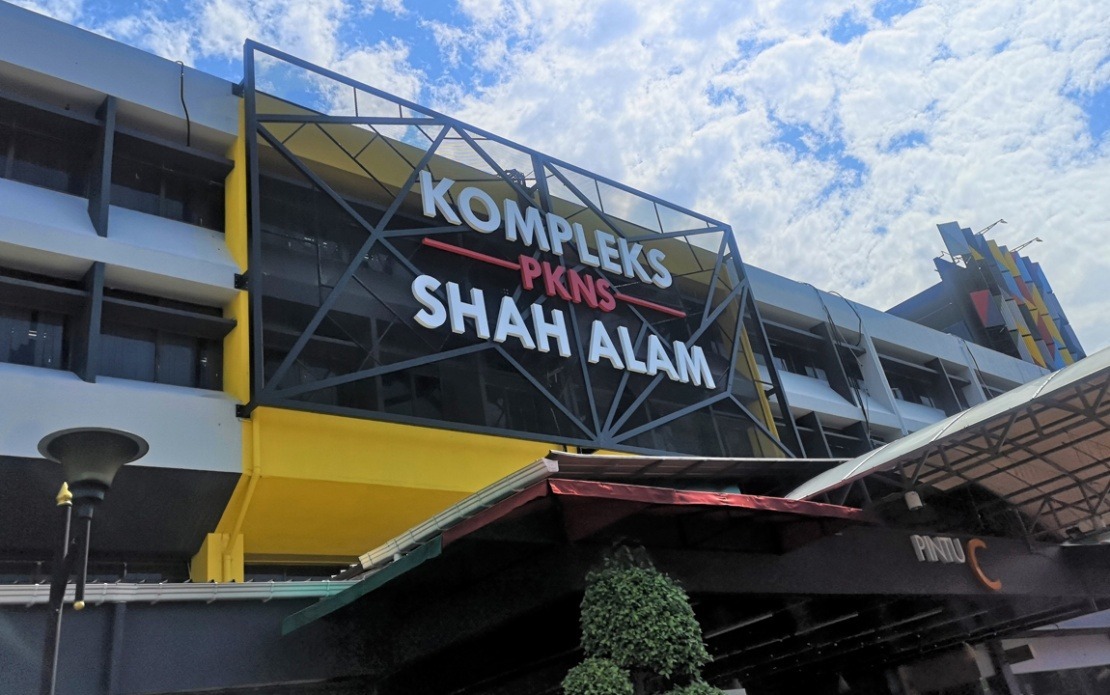
The Shah Alam PKNS Complex has returned to normal business operations following a fire incident that prompted a brief shutdown of the Selangor State Development Corporation's flagship commercial hub. The facility reopened on July 3 after the Selangor State Development Corporation confirmed that all safety protocols and inspection procedures had been successfully completed, clearing the way for tenants, staff and visitors to resume their daily activities without restriction.
The fire broke out in the afternoon of July 2 within the complex's mechanical systems, specifically originating from an Air Cooled Package Unit panel positioned inside the Air Handling Unit room situated on the building's first floor. This particular location houses critical environmental control equipment that maintains climate conditions throughout the facility. Initial findings from the building's facility management team point to this component as the source, though fire authorities have indicated further investigation remains underway to establish the exact ignition sequence and contributing factors.
Management responded immediately upon discovering the fire by implementing comprehensive emergency protocols that had been established for such contingencies. The decision to temporarily cut electricity supply and disable air-conditioning systems in the affected zone represented a necessary precautionary measure designed to prevent additional fuel sources from exacerbating the situation. Through the public address system, all occupants in Phase 1 of the complex received evacuation instructions, enabling an orderly and swift departure of the building's numerous tenants and workers.
The Selangor Fire and Rescue Department demonstrated rapid response capability, arriving at the scene and bringing the fire under control within a relatively short timeframe. The swift containment prevented flames from spreading horizontally or vertically through the structure to other operational areas or adjacent facilities. This successful limitation of the fire's scope meant that only the mechanical room and its immediate surroundings sustained direct exposure to heat and flames, while the remainder of the complex remained structurally intact and undamaged.
Assistant Director of Operations Ashrul Riezal Asbar from the Selangor JBPM confirmed on July 2 that the incident resulted in zero casualties among the hundreds of individuals present within the facility at the time of the emergency. No injuries were reported among evacuation participants, fire responders, or building staff involved in the emergency response. This positive outcome underscores the effectiveness of the evacuation procedures and the lack of panic during the emergency situation.
The temporary electricity and air-conditioning shutdown created operational constraints, necessitating the complex's closure until comprehensive safety inspections could be conducted. Engineers and facility specialists undertook detailed assessments of the affected mechanical systems, electrical infrastructure, and structural integrity of the fire-affected area. These inspections confirmed that the systems could be safely restored and that no secondary damage to building systems had compromised safety standards.
The Shah Alam PKNS Complex represents a significant commercial asset for Selangor, housing numerous businesses, service providers, and administrative functions that depend on continuous access to the facility. The brief disruption highlighted the importance of robust building systems and emergency response protocols in maintaining business continuity within commercial hubs. The complex's swift restoration to operations minimized disruption to the commercial activities and employment of hundreds of workers and business owners operating from the location.
Fire safety remains a critical concern across Malaysia's commercial infrastructure, particularly in multi-tenant facilities where numerous occupants share common mechanical and electrical systems. The incident serves as a reminder of potential hazards associated with air-conditioning and environmental control equipment, which operates continuously in the tropical climate and can experience component failure under sustained operational stress. Regular maintenance and inspection programs for such systems remain essential preventative measures.
The Selangor Fire and Rescue Department's ongoing investigation will likely yield recommendations for enhanced maintenance protocols or equipment upgrades to prevent similar incidents at this facility or comparable structures across the state. The cooperation between building management, fire authorities, and state development corporation officials demonstrates the coordinated approach necessary for effective emergency response and recovery in commercial settings. As investigators determine whether this incident resulted from equipment degradation, manufacturing defect, or operational oversight, the findings may inform industry standards for mechanical system maintenance across Malaysia's commercial real estate sector.

