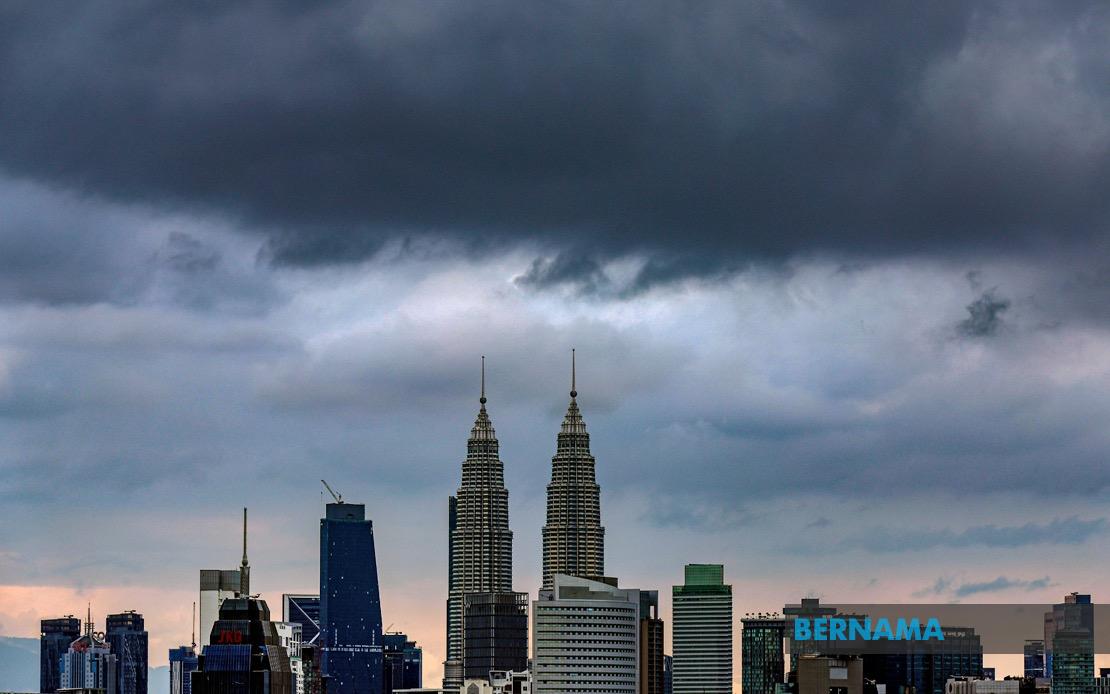
The Malaysian Meteorological Department has alerted residents across a significant portion of Peninsular Malaysia to prepare for severe weather conditions on Tuesday, with thunderstorms, torrential rainfall, and strong winds expected to persist until mid-afternoon. The warning encompasses the capital territories of Kuala Lumpur and Putrajaya alongside eight additional states, affecting a substantial belt of the country's most densely populated regions and creating potential disruptions to daily activities across multiple sectors.
Kedah faces particular exposure, with the meteorological alert targeting several districts in the northern state. The affected areas include Yan, Pendang, Kuala Muda, Sik, Baling, Kulim, and Bandar Baharu, representing a geographic spread across both the central and coastal portions of the state. Perak similarly faces heightened risk in specific zones, notably Kerian and the combined Larut, Matang and Selama district, which encompasses both inland and western coastal regions vulnerable to monsoon-influenced systems.
The warning encompasses the entirety of Penang, placing the island state and adjacent mainland areas at risk during what represents a critical travel and commercial period. Selangor, Malaysia's most economically productive state, faces warnings across multiple jurisdictions including the Klang Valley's administrative and commercial heartland through Kuala Langat and the surrounding hinterland regions of Hulu Langat and Sepang. This concentration of alerts in the Selangor region carries particular significance given the state's role as the nation's primary economic engine and its dense transportation networks.
Pahang experiences targeted warnings limited to Rompin, a district that historically experiences significant rainfall during monsoon transitions. Negeri Sembilan's alert covers Seremban, the state capital, alongside Port Dickson, Rembau, and Tampin, creating exposure across both administrative centres and outlying districts. Melaka faces the alert in its entirety, while Johor's southern regions including Tangkak, Segamat, Muar, Batu Pahat, and Kluang are flagged for the developing weather system.
The three-hour window until 3pm suggests a relatively concentrated severe weather event rather than an extended weather system, though meteorological forecasts during monsoon transition periods often carry considerable uncertainty. The combination of thunderstorms with heavy rainfall and strong winds creates a compound hazard profile that poses risks to infrastructure, transportation networks, and public safety. Strong winds accompanying heavy precipitation can compromise power distribution networks, while rapid surface water accumulation in urban areas may overwhelm drainage infrastructure, particularly in low-lying zones and flood-prone localities.
For Malaysian commuters and businesses, the timing carries implications across multiple sectors. The mid-afternoon forecast deadline suggests that morning rush hour traffic should largely clear before the primary weather window, though the alert's geographic breadth means that workplace operations spanning multiple states may face simultaneous disruptions. Construction sites, outdoor industrial operations, and logistics networks across the affected regions typically implement weather protocols when such alerts are issued, potentially slowing productivity across supply chains dependent on these states.
The geographic concentration of the alert around the Klang Valley, Penang, and the northwestern corridor reflects typical monsoon-influenced weather pattern behaviour. This particular track suggests atmospheric conditions favouring convective storm development across these regions, likely connected to a monsoon trough or similar circulation system generating instability and lift mechanisms necessary for thunderstorm formation. The specificity of district-level warnings indicates that meteorologists have identified particular areas of greater atmospheric vulnerability rather than issuing blanket alerts for entire states.
Public authorities in affected states typically activate emergency response protocols when such alerts are issued, positioning rescue resources and preparing drainage facilities. Police departments often increase visibility on highways crossing these regions, while fire and rescue services ready teams for potential weather-related incidents. Urban local authorities activate contingency planning for flooding in known susceptible areas, particularly in Kuala Lumpur and Selangor where rapid urbanisation has reduced natural drainage capacity.
Risk considerations extend to transportation infrastructure throughout the alert period. The combined effect of heavy rain and strong winds creates hazardous driving conditions on elevated structures such as the North-South Expressway, major Federal routes, and bridge crossings. Aviation authorities monitor visibility and surface conditions at Kuala Lumpur International Airport and other regional facilities, with potential implications for flight schedules. Rail operators similarly review operational protocols given the extended geographic scale of the alert.
The forecasted timeframe ending at 3pm suggests that evening commute periods should proceed under improving conditions, though this depends on accurate meteorological prediction. Malaysian weather systems during transition periods between monsoons sometimes produce less predictable outcomes than monsoon-established weather patterns, meaning that residents and organisations should treat such forecasts as guidance requiring flexibility rather than absolute guarantees. The specificity of the three-hour window indicates reasonable meteorological confidence in both timing and affected areas, though margin for variation exists.
For regional observers, this weather alert illustrates the ongoing challenge of managing tropical climate variability across one of Southeast Asia's most economically significant zones. The concentration of alerts across multiple states simultaneously underscores how weather systems can create correlated disruptions across interconnected supply chains and transportation networks. Businesses and government agencies operating across Peninsular Malaysia's central and northwestern regions typically maintain weather contingency protocols reflecting the frequency and intensity of such events during monsoon transition periods and established monsoon seasons.

