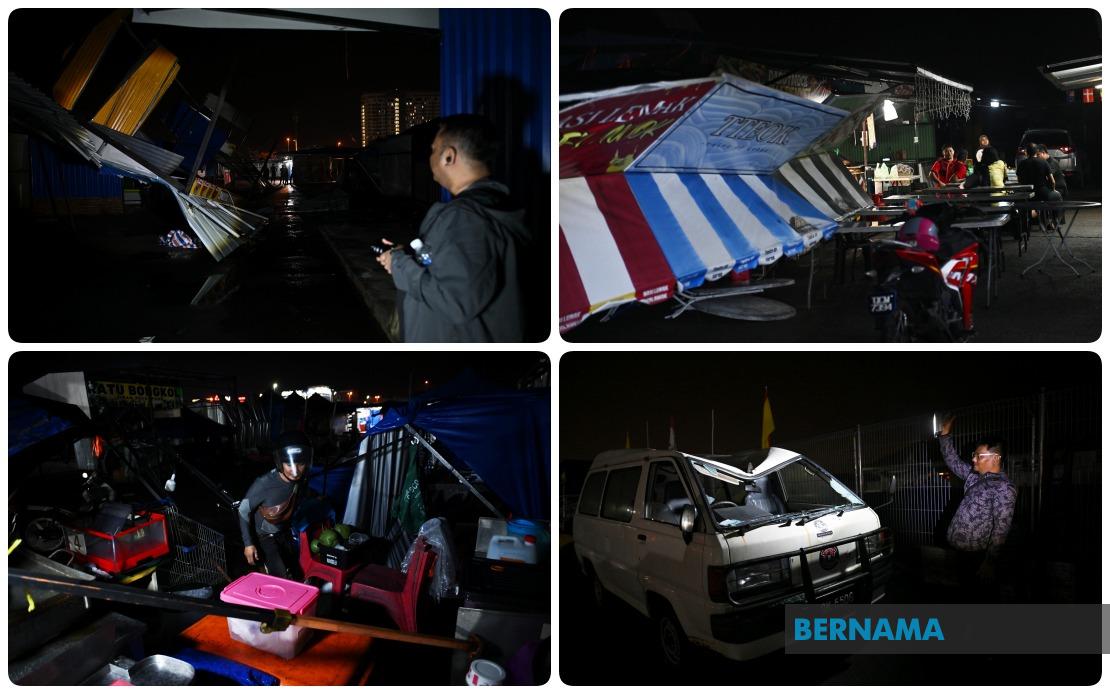
A violent storm that swept through Kuching on the weekend has dealt a devastating blow to the N6 Metrocity 2 Youth Night Market, forcing its closure as strong winds tore through vendor stalls and destroyed critical infrastructure. The incident, which occurred during the busiest trading period of the week, has left more than 40 of the market's approximately 300 trader lots severely damaged, with individual losses estimated between RM2,000 and RM5,000 per stall. The sudden onset of the tempest caught vendors off guard, compelling them to abandon their positions and seek safety as canopy structures became airborne hazards.
The meteorological event that triggered the damage was part of a broader weather warning issued by the Malaysian Meteorological Department (METMalaysia) across multiple Sarawak divisions. Between 5 pm and 9 pm on the day in question, the agency had issued a thunderstorm alert covering Kuching, Serian, Siburan, Samarahan, Simunjan, Kapit and Song. However, the intensity of the storm that ultimately struck the night market exceeded typical expectations for such warnings, with conditions severe enough to compromise structural safety.
Vendors who have operated at the facility for approximately a decade describe the incident as the most harrowing episode they have witnessed at the location. Mohamad Faisal, a 42-year-old trader, recounted the panic that gripped the market as wind speeds increased dramatically. He explained that the sudden deterioration of conditions left little time for vendors to secure their merchandise or protective structures. The sight of canopies becoming projectiles forced immediate evacuation, with traders prioritising personal safety over salvaging inventory or equipment. The psychological impact of witnessing business infrastructure transformed into flying debris has compounded the financial stress already being experienced.
The scale of destruction extends beyond individual trader losses. The market's physical infrastructure, including the main stage used for entertainment and promotional activities, the management office, and the electrical supply network, all suffered substantial damage. These shared facilities represent investments made by the market association itself and are critical to the operational viability of the entire venue. The collapse of electrical infrastructure, in particular, raises questions about how quickly normal operations can resume and what interim measures must be implemented to ensure vendor safety during any recovery period.
N6 Metrocity 2 Youth Night Market deputy chairman Hamzah Hassan has characterised this event as exceeding the severity of previous natural disasters that have affected the location. His assessment carries weight given the decade-long operational history of the market and the comparative frequency of weather-related incidents in the region. The scale of simultaneous damage across 40 trader lots, combined with the destruction of major shared infrastructure, suggests a weather event of notable intensity rather than routine seasonal turbulence. This characterisation underscores the urgency of the situation and the significant recovery effort now required.
The financial burden being borne by individual traders extends beyond canopy replacement, the most visible cost component. Vendors must also account for damage to essential business equipment such as cooking stoves, water storage containers, point-of-sale systems, and merchandise that may have been destroyed or rendered unsaleable. For small-scale hawkers operating with limited profit margins and minimal reserves, a loss of RM2,000 to RM5,000 can represent weeks or months of operational income. This creates immediate cash flow crises for affected traders who may struggle to resume operations without external support.
The night market holds particular significance within Kuching's informal economy and community culture. Operating under the N6 Metrocity 2 banner, the venue has become an established weekend destination for both vendors seeking affordable commercial space and residents searching for diverse food and merchandise options. The market's youth-focused positioning suggests an attempt to create a modern iteration of traditional night bazaars, blending contemporary commercial practices with community gathering functions. The temporary closure disrupts not only vendor livelihoods but also the consumer ecosystem that has developed around this facility.
Market leadership has indicated openness to assistance from government ministries, elected representatives, and cooperative organisations to alleviate the financial strain on affected hawkers. This appeal reflects the recognition that individual trader recovery capacity is insufficient and that institutional support mechanisms may be necessary. In the Malaysian context, such appeals often lead to targeted interventions through small business development programmes, emergency relief funds, or insurance arrangement facilitation. However, the availability and accessibility of such support programmes in Sarawak remains variable, and vendors may face bureaucratic obstacles in accessing assistance.
The incident raises broader questions about infrastructure resilience in commercial markets across Sarawak and Malaysia more broadly. Night markets, by their nature, operate with temporary or semi-permanent structures that prioritise cost efficiency and operational flexibility over structural engineering capacity to withstand extreme weather. As climate patterns potentially shift and extreme weather events become more frequent, the adequacy of current structural standards and safety protocols in informal commercial spaces warrants examination. Kuching's strategic location on the island of Borneo exposes it to tropical weather systems capable of generating severe convective activity, yet many commercial markets remain designed with minimal weather-hardening measures.
The closure of N6 Metrocity 2 Youth Night Market, while necessary for safety reasons, will have ripple effects throughout Kuching's informal economy. Traders unable to operate will lose immediate income, landlords operating the market facility will see revenue disruption, and consumers will lose access to preferred shopping and dining venues during the recovery period. The temporary nature of the closure means operations may resume within days or weeks depending on repair progress, but vendors lacking inventory or equipment will require recovery time even after structures are restored. The incident exemplifies the vulnerability of informal sector workers to environmental shocks and the importance of resilience-building measures in community-based commercial settings.

