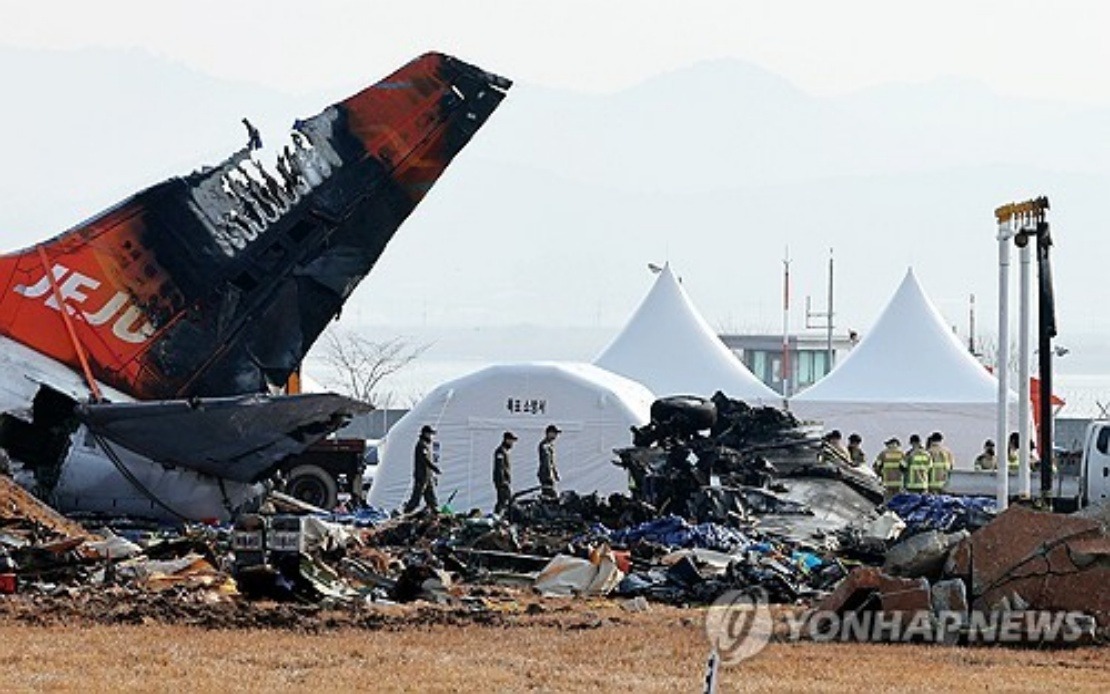
South Korean authorities have escalated their investigation into the December 2024 Jeju Air disaster by referring seven transport ministry officials to prosecutors on charges of concealing critical safety information. The officials are suspected of orchestrating a cover-up regarding a localiser—a precision navigation system essential for safe aircraft landings—that failed to meet regulatory standards before the catastrophic incident, according to findings announced by a special police investigation team on Wednesday.
The crash itself represents one of South Korea's deadliest aviation accidents. On December 29, 2024, Jeju Air Flight 2216 executed an emergency belly landing at Muan International Airport, located approximately 290 kilometres south of the capital Seoul. During the harrowing descent, the aircraft struck a concrete structure housing the problematic localiser, resulting in 179 deaths among passengers and crew members. The impact of the collision with this structural obstruction appears to have significantly worsened the disaster's toll, transforming what might have been a survivable emergency landing into a mass casualty event.
Investigators found that the seven officials deliberately issued public statements characterizing the localiser's installation as compliant with all applicable regulations and safety standards. However, evidence gathered during the inquiry demonstrates that these individuals possessed knowledge that the equipment did not fully satisfy the required safety specifications. This deliberate misrepresentation to the public constitutes a serious breach of administrative integrity and raises questions about institutional accountability within South Korea's transport oversight system.
The localiser's placement within a concrete protective structure became a focal point of the crash investigation almost immediately after the incident. Aviation safety experts and forensic analysts questioned whether the positioning and design of this concrete mound—ostensibly intended to shield navigation equipment from weather and interference—actually created a hazard that amplified the crash's severity. The concrete structure's presence directly in the aircraft's path during the emergency landing suggests that even minor deviations from the intended landing zone could prove catastrophic, a consideration that appears to have motivated questioning about whether proper safety protocols were followed during the system's installation.
This case exemplifies a troubling pattern in aviation safety management: the gap between formal regulatory compliance and actual operational safety. The officials' decision to publicly affirm that installation standards had been met, while privately understanding that gaps existed, represents a fundamental abdication of the duty that public servants bear toward protecting civilian lives. In the aviation sector, where split-second decisions and equipment reliability determine outcomes measured in human lives, such administrative negligence transforms into lethal consequence.
The investigation's focus on the officials rather than solely on technical factors suggests that negligence extended beyond simple engineering oversight. The deliberate crafting and distribution of false statements indicates an intentional strategy to shield the ministry and its operations from scrutiny. This institutional behaviour raises uncomfortable questions about whether warning signs preceding the crash were observed but dismissed, or whether pressure to maintain the airport's operational status outweighed safety considerations.
For Malaysia and the broader Southeast Asian aviation community, this case carries significant implications. Many regional airports operate under similar regulatory frameworks influenced by international standards, and several rely on comparable navigation systems and safety infrastructure. The Jeju Air investigation demonstrates that regulatory certification alone provides insufficient protection if institutional oversight falters. Malaysian aviation authorities and airport operators would be wise to examine their own localiser installations and ground equipment, ensuring that equipment certified as compliant genuinely meets all specifications and that no institutional incentives exist to paper over genuine safety shortcomings.
The referral to prosecutors represents a crucial inflection point in the investigation. Unlike administrative inquiries or technical reviews, criminal prosecution creates accountability with teeth. If the seven officials face conviction, they would join a growing roster of public officials held personally liable for decisions that endanger public safety. This potentially signals a shift in South Korea's approach to aviation oversight—one that treats administrative malfeasance as seriously as technical failures.
The broader institutional implications extend to how governments balance transparency with the operational demands of major public infrastructure. Airport operators face pressure to maintain safety certifications while managing costs and scheduling demands. When these pressures intensify, the temptation to classify minor non-compliances as acceptable trade-offs increases. The Jeju Air case demonstrates catastrophically that such calculations prove fatal. The involvement of seven officials in a coordinated cover-up suggests institutional rather than individual failure—a systemic problem that likely requires deeper structural reforms than prosecuting individual actors.
Looking forward, this case will influence how South Korea and potentially other nations approach safety certification and public accountability in aviation. The prosecution of officials who knowingly misrepresented equipment status may establish legal precedent that raises the cost of administrative corner-cutting. For passengers throughout Southeast Asia, the message is sobering: your safety depends not only on engineering competence but on institutional integrity and the willingness of prosecutors to hold officials accountable when they fail that responsibility.

