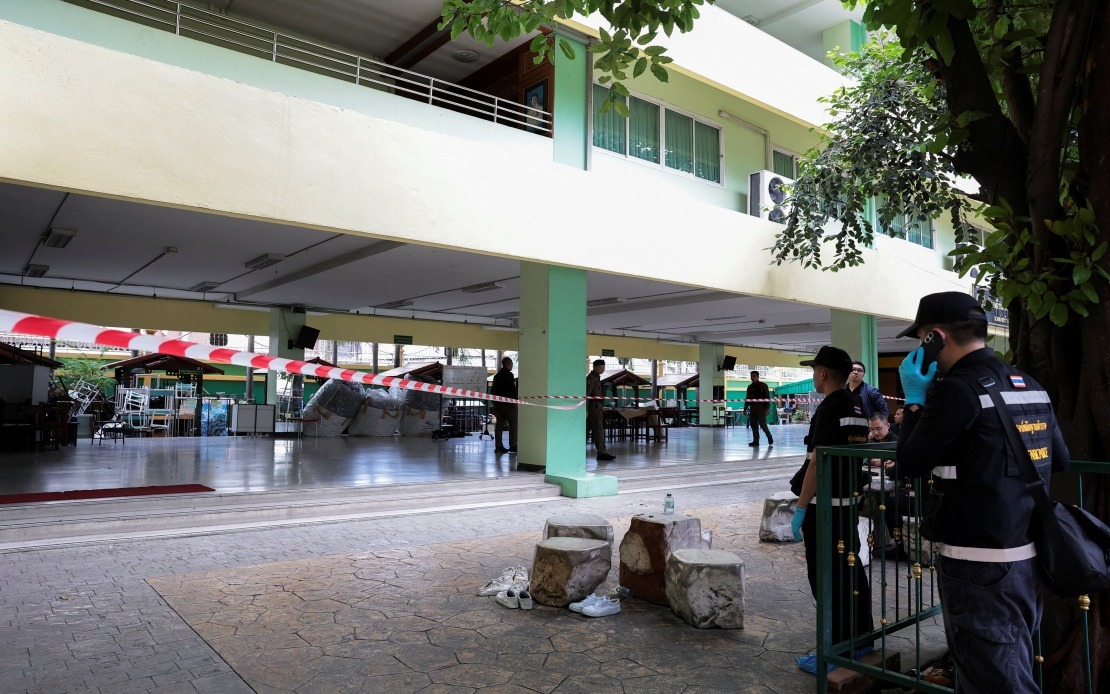
A devastating attack unfolded at Debsirin Nonthaburi School in Bang Kruai district on Friday morning when a student unleashed gunfire that claimed seven lives and wounded at least fifteen others. The incident, which occurred around 10 am in Nonthaburi province northwest of the Thai capital, represents a stark reminder of the lethal consequences when firearms fall into the hands of young people. Among the dead were three teachers and three students, along with the gunman himself, who died at the scene.
Royal Thai Police deputy inspector-general and spokesperson Lieutenant General Trairong Piwpan provided details of the tragedy to reporters, confirming that emergency services transported fifteen injured persons to hospital facilities, with two cases classified as serious. The rapid casualty toll underscores how quickly violence can spiral in a confined educational setting where vulnerability is heightened and escape routes limited. Authorities swiftly established a perimeter and began their investigation into the motive and circumstances surrounding the attack.
Police examination of the crime scene uncovered a 9mm handgun along with 34 rounds of ammunition positioned outside the weapon's magazine. Investigators traced the firearm's ownership to the suspect's grandfather, raising troubling questions about how a minor gained access to a loaded weapon within a household. This discovery has reignited concerns about firearms storage practices and family accountability in secured gun ownership, issues that resonate across Southeast Asia where strict regulations exist in most nations.
The immediate aftermath saw chaos and fear grip the school community. Authorities initiated emergency evacuation procedures, relocating both teachers and students to the nearby Chanrat Wittaya School for safety and to prevent further panic. School officials appealed to parents and guardians to collect their children promptly, creating scenes of distressed families searching for loved ones and seeking reassurance about their safety. The psychological toll on survivors and witnesses will likely extend far beyond the initial hours of crisis management.
Recognising the profound emotional impact, Thailand's national police chief issued directives to Police General Hospital to deploy trained psychologists to the scene and affected areas. This proactive measure acknowledges that trauma counselling and mental health support must begin immediately, not weeks later, as survivors process what many will carry as deeply traumatic memories. Such interventions are critical in preventing secondary psychological complications among students who witnessed violence in what should be a sanctuary for learning.
Prime Minister Anutin Charnvirakul, holding the concurrent portfolio of interior minister, arrived at the scene to assess the situation and convey the government's response. He expressed profound sorrow over the tragedy and issued directives ensuring that injured persons received urgent medical care and that relevant officials deployed resources to support affected families. His presence underscored the gravity with which Thailand's leadership treated the incident, though it also highlighted the recurring nature of such violence.
Anutin seized the opportunity to reinforce his government's controversial position on firearms regulation, connecting Friday's tragedy directly to ongoing policy debates about gun permits. He stated unequivocally that the incident validated the administration's refusal to renew permits for civilian firearm carrying and possession, positioning the shooting as evidence supporting stricter gun control measures. This framing suggests the government views such tragedies as opportunities to bolster arguments for tighter restrictions, though critics might counter that enforcement of existing regulations proves insufficient when family members fail to secure weapons properly.
Thursday's violence represents the second major school shooting incident in Thailand within less than six months, a frequency that alarms educational authorities and child safety advocates throughout the region. The previous incident occurred in February when an eighteen-year-old gunman opened fire at a school in Hat Yai, Songkhla province, killing the school director and injuring additional victims before police apprehended him. The recurring pattern suggests systemic vulnerabilities in school security protocols, mental health services for troubled youth, and perhaps most fundamentally, the availability of firearms to individuals with unstable temperaments or violent impulses.
For Malaysia and other Southeast Asian nations, Thailand's repeated school shootings carry cautionary lessons. While Malaysia maintains relatively strict gun ownership regulations compared to global standards, the Thai experience demonstrates that even with regulatory frameworks in place, enforcement failures and inadequate family accountability can catastrophically undermine public safety objectives. The incidents prompt reflection on whether current security measures at Malaysian schools sufficiently protect students and whether emergency response protocols would function effectively if such violence occurred domestically.
The tragedy also highlights the complex intersection between family responsibility and state regulation in preventing firearms deaths. The suspect's grandfather possessed a legal weapon that somehow became accessible to a young person with apparent violent intentions. This gap between legal ownership and practical security measures represents a recurring problem in gun violence literature internationally. Thailand's authorities now face pressure to not merely update regulations but to establish enforcement mechanisms ensuring that legal gun owners maintain custody standards that prevent unauthorised access by minors or unstable individuals.
School administrators across the region will scrutinise their security infrastructure in response to these events. Metal detectors at entrances, armed security personnel, reinforced classroom doors, and evacuation procedures require regular testing and updating. Yet equally important are pastoral support systems that identify struggling students showing warning signs of violence before incidents occur. Mental health screening, counselling services, and intervention programmes targeting at-risk youth represent preventive approaches that complement hardware-based security measures.
As investigators continue examining the gunman's background and motivations, authorities must address uncomfortable questions about why a student possessed sufficient access to firearms and ammunition to execute such a coordinated attack. Parents and guardians throughout Thailand and across Southeast Asia are likely experiencing renewed anxiety about their children's safety during school hours. The Debsirin Nonthaburi School community faces a long recovery process extending far beyond physical injuries, requiring sustained psychological support and institutional healing.
Thailand's education sector will undoubtedly confront difficult conversations about gun violence prevention, security resource allocation, and mental health infrastructure. For Malaysian policymakers and educators, these tragic events underscore the importance of maintaining robust firearm regulations, supporting school safety initiatives, and investing in early intervention programmes that identify and assist troubled youth before crises materialise. The human cost of such violence transcends borders, reminding the entire region that child safety demands sustained commitment and comprehensive approaches rather than reactive responses.

