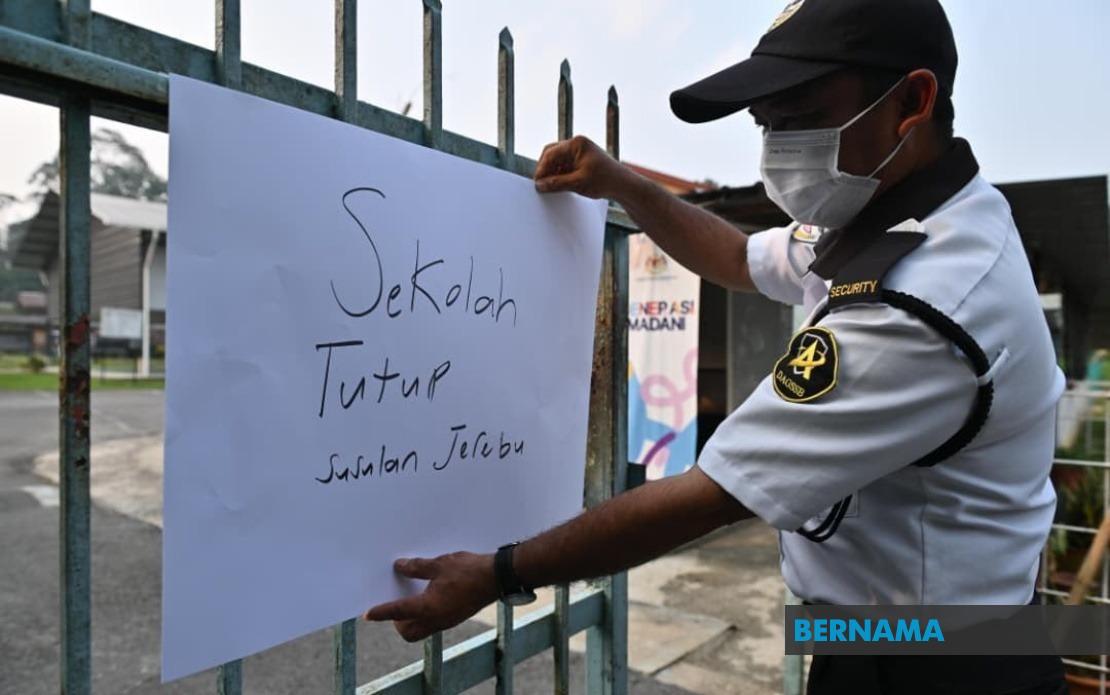
Authorities in Sarawak have extended the suspension of classes at schools throughout the Serian district through Friday, responding to deteriorating air quality conditions driven by smoke drifting across regional borders. The Sarawak State Education Department announced the decision following consultations with administrators and leadership at both secondary and primary institutions overseen by the Serian District Education Office, signalling that the haze situation remains sufficiently severe to warrant continued classroom closures.
The primary rationale behind the extension centres on alleviating operational strain on multiple stakeholders within the education ecosystem. School administrators, teaching staff, parents, and most significantly students residing in boarding facilities would have faced considerable inconvenience had classes resumed as initially scheduled. By maintaining the closure through Friday, the education authorities sought to eliminate logistical complications and reduce unnecessary disruptions to household routines during a period when outdoor air quality poses documented health risks.
Cross-border haze originating from neighbouring regions has emerged as a recurring environmental challenge for eastern Malaysia, particularly during certain seasons when atmospheric conditions facilitate smoke transport across political boundaries. Serian, situated within Sarawak's interior, has proven vulnerable to these transnational pollution episodes, which can rapidly escalate air quality degradation beyond safe exposure levels. The reliance on temporary school closures represents a reactive rather than preventative approach, highlighting the persistent difficulty of addressing pollution sources that lie beyond a single jurisdiction's direct control.
The Air Pollution Index reading for Serian stood at 178 as of 4 pm on the day of the announcement, placing the district firmly within the unhealthy classification according to Malaysia's standardized air quality assessment system. This threshold indicates that vulnerable population segments—including children, elderly individuals, and those with pre-existing respiratory conditions—face elevated health risks from prolonged outdoor exposure. Schools function as congregational spaces where hundreds of young people gather daily, making them particularly sensitive to air quality fluctuations that could trigger acute respiratory episodes or exacerbate chronic conditions like asthma.
Educational institutions have been instructed to maintain vigilant monitoring of real-time air quality data through the Air Pollution Index Management System, enabling rapid decision-making regarding operational adjustments. Rather than issuing blanket directives from state level, the approach delegates monitoring responsibilities to individual schools, requiring principals and administrators to cross-reference current API readings for their specific geographic zones. This decentralized framework acknowledges that air quality can vary substantially across relatively short distances, allowing more granular responses tailored to localized conditions rather than district-wide generalizations.
The closure impacts not merely the suspension of lessons but encompasses broader implications for working families and household management routines. Parents with children attending affected schools must arrange alternative childcare or modify employment schedules, particularly those without flexible workplace arrangements. For families in Serian, many of whom work in agriculture, resource extraction, or service sectors with rigid scheduling, these disruptions create genuine economic consequences beyond the obvious educational delays.
Boarding schools present a distinct complication within this crisis scenario, as students cannot simply remain home during facility closures. The decision to extend the shutdown explicitly acknowledged the burden this would impose on residential institutions required to continue housing and feeding students while suspending formal academic activities. Administrators would face mounting operational costs and supervisory challenges managing confined populations of adolescents during an indefinite closure period without clear resumption timelines.
Sarawak's vulnerability to transboundary haze reflects the region's geographic positioning relative to major pollution sources in Indonesia, where agricultural burning and industrial activities seasonally generate substantial smoke plumes. Climate patterns and atmospheric circulation systems can transport these emissions hundreds of kilometres northward into Malaysian airspace, particularly affecting Sarawak and Sabah. The phenomenon underscores the limitations of purely domestic environmental governance when pollution sources operate beyond territorial jurisdiction, requiring bilateral or multilateral cooperation to address root causes effectively.
The education department signalled its commitment to maintaining transparent communication channels with all relevant parties, pledging to disseminate updated information as circumstances evolve. This commitment reflects institutional awareness that indefinite closures generate frustration and uncertainty among stakeholders requiring definitive guidance for planning purposes. Whether atmospheric conditions would permit resumption on Saturday or necessitate further extensions remained contingent on real-time pollution measurements and meteorological forecasting, introducing an element of uncertainty that complicated recovery planning.
From a Southeast Asian perspective, Serian's predicament illustrates challenges confronting the region's rapidly developing economies, where industrial expansion and agricultural intensification in some areas create environmental consequences felt across borders. Malaysia's experience managing transboundary haze has informed regional discussions about environmental responsibility and pollution mitigation, yet practical solutions remain elusive given competing economic priorities and enforcement difficulties. School closures, while protecting immediate health, represent symptomatic rather than systemic responses to underlying regional environmental governance deficits.

