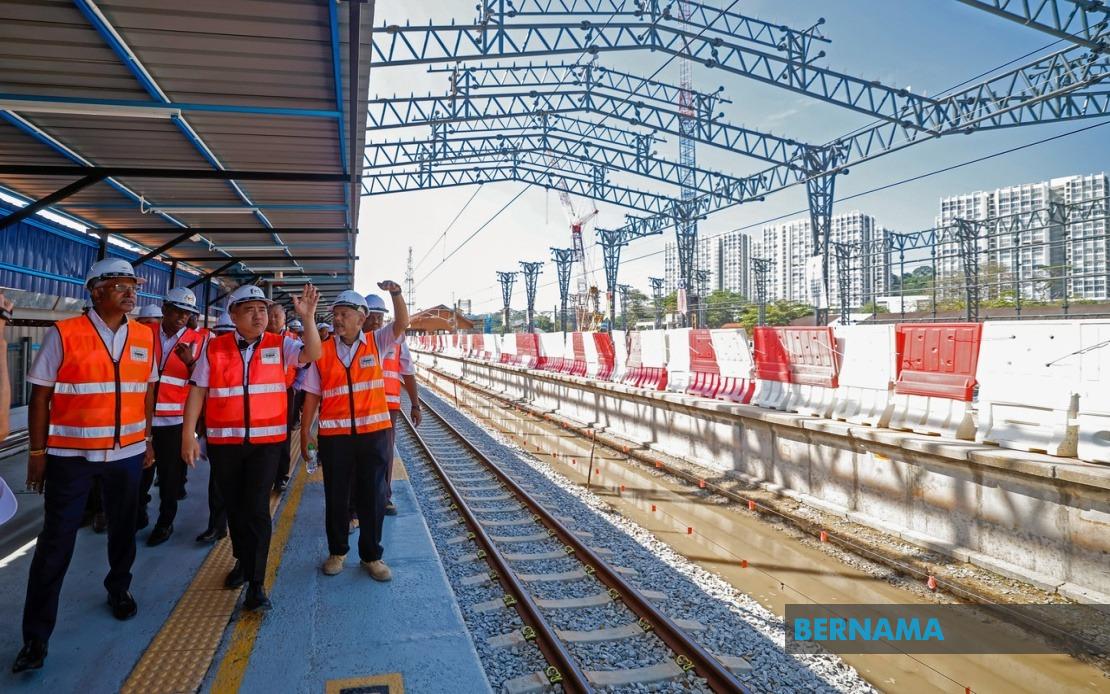
Seremban's new integrated transport hub, the Seremban Sentral railway station, has progressed to 35 per cent completion and is on track to open its doors by March 2027, Transport Minister Anthony Loke announced during an inspection visit to the RM100 million project site. The modernisation effort represents a landmark infrastructure undertaking for the Negeri Sembilan capital, consolidating rail services under one cohesive contemporary facility that will merge the heritage-listed Seremban KTMB station, which dates back over a century, with cutting-edge passenger infrastructure.
The most labour-intensive phases of development have now concluded, a milestone that Loke identified as crucial to unlocking faster construction momentum in the coming months. Underground piling operations—typically the most time-consuming element of major transport projects—have been finalised, while the complex relocation of subsurface utilities and cable networks has been resolved. These foundational challenges, which necessarily consumed the initial two years of the project timeline, have historically slowed progress on comparable infrastructure schemes across Southeast Asia. Loke explained that the meticulous nature of this work, requiring precise positioning and coordination with existing underground infrastructure, had necessitated patience during the early implementation phase.
With these technical barriers now cleared, the project is entering a more visible and rapid construction phase characterised by structural assembly and aesthetic completion. The installation of the station's roof structure, glazing systems, and architectural finishing elements will accelerate substantially, transforming the site from its current foundational state into the recognisable station building that residents will eventually utilise. This acceleration pattern reflects typical large-scale transport project trajectories, where early-stage groundworks appear to yield minimal visible progress before rapid advancement once substructure elements are secured.
The architectural vision for Seremban Sentral incorporates distinctive local character through Minangkabau-inspired design elements, positioning the facility as more than a functional transport node but as a civic landmark for the city. The station embraces green building principles throughout its design and construction methodology, aligning with contemporary environmental standards increasingly demanded by Malaysian urban planning authorities. These sustainable design considerations reflect shifting expectations within the region regarding infrastructure development that balances capacity expansion with environmental responsibility.
Capacity planning underpins the station's long-term utility for Seremban and the broader Klang Valley region. The facility has been engineered to accommodate up to 30,000 daily passengers upon initial opening, with structural provision for expansion to accommodate 120,000 daily users as demand warrants. This scalable approach reflects sophisticated transportation forecasting, recognising that the station's 30 to 50 year operational lifespan will witness substantial demographic and commuting pattern evolution. The design incorporates six platform positions, though only three will be constructed initially, permitting staged expansion aligned with actual demand growth rather than speculative overbuilding.
The double-track infrastructure currently under completion across the Klang Valley Double Track Phase 2 project will directly enhance Seremban Sentral's viability and attractiveness. Once this complementary upgrade reaches completion and frequency increases materialise across Komuter and express transit services, the station will function as a compelling alternative to private vehicle use, supporting broader modal shift objectives championed by the Ministry of Transport. Loke's observation that elevated service frequency will attract residential migration to Seremban reflects the transit-oriented development philosophy underpinning contemporary Southeast Asian urban planning.
Multimodal connectivity and traffic flow management have received deliberate architectural attention. The new station incorporates dual entrance configurations and dedicated drop-off facilities positioned at opposite locations—fronting Jalan Tunku Antah and the rear station approach—to distribute arrival and departure traffic patterns and mitigate congestion that frequently accompanies single-access transport hubs. This design sophistication acknowledges Malaysian urban congestion challenges and represents genuine integration with surrounding street networks rather than isolated facility insertion.
The heritage conservation dimension adds complexity to this project. Simultaneous renovation of the 100-year-old original Seremban KTMB station, completed in the preceding month, entailed modernising electrical and wiring infrastructure while preserving architectural heritage value. Beyond aesthetic preservation, the rehabilitation involved functional upgrades ensuring contemporary safety standards compliance. Critical flood mitigation improvements form part of this heritage station work, with new sewerage infrastructure now diverting stormwater directly into Sungai Temiang, bypassing the station platform and track areas that previously experienced inundation during heavy precipitation events. This engineering solution addresses historical operational disruptions while protecting heritage fabric.
The broader transit-oriented development framework surrounding Seremban Sentral represents integration strategy extending beyond the station itself. The TOD Seremban Sentral project, positioned behind the primary station facility, exemplifies how transport infrastructure anchors mixed-use urban regeneration. This approach, increasingly adopted across Malaysian cities, leverages transport investment to catalyse surrounding area revitalisation through coordinated commercial and residential development.
Construction complexity has necessitated temporary service disruptions across the wider rail network. Afternoon Komuter service frequency reductions currently implemented reflect deliberate scheduling decisions prioritising faster construction completion over sustained baseline service levels during the development window. This trade-off strategy, while imposing short-term passenger inconvenience, represents pragmatic recognition that accelerating project completion yields longer-term service benefits exceeding costs of temporary frequency constraints.
The Seremban Sentral project exemplifies contemporary Southeast Asian transport infrastructure ambition, combining heritage preservation with modernisation, integrating multiple transport modes, incorporating sustainable design principles, and positioning passenger infrastructure as urban development catalyst. Its March 2027 completion target represents achievable timing given the current construction momentum, contingent upon maintaining the accelerated pace now possible following completion of foundational technical challenges. For commuters and residents across Negeri Sembilan and the wider Klang Valley region, the facility promises transformation of regional connectivity patterns and urban living proposition when it commences operations.

