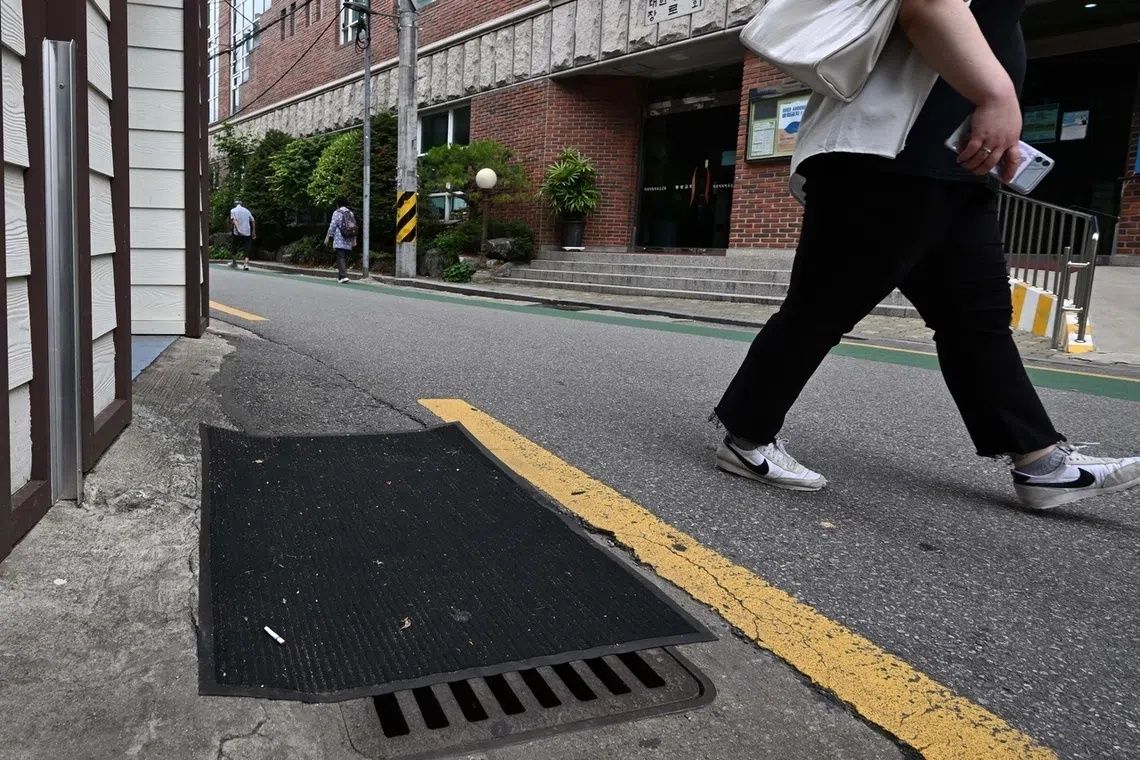
Residents and visitors to Seoul frequently encounter an unpleasant reality of life in South Korea's capital: sudden, sharp odours that assault pedestrians on busy sidewalks and at bus stops without warning. Though these episodes typically vanish within seconds, their cumulative impact has become impossible to ignore. Complaints about mysterious bad smells have become a fixture in online forums across both Korean and international communities, painting a picture of a major metropolitan area struggling with an invisible but persistent problem that undermines its image as a cutting-edge global city.
A 2025 report from the Seoul Institute reveals that the city's sewerage system accounts for approximately half of all civil complaints related to unpleasant odours, establishing sewer-related issues as the dominant source of olfactory grievance among residents. The scope of the problem extends beyond mere annoyance; it represents a significant quality-of-life concern in an otherwise highly developed urban environment. The situation underscores a fundamental disconnect between Seoul's reputation as a technologically advanced metropolis and the reality of its aging infrastructure, which continues to create conditions for malodorous compounds to escape into the atmosphere that millions breathe daily.
While Seoul initiated formal odour reduction measures in 2015, which initially produced promising results, the trajectory has since reversed course. Complaints declined from 3,095 in 2015 to a low of 1,660 in 2020, suggesting that targeted interventions could make a tangible difference. However, this progress proved temporary; by 2024, complaints had rebounded to 2,302, indicating that the underlying problems remain fundamentally unresolved. This cyclical pattern reflects the city's struggle to implement sustainable solutions rather than merely applying temporary patches to systemic failures.
The culprit behind Seoul's odour crisis is hydrogen sulfide, a colourless gas that produces a distinctive rotten egg stench when it forms during the decomposition of organic matter in oxygen-deprived sewer environments. The chemical reaction occurs naturally when sewage sits stagnant within the city's underground pipes, a condition that becomes particularly acute during hot, dry periods with minimal rainfall. In contrast, during heavy downpours, increased water flow through the system helps flush out accumulated gases and prevents dangerous concentrations from building up, which explains why odour complaints tend to spike during Seoul's dry seasons.
Seoul's contemporary sewer predicament is fundamentally rooted in the city's explosive growth over recent decades, which has outpaced the capacity of infrastructure systems built for a smaller urban population. To manage this mismatch, many buildings installed septic tanks as temporary solutions before their wastewater entered the main underground sewer network. While these tanks effectively remove solid waste materials, they cannot eliminate dissolved organic compounds that remain suspended in liquid effluent. Once this partially treated wastewater enters the underground pipes, dissolved organic matter becomes susceptible to decomposition, generating hydrogen sulfide and other malodorous gases that escape through maintenance holes and storm drains scattered across the city.
A fundamental architectural flaw compounds these challenges: Seoul's combined sewer system, which channels both domestic wastewater and street-level stormwater through identical underground pipes. This integration creates conditions where stagnant wastewater accumulates in pipes during dry periods, since reduced water flow fails to provide the flushing action necessary to prevent decomposition. The city has recognized this systemic limitation and, since the early 1990s, has explored converting to a dual-pipe system in which wastewater and stormwater travel separately. However, progress has stalled dramatically due to the extraordinary difficulty and expense of replacing underground sewer networks beneath an densely populated city. By 2025, only 20.4 per cent of Seoul's total sewer infrastructure had undergone conversion to this separated system, leaving nearly 80 per cent still vulnerable to the problems inherent in combined networks.
Official responses from Seoul's municipal government acknowledge the issue's complexity but have historically relied upon reactive rather than proactive frameworks. A Seoul city official noted that odours arise from diverse and complex factors requiring expert diagnosis on a case-by-case basis, and the government has begun considering structural sewer modifications and dredging of accumulated sediment from pipe interiors. However, these measures remain piecemeal responses rather than comprehensive urban strategies. More significantly, South Korea's existing legal framework emphasizes management of odours that breach allowable limits rather than mandating that local governments prevent sewer odours from occurring in the first place. This complaint-driven approach, according to Ki Dong-won, a researcher at the Seoul Institute, has prevented the establishment of long-term, standardized solutions that could address the problem systematically.
The research community has identified critical gaps in Seoul's odour management infrastructure. Korea currently lacks predictive models capable of forecasting how sewer odours disperse above ground or determining which urban areas face greatest vulnerability to complaints. While efforts to create sewer odour maps have commenced, these initiatives remain disconnected from performance metrics or evaluation criteria for existing odour reduction facilities. Without such diagnostic tools, the city essentially operates blind, unable to target interventions toward areas of greatest impact. This analytical vacuum leaves Seoul dependent upon reactive responses to complaints rather than proactive prevention in identified hotspots.
Expert recommendations suggest that mechanical water circulation through sewer pipes could prevent stagnation and decomposition, sidestepping the need to rebuild entire sewer networks. Park Seok-soon, an environmental engineering professor emeritus at Ewha Womans University, proposes artificially circulating water from hydrants through sewer pipes to maintain continuous flow and prevent sewage deterioration. This approach reflects practices already adopted successfully in major Japanese cities and other developed nations that continue operating combined sewer systems while maintaining strict management protocols. The comparison proves instructive for Seoul's policymakers: other advanced cities have demonstrated that combined systems can function acceptably when managed with discipline and technical sophistication.
For Malaysian readers, Seoul's sewer odour crisis offers instructive parallels to infrastructure challenges facing rapidly urbanizing cities throughout Southeast Asia. As regional cities expand faster than their utility systems can accommodate, similar disconnects between growth and infrastructure capacity threaten to create comparable quality-of-life problems. Seoul's experience demonstrates that reactive complaint-management approaches and piecemeal infrastructure improvements prove insufficient for addressing systemic problems. The city's struggle suggests that emerging Asian metropolises should prioritize comprehensive infrastructure planning, systematic diagnostic frameworks, and proactive management protocols before problems become deeply entrenched. Only through fundamental rethinking of how sewer systems operate—rather than endless incremental fixes—can cities eliminate persistent odour issues that undermine urban livability despite overall economic advancement and technological sophistication.

