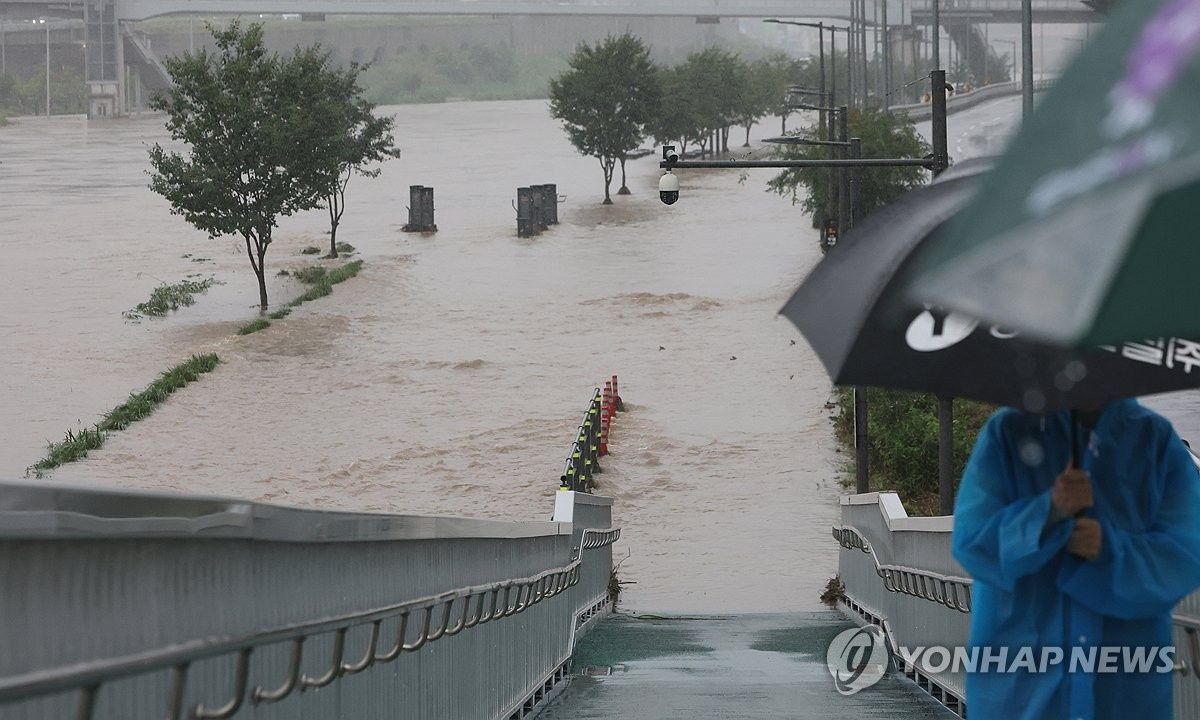
South Korea's capital region and eastern provinces have been pummelled by a severe weather system that unleashed torrential overnight rainfall, triggering widespread flooding and property damage across multiple cities and counties. The downpour, which persisted from midnight through the morning of Saturday, left authorities scrambling to manage the fallout as the Central Disaster and Safety Countermeasure Headquarters documented damage affecting hundreds of homes and public infrastructure.
Meteorological measurements reveal the intensity of the precipitation across the affected zone. The Seoul metropolitan area and Gangwon Province received accumulated rainfall approaching 200 millimetres during the critical eight-hour window, with particularly severe concentrations in northern border municipalities. Paju registered 192.5 millimetres, while Dongducheon recorded 189.5 millimetres, and Pocheon accumulated 179 millimetres. Further readings from Gimpo and Cheorwon indicated 166.5 and 159.5 millimetres respectively, demonstrating the broad geographic reach of this weather system and the variable intensity across different localities.
The consequences of this deluge manifested across multiple dimensions of daily life and infrastructure. Damage assessments tallied approximately 540 cases of property loss or infrastructure disruption scattered throughout the affected region. Among these, authorities confirmed 148 instances where inundation directly damaged residential properties or obstructed road networks, essentially paralyzing transportation in affected areas. An additional 392 reports involved fallen trees and debris—a secondary but significant consequence of saturated soil conditions and wind associated with the storm system. The volume of such debris incidents underscores the structural stress imposed on vegetation and outdoor structures.
Despite the extensive material damage, the meteorological and emergency response systems succeeded in preventing loss of human life. The absence of casualties stands as a testament to established warning protocols and public preparedness mechanisms, though anxiety about future rainfall remains high given weather forecasts. Nevertheless, precautionary measures did necessitate temporary relocation of vulnerable populations. Authorities evacuated 95 individuals representing 44 separate households across six municipalities, reflecting a cautious approach to safeguarding residents in flood-prone or landslide-susceptible areas where overnight conditions could deteriorate without immediate warning.
Public infrastructure constraints extended beyond residential zones into major recreational and transportation networks. Ten national parks, including the prominent Mount Bukhan facility within Seoul proper, were shuttered to prevent visitor exposure to ongoing hazardous conditions such as landslides and flash flooding in valleys. The closures encompassed 275 distinct hiking trails and access routes, effectively restricting outdoor activities across a vast recreational footprint that normally attracts substantial weekend traffic. Maritime operations also faced disruption, with authorities suspending seven ferry routes along the western coastal corridor, limiting transportation options for residents of island communities and waterfront regions.
Alarm bells continue ringing within disaster management agencies as meteorological forecasts indicate precipitation will intensify further through Sunday. Expected rainfall rates could approach 300 millimetres per hour in certain localised zones, potentially exceeding the drainage capacity of even well-maintained infrastructure systems. This escalating scenario prompted heightened vigilance within the southern and central provinces of Chungcheong and Gangwon, where terrain characteristics render populations particularly susceptible to cascading landslide events. The combination of saturated earth conditions from the overnight deluge and the prospect of renewed heavy precipitation creates a compounding hazard environment.
Prime Minister Han Seong-sook convened an emergency response coordination meeting Saturday morning, emphasising the necessity for rapid deployment of equipment and personnel to affected districts. Her statement balanced acknowledgment of the fortunate absence of fatalities against recognition of tangible suffering experienced by those whose homes and vehicles sustained flood damage or whose livelihoods depend on road-based commerce now disrupted by inundation. The prime minister's public expression of sympathy functioned both as acknowledgment of citizen distress and an implicit commitment to coordinated governmental support, signalling that recovery and reconstruction would receive official priority attention.
For Malaysian readers, this episode illustrates parallels with monsoon-related challenges familiar across Southeast Asia. Like Malaysia's experience during periods of enhanced precipitation, South Korea's densely populated lowland corridors prove vulnerable when rainfall intensity outpaces drainage infrastructure design parameters. The rapid mobilisation of rescue equipment, temporary relocation protocols, and national park closures reflect disaster management approaches analogous to those deployed domestically during flood emergencies. The distinction lies partly in the smaller geographic footprint of South Korea's crisis, though the per-capita concentration of disruption remains substantial.
The unfolding situation also demonstrates that advanced warning systems and established evacuation procedures, while reducing fatalities, cannot eliminate material losses or prevent significant economic disruption. South Korea's experience suggests that even well-resourced nations must continuously upgrade stormwater management infrastructure and strengthen contingency planning as climate variability potentially increases the frequency and intensity of extreme precipitation events. This precedent carries implications for Malaysian urban planners and emergency management authorities monitoring similar precipitation patterns in tropical and subtropical regions.

